Patna: The number 13 has long been associated with superstition and bad luck, and for Prime Minister Narendra Modi, it carries a particularly traumatic memory. In October 2013, a series of bomb blasts rocked Patna's Gandhi Maidan during an election rally addressed by Modi, then Gujarat chief minister, killing six people and injuring around 80 others. At that time, Bihar was governed by the JD(U)-led administration under Chief Minister Nitish Kumar, who had severed ties with the BJP just months earlier.
A Historic Political Moment
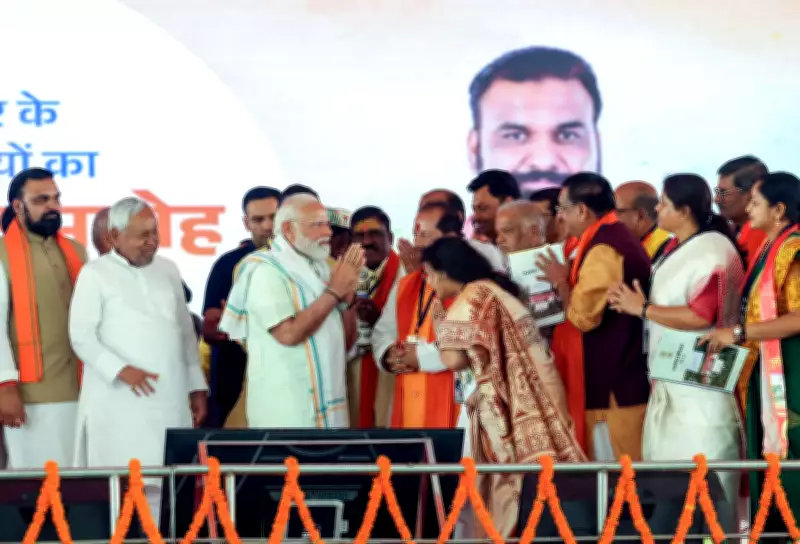
In a remarkable turn of events, exactly 13 years later, Prime Minister Modi, several Union ministers, and Nitish Kumar were once again present at Gandhi Maidan on Thursday. This time, the occasion was the expansion of the state cabinet, following the BJP's assumption of complete control over Bihar's government after Nitish Kumar decided to hand over power to the saffron party. BJP leaders described the event as a historic political milestone.
"Today's event was indeed special as the PM was witness to the expansion of the BJP-led government in Bihar," BJP spokesperson Manoj Sharma told TOI on Thursday. "It was also special because the lotus had bloomed from Gangotri to Ganga Sagar, and the Ganges flows from Bihar to reach Ganga Sagar," he added, referring to the BJP's electoral symbol.

Shifting Political Alliances
Although the NDA alliance of the BJP and JD(U) had governed Bihar together since 2005, Modi's political relationship with the state has seen sharp turns over the years. In October 2013, shortly after being declared the NDA's prime ministerial candidate, Modi arrived in Patna to address a rally at Gandhi Maidan as Gujarat chief minister. Nitish Kumar had already broken ties with the BJP, reportedly unhappy over Modi's elevation as the NDA's face.
The JD(U) suffered a major setback in the 2014 Lok Sabha elections, winning only two of Bihar's 40 seats after contesting 38 constituencies. In contrast, the BJP-led NDA secured 31 seats. Relations between Modi and Nitish deteriorated further during the 2015 Bihar assembly elections when, despite an aggressive campaign led by the Prime Minister, the BJP-led NDA won only 58 seats against 178 secured by the Grand Alliance in the 243-member assembly.
However, political equations changed repeatedly over the next several years. Nitish returned to the NDA after quitting the Grand Alliance, later walked away again to rejoin the opposition camp, and eventually returned to the BJP-led alliance after 17 months. After more than two decades of sharing power with Nitish, the BJP finally secured full leadership in Bihar after Nitish shifted to national politics. This moment also coincided with the BJP's historic victory in West Bengal, ending decades of Left and Trinamool Congress dominance in the state.