December 26, 1985, was a day of significant political and economic developments across South Asia, from Guwahati to Islamabad and New Delhi. Key events included a major assurance from a new chief minister, a historic announcement from a neighbouring nation, and a crucial policy shift by the Indian government.
Mahanta's Pledge for a United Assam
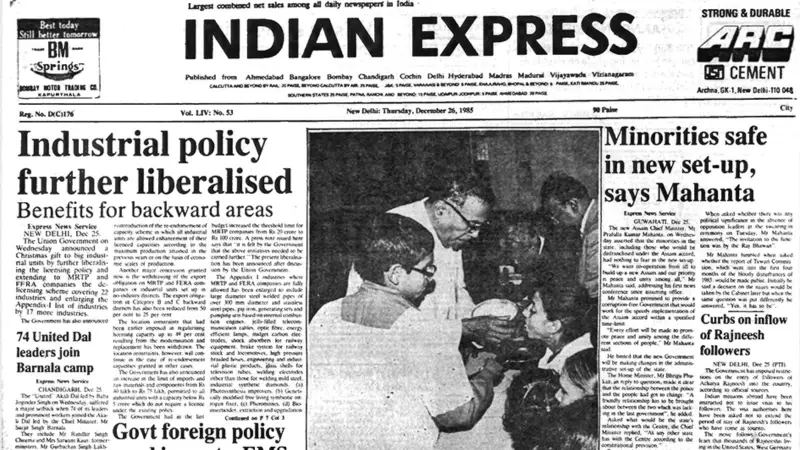
In one of his first official acts after taking charge, the new Chief Minister of Assam, Prafulla Kumar Mahanta, addressed the media on December 26, 1985. He sought to allay the fears of minorities in the state, a sensitive issue in the aftermath of the Assam Accord. Mahanta explicitly stated that minorities, including those who stood to be disenfranchised under the Accord's provisions, had nothing to fear from his new administration.
"We want cooperation from all to build up a new Assam and our priority is peace and unity among all," Mahanta declared at his inaugural news conference. This statement was aimed at fostering stability and reconciliation in a state that had witnessed prolonged agitation over the issue of foreign nationals.

Pakistan Announces End of Eight-Year Martial Law
Across the border, a major political transition was underway. Pakistan's Prime Minister, Mohammad Khan Junejo, announced via Radio Pakistan that the country's eight-year-old martial law was being lifted. While he did not specify an exact date, reports indicated the change was scheduled for the following week.
Junejo added that the upcoming birth anniversary of the nation's founder, Muhammad Ali Jinnah, would be "the most significant one" in Pakistan's history, marking its return to civilian rule. This move signalled a tentative step towards democratic normalisation after years of military governance.
India's Christmas Gift to Big Industry
In New Delhi, the Union government delivered a substantial Christmas gift to large industrial units. It further liberalised the industrial licensing policy, extending a delicensing scheme that covered 22 industries to companies regulated under the MRTP (Monopolies and Restrictive Trade Practices) Act and FERA (Foreign Exchange Regulation Act).
Additionally, the government expanded the Appendix-I list of industries by more than 17 sectors. This policy relaxation was designed to boost investment, reduce bureaucratic hurdles, and stimulate economic growth by giving greater freedom to major corporate players.
Other Key Developments
In another notable decision, the Indian government imposed restrictions on followers of Acharya Rajneesh (Osho). Official sources confirmed that Indian missions abroad were instructed not to issue visas to his disciples. Visa authorities within India were also directed not to extend the stay of Rajneesh followers who had entered as tourists.
This preemptive move was driven by concerns that thousands of Rajneeshis living in the United States, West Germany, and Switzerland might seek to flock to India, potentially creating administrative and social challenges.
Looking back, December 26, 1985, stands as a snapshot of a region in flux—grappling with internal security assurances, celebrating a return to constitutional rule, and embracing economic liberalisation, all while managing new-age spiritual movements.