2026 Assembly Elections: A Political Earthquake
The 2026 assembly elections across five states and a union territory have dramatically altered India's political landscape. From Vijay's blockbuster debut in Tamil Nadu to the saffron breakthrough in West Bengal and Kerala's return to rotation, the verdict has produced clear winners and decisive losers.
Winners
1. Vijay
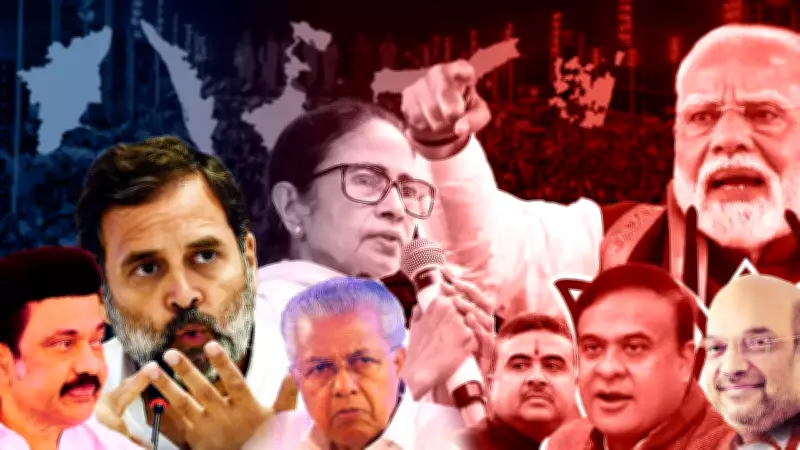
Vijay is the undisputed biggest winner of the 2026 elections. His Tamilaga Vettri Kazhagam (TVK) emerged as the largest party in Tamil Nadu with over 100 seats, shattering the five-decade-old Dravidian duopoly. Contesting all 234 seats independently, Vijay's "third way" resonated with young and first-time voters, positioning TVK as a clean alternative. The 'MGR 2.0' effect saw cinematic charisma translate into a mass political movement, fundamentally changing the state's political grammar.
2. PM Modi and Amit Shah
Prime Minister Narendra Modi and Amit Shah proved their electoral model's resilience. The BJP's gains in West Bengal and incremental growth in Tamil Nadu signal that their strategy is no longer geographically confined. Modi's intense campaigning and Shah's 20-day stay in Bengal were pivotal. These results feed into future elections, reinforcing the narrative of electoral invincibility.

3. Himanta Biswa Sarma
Himanta Biswa Sarma achieved a rare feat: converting incumbency into a third straight victory for the BJP-led NDA in Assam. His focus on infrastructure and welfare schemes like Orunodoi created a direct connect with rural households. Identity politics and security concerns helped consolidate the majority vote base, elevating Sarma's stature within the BJP.
4. VD Satheesan and Rahul Gandhi
VD Satheesan and Rahul Gandhi were the twin pillars behind the Congress-led UDF's landmark victory in Kerala, ending the LDF's decade-long rule. Satheesan's statewide outreach and grassroots rebuilding made him the frontrunner for chief minister. Rahul Gandhi's sustained engagement, especially as Wayanad MP, boosted youth participation and strengthened his national position within the opposition.
5. Suvendu Adhikari
Suvendu Adhikari emerged as the central figure in the BJP's historic breakthrough in West Bengal, guiding the party past the majority mark. His Hindu consolidation narrative and focus on issues like the RG Kar case and corruption flipped dozens of TMC strongholds. Adhikari is now a top contender for the chief minister post.
Losers
6. MK Stalin
MK Stalin faced a stunning reversal as the DMK slipped to third position in Tamil Nadu. Anti-incumbency, corruption allegations, and the rise of TVK proved decisive. The shift of urban voters, especially in Chennai, toward TVK reflects a generational and aspirational shift the DMK failed to counter.
7. Mamata Banerjee
Mamata Banerjee's 15-year rule ended with the BJP surging past the majority mark. The RG Kar incident, voter roll revisions, and anti-incumbency after three terms contributed to the TMC's collapse. A record turnout signaled a decisive push for change.
8. Pinarayi Vijayan
Pinarayi Vijayan's bid for a historic third term was blocked by the UDF. The defeat signals limits to his centralized leadership model, with internal dissent and corruption narratives eroding support. The Left now loses its only governed state, fighting for relevance.
9. Gaurav Gogoi
Gaurav Gogoi failed to convert his high-profile campaign into a credible challenge against the BJP in Assam. Losing Jorhat and the Congress-led alliance falling short of expectations leaves him leading a weakened opposition.
10. Edappadi K Palaniswami
EPS failed to reclaim power or reposition the AIADMK as the primary alternative in Tamil Nadu. The rise of TVK occupied the opposition space, and the party's seat share stagnated. The AIADMK is no longer the default challenger.
Counting is still underway, and final results will be out in a few hours. This analysis is based on trends and leads.