

Assembly Elections 2026: Poll Schedule Unveiled for Five States and Union Territory
The Election Commission of India has officially declared the schedule for the highly anticipated 2026 assembly elections, covering five key regions: Kerala, West Bengal, Tamil Nadu, Assam, and the Union Territory of Puducherry. Polling is set to occur between April 9 and April 23, with the crucial vote counting scheduled for May 4. This electoral process is expected to witness intense competition among various political parties vying for power in these states.
Election Commission's Preparatory Measures and Security Deployments
In early March, Chief Election Commissioner Gyanesh Kumar, accompanied by Election Commissioners Sukhbir Singh Sandhu and Vivek Joshi, conducted visits to the poll-bound states to assess and review preparedness. To ensure smooth and transparent elections, the Commission has invoked its plenary powers under Article 324 of the Constitution and Section 20B of the Representation of the People Act, 1951. Central Observers have been deployed across the regions to oversee election conduct and strengthen on-ground management. Security arrangements include the deployment of over 1.4 lakh Central Armed Police Forces (CAPF) personnel and state police, supported by judicial officers and returning officers to monitor logistics and maintain law and order.
State-Wise Polling Details and Key Contests
West Bengal: Polling will be conducted in two phases starting April 23. The primary contest is between the Trinamool Congress (TMC) led by Mamata Banerjee and the Bharatiya Janata Party (BJP). Approximately 60 lakh doubtful voter cases are under judicial review, adding complexity to the electoral landscape.

Assam: Single-phase polling is scheduled for April 9. The BJP faces challenges from the Congress and various regional parties. Heavy CAPF deployment has been arranged to ensure secure and peaceful voting across the state.
Tamil Nadu: Voting will occur in a single phase on April 23. A three-way contest is emerging, featuring the DMK-led alliance, the AIADMK-BJP combine, and the Tamilaga Vettri Kazhagam (TVK). Political alliances are rapidly forming, with significant developments in seat-sharing agreements.
Kerala and Puducherry: Both regions will vote on April 9. In Kerala, the main battle is between the Left Democratic Front (LDF) and the United Democratic Front (UDF), with the BJP aiming to expand its influence. Puducherry expects a tight contest between the Congress-DMK-CPI alliance and opposition parties including the All India NR Congress and BJP.
AIADMK's Alliance Strategy and Welfare Promises
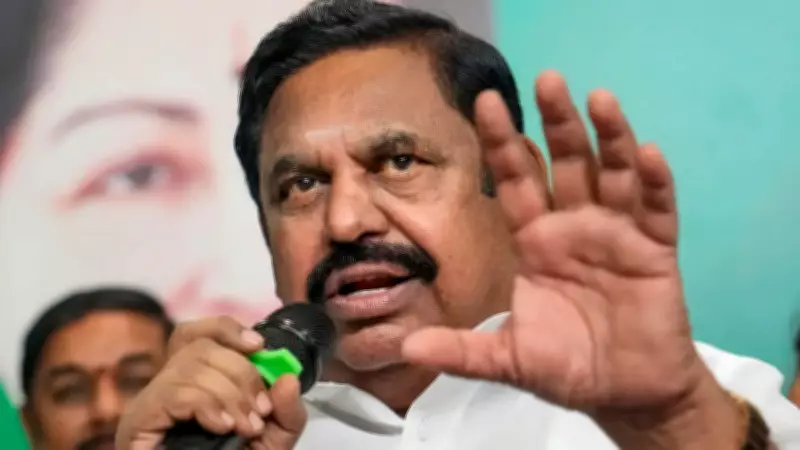
At the AIADMK headquarters, General Secretary Edappadi K Palaniswami finalized a crucial alliance deal as part of the National Democratic Alliance (NDA) ahead of the Tamil Nadu polls. In a significant announcement, Palaniswami promised free refrigerators to all rice category ration cardholders if the AIADMK is voted to power in the 2026 Assembly election. Additionally, he assured the provision of one kilo of dal and one litre of cooking oil for free to these cardholders, along with a one-time grant of Rs 10,000 to every family to manage tax burdens and price rise. Tamil Nadu has nearly 2.22 crore rice ration cardholders who receive free rice and subsidized commodities through 34,773 fair price shops under the public distribution system.
Political Developments and Seat-Sharing Agreements
Tamil Maanila Congress (Moopanar) Joins NDA: Following a meeting with Union Minister Piyush Goyal and Edappadi K Palaniswami, TMC(M) president GK Vasan announced a seat-sharing agreement with the AIADMK-led NDA, securing five constituencies for the upcoming polls. Vasan expressed high confidence in his party's winnability, stating that these five winning constituencies would help the AIADMK form a government. Notably, the party will contest on the BJP's 'Lotus' symbol due to technical issues with its traditional 'Cycle' emblem at the Election Commission.

DMK Strengthens Alliances: The ruling Dravida Munnetra Kazhagam (DMK) has secured support from key parties. Makkal Needhi Maiam (MNM) chief Kamal Haasan announced that his party will not contest the polls but will strongly support the DMK from outside. Additionally, the Desiya Murpokku Dravida Kazhagam (DMDK) reached a seat-sharing agreement with the DMK, with DMDK set to contest 10 Assembly constituencies. Earlier, the DMK and the Viduthalai Chiruthaigal Katchi (VCK) also announced their seat-sharing arrangement.
NDA Seat Allocation in Tamil Nadu: Under the NDA agreement, the AIADMK-led alliance will contest over 170 seats. The BJP has been allotted 27 seats, followed by the Pattali Makkal Katchi (PMK) with 18 seats, and the Amma Makkal Munnetra Kazhagam (AMMK) with 11 seats.
Opposition Criticism and Confidence
DMK spokesperson TKS Elangovan criticized the NDA alliance, claiming it has failed to achieve anything for Tamil Nadu. He expressed confidence in the DMK's performance, stating that voters are aware that no schemes are coming to the state due to the BJP. His remarks highlight the ongoing political rhetoric as parties gear up for the polls.
Assam Nominations and Scrutiny Process
In Assam, scrutiny of nomination papers for the Assembly elections resulted in 776 candidates being found eligible, while the process was adjourned until March 25 for two constituencies: Barpeta (SC) and Dhekiajuli. Among those awaiting clearance are BJP Cabinet minister Ashok Singhal, seeking re-election from Dhekiajuli, and Congress candidates from both seats. A total of 815 candidates filed 1,389 sets of nomination papers for the elections scheduled on April 9, with the last date for withdrawal of candidature set for Thursday until 3:00 PM.
Internal Party Dynamics and Security Concerns
In Kerala, internal contestations have surfaced as CPM rebel G Sudhakaran announced he would campaign against Agriculture Minister P Prasad in Cherthala, citing unwarranted remarks. This underscores the complex dynamics within parties as they navigate the electoral landscape. Security remains a top priority, with comprehensive measures in place to ensure free and fair elections across all regions.
The 2026 Assembly Elections are poised to be a landmark political event, shaping the future governance of these key Indian states and union territory.





