

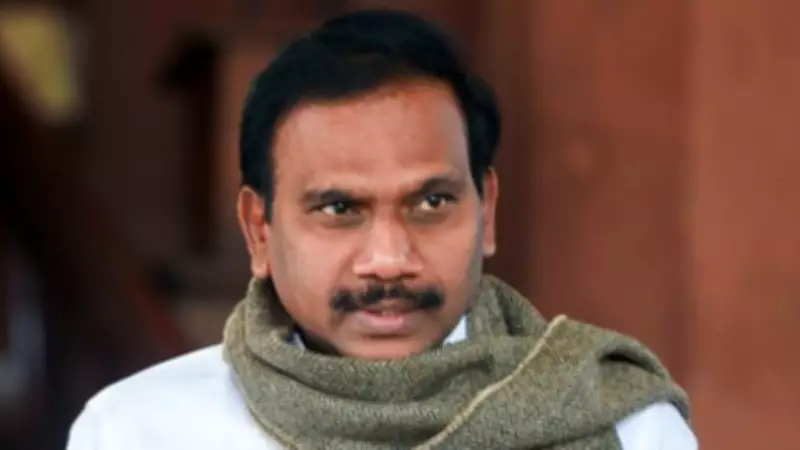
DMK Leader A Raja Takes Legal Action Over AI-Fabricated Audio Clip
DMK leader and former Union minister A Raja has escalated a political controversy by issuing a formal legal notice to a YouTube channel regarding a disputed audio recording. The politician asserts that the clip in circulation has been artificially manufactured using advanced AI technology and selectively edited to distort his actual statements and create a false narrative.
Claims of Fabrication and Misrepresentation
A Raja stated clearly, "The audio clip being circulated as if I spoke those words has been cut, pasted, and created using artificial intelligence to falsely fabricate a narrative. I have sent a legal notice through my lawyer regarding this matter." He emphasized that the recording does not represent his genuine speech and has been manipulated to serve malicious purposes.
The controversial audio, which emerged recently on various social media platforms, allegedly contains disparaging remarks about DMK leadership and internal party dynamics. Circulated in two separate segments, the clips purportedly suggest that Tamil Nadu Chief Minister MK Stalin is 'unfit' for leadership and include sensitive references to the historical 2G spectrum scam. More troublingly, the audio makes claims about the late DMK patriarch M Karunanidhi being mistreated or confined during his final days.

Political Reactions and Accusations
Raja specifically criticized AIADMK general secretary Edappadi K Palaniswami for utilizing this unverified recording to launch defamatory attacks against both Karunanidhi and Chief Minister Stalin. He described Palaniswami's reliance on the questionable audio for political advantage as "politically uncivilised and dishonest." To reinforce his argument, Raja referenced verses from renowned Tamil poet Bharathiyar, suggesting that truth and integrity should prevail over deceptive tactics.
Palaniswami has reportedly cited the audio clip to demand a fresh investigation into Karunanidhi's death should his party return to power in Tamil Nadu. This development occurs against the backdrop of the upcoming state elections, with polling scheduled for April 23 in a single phase and vote counting set for May 4.
Broader Implications for Politics and Technology
This incident highlights growing concerns about the misuse of artificial intelligence in political discourse. The ability to fabricate convincing audio recordings presents significant challenges for verifying information during election seasons. Raja's legal action represents one of the first prominent cases in Indian politics where a leader has formally challenged AI-generated content as defamatory.
The controversy underscores the importance of media literacy and verification mechanisms in an era where digital manipulation technologies are becoming increasingly sophisticated. Political observers note that such incidents could set precedents for how similar cases are handled legally and ethically in the future.
As Tamil Nadu prepares for crucial elections, this dispute over fabricated audio content adds another layer of complexity to an already heated political landscape. The outcome of Raja's legal notice and the continued circulation of the disputed recording may influence campaign strategies and public perception in the coming weeks.






