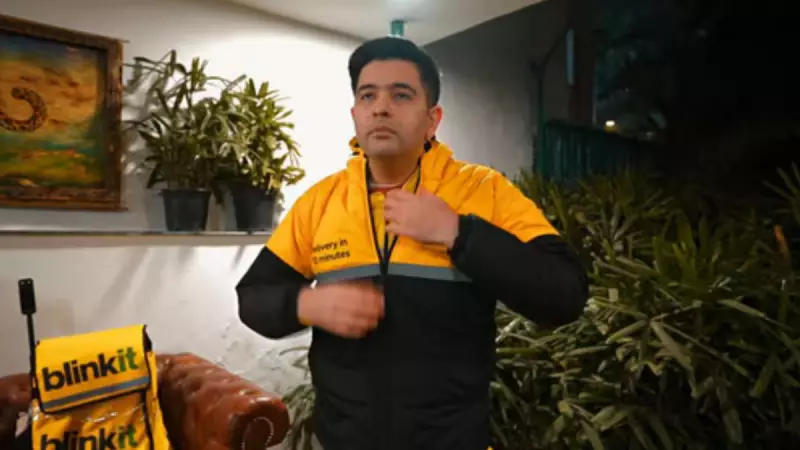
In a move highlighting the ongoing debate over the rights and working conditions of gig economy workers, Aam Aadmi Party (AAP) Member of Parliament Raghav Chadha recently spent a day working as a delivery partner for the quick-commerce platform Blinkit. The event, which took place on January 12, 2026, was captured in a video that has since sparked widespread discussion.
A Day in the Life of a Delivery Executive
Raghav Chadha, the Rajya Sabha MP from Punjab, decided to step into the shoes of a gig worker to personally understand the challenges they face daily. Dressed in the familiar uniform and equipped with a delivery bag, Chadha navigated the streets to fulfill customer orders. The video footage shows him interacting with customers, managing the delivery app, and handling packages.
This hands-on experience was not merely a publicity stunt but a direct response to the growing demands from gig workers across the country. Delivery partners for platforms like Blinkit, Swiggy, and Zomato have been vocal about their need for better pay structures, improved working conditions, and access to social security benefits.

The Core Demands of Gig Workers
The action by the AAP parliamentarian brings sharp focus to the key issues raised by delivery executives and other gig workers. Their primary demands, which have been the subject of protests and discussions, include:
- Fair and Transparent Pay: Workers seek a revision of the per-delivery payment model, arguing that current rates do not adequately compensate for fuel costs, vehicle maintenance, and time.
- Social Security Coverage: A major demand is for access to schemes like health insurance, accident coverage, and pension plans, which are typically absent in gig work contracts.
- Job Security and Grievance Redressal: The lack of formal employment status makes workers vulnerable to sudden deactivation from apps without a clear recourse mechanism.
By participating in the work himself, Chadha aimed to gather firsthand insight into these systemic issues. His experience likely involved confronting the pressure of delivery timelines, the physical strain of continuous travel, and the financial uncertainty of income dependent on the number of orders completed.
Political Response and Broader Implications
Raghav Chadha's day as a Blinkit delivery partner is a significant political gesture. It aligns with the AAP's broader narrative of advocating for the common citizen and challenging policies perceived as exploitative. The move puts pressure on both the government and the corporate sector to address the regulatory grey area surrounding gig work.
The Indian gig economy has expanded rapidly, employing millions, yet it operates without a comprehensive legal framework that guarantees worker welfare. The incident underscores the urgent need for policy intervention. Several states and the central government have been deliberating on a possible "Code on Social Security" that could extend some benefits to platform workers, but implementation remains a complex challenge.
Chadha's action has successfully amplified the gig workers' plight in the public and political discourse. It demonstrates a method of political engagement that goes beyond speeches in parliament, opting instead for experiential advocacy. The video of his workday serves as a powerful tool to humanize the struggles of a largely invisible workforce that powers the convenience of urban India.
In conclusion, Raghav Chadha's temporary role as a Blinkit delivery executive is more than a symbolic act. It is a pointed commentary on the evolving nature of work in the digital age and the pressing need to balance innovation with equity. As the debate continues, this event marks a notable moment where political action directly intersected with the grassroots realities of India's booming platform economy.