

Adnan Sami's Father Was Pakistani Air Force Pilot in 1965 War
The father of renowned singer and composer Adnan Sami, Arshad Sami Khan, served as a pilot in the Pakistani Air Force during the 1965 India-Pakistan war. Historical records confirm that he participated in military operations, including the bombing of the Pathankot airbase in Punjab, India. This background has recently resurfaced in public discourse, adding a complex layer to his son's identity and public engagements in India.
RSS Chief Mohan Bhagwat's Meeting with Adnan Sami Sparks Controversy
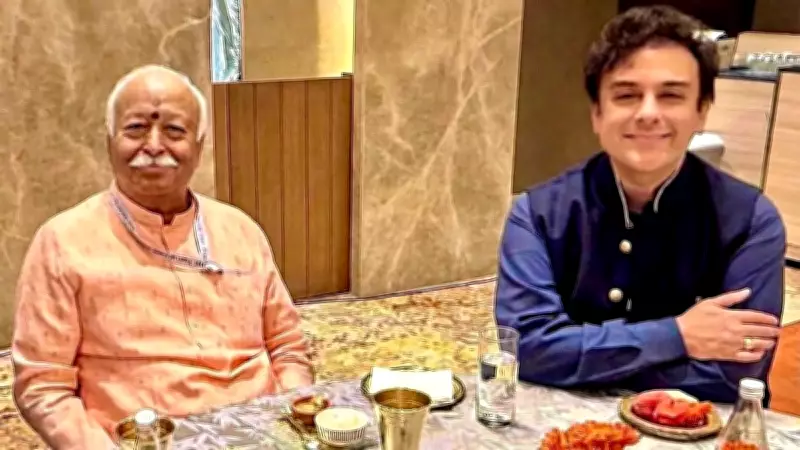
On February 8, 2026, Adnan Sami shared on social media that he had an incredible afternoon with Mohan Bhagwat, the Sarsanghchalak (Chief) of the Rashtriya Swayamsevak Sangh (RSS). Sami described Bhagwat as a legendary figure, an incredible gentleman, and a beautiful soul. He expressed delight in hearing Bhagwat speak, noting that the RSS chief eloquently explained and cleared many myths and misconceptions during their interaction.
The meeting, which included a shared meal, was highlighted by Sami as a positive and enlightening experience. However, it quickly ignited a political firestorm, with opposition parties seizing on the event to criticize the RSS and its affiliated political groups.

Political Reactions and Accusations of Anti-Nationalism
The Maharashtra Congress party responded sharply to the meeting, posting on social media to remind the public of Adnan Sami's father's role as a Pakistani pilot in the 1965 war. In their post, they accused the RSS of being anti-national, using hashtags such as #देशद्रोही_भाजपा (Traitor BJP) and #RSS to amplify their message. This reaction underscores the ongoing tensions in Indian politics, where associations with Pakistan or its military are often viewed through a lens of national security and patriotism.
The controversy highlights how personal histories can become politicized, especially in the context of India-Pakistan relations. Adnan Sami, who is now an Indian citizen and a celebrated artist, finds himself at the intersection of these debates, with his family's past being used to question the motives and integrity of current political engagements.
Broader Implications for National Discourse
This incident raises important questions about reconciliation, dialogue, and the boundaries of political discourse in India. Supporters of the meeting argue that it represents a step towards bridging divides and fostering understanding, as Bhagwat engaged in a cordial discussion with Sami. They emphasize the value of clearing misconceptions and promoting unity, regardless of historical backgrounds.
On the other hand, critics contend that such interactions undermine national security sentiments and normalize ties with individuals linked to adversarial nations. They point to the emotional weight of events like the 1965 war, which remain vivid in public memory, to justify their stance against the meeting.
As the debate continues, it reflects deeper societal conflicts over identity, loyalty, and the role of historical narratives in shaping contemporary politics. The episode serves as a reminder of how quickly personal moments can escalate into national controversies in today's hyper-connected world.






