In a significant political development that underscores the growing efforts to forge opposition unity ahead of crucial elections, former Uttar Pradesh Chief Minister Akhilesh Yadav has declared that only West Bengal Chief Minister Mamata Banerjee, popularly known as 'Didi', can effectively counter the Bharatiya Janata Party's (BJP) political onslaught across India. This statement came following a high-profile meeting between the two leaders at the state secretariat 'Nabanna' in Kolkata, which has sparked widespread discussions about potential alliances and strategies to challenge the ruling party at the national level.
A Strategic Meeting at Nabanna
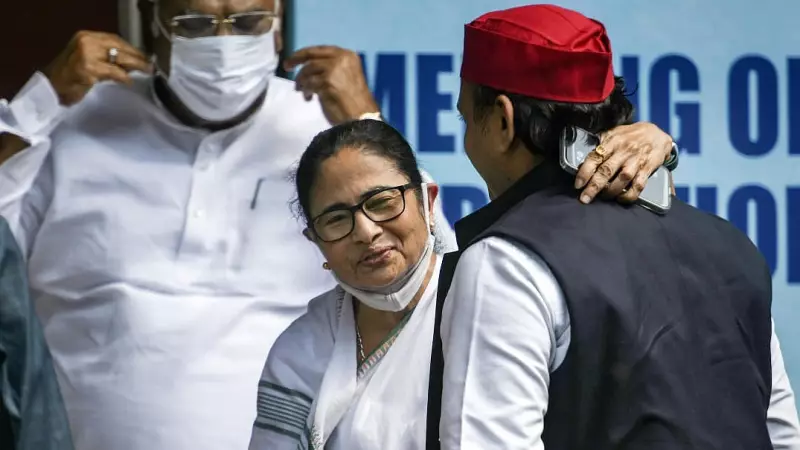
Akhilesh Yadav, accompanied by his wife and Lok Sabha MP Dimple Yadav, held a detailed discussion with Mamata Banerjee at the West Bengal state secretariat. The meeting, which took place on January 27, 2026, was seen as a pivotal moment in opposition politics, as both leaders are key figures in their respective regions and have been vocal critics of the BJP-led central government. The gathering at Nabanna, a symbol of state governance, highlighted the seriousness of their engagement and the potential for collaborative efforts in the upcoming electoral battles.
Akhilesh's Bold Assertion on Mamata's Role
After the meeting, Akhilesh Yadav emphasized Mamata Banerjee's unique position in Indian politics, stating that her leadership and grassroots connect make her the most formidable force to challenge the BJP's dominance. He pointed to her successful governance in West Bengal and her ability to mobilize support across diverse demographics as key factors that could galvanize opposition forces. This endorsement from a prominent leader like Akhilesh, who hails from Uttar Pradesh—a state with immense political significance—adds weight to the narrative of opposition consolidation.

Implications for Opposition Unity and Electoral Strategies
The meeting and Akhilesh's subsequent remarks have ignited speculation about a broader opposition front taking shape to counter the BJP in the 2026 elections and beyond. Political analysts suggest that such alliances could focus on issues like federalism, economic policies, and social justice to appeal to voters disenchanted with the current regime. The involvement of leaders like Akhilesh Yadav and Mamata Banerjee, who command substantial followings in their states, could pave the way for a more cohesive opposition strategy, potentially altering the political landscape in India.
As the political dynamics continue to evolve, this development underscores the ongoing efforts to build a united front against the BJP, with Mamata Banerjee emerging as a central figure in these discussions. The outcome of such meetings could have far-reaching consequences for India's democratic processes and the balance of power in the coming years.