Akhilesh Yadav Accuses Election Commission and BJP of Voter Deletion Conspiracy in Uttar Pradesh
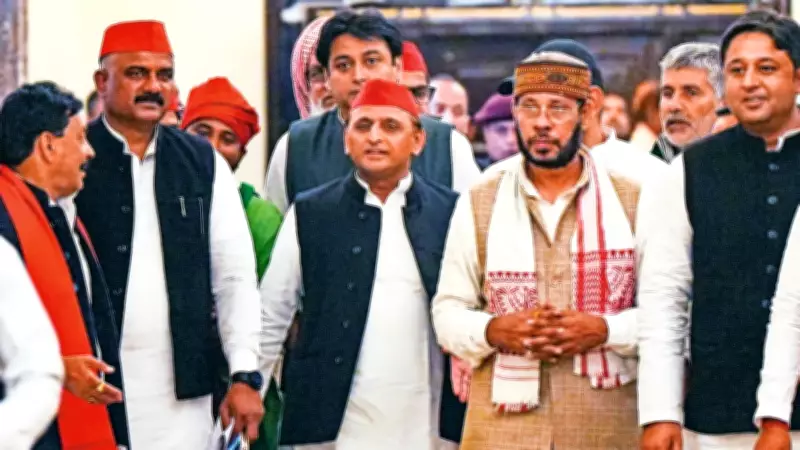
Samajwadi Party president Akhilesh Yadav has made serious allegations against the Election Commission of India and the Bharatiya Janata Party, claiming they are collaborating to systematically delete the names of approximately 1 crore Muslim and PDA (Pichhda, Dalit, and Alpsankhyak) voters from electoral rolls in Uttar Pradesh. The former chief minister announced that his party will pursue legal action in court to address what he describes as a grave threat to democratic rights.
Allegations of Systematic Voter Suppression
During a press conference held in Lucknow, Yadav asserted that the ongoing Special Intensive Revision (SIR) exercise in Uttar Pradesh is being manipulated to target specific voter demographics. "Voting is the most fundamental right in a democracy, and there should be absolutely no tampering with it," declared Yadav. "The Election Commission, in collusion with the BJP, has devised a scheme to eliminate PDA voters from electoral lists using Form-7 submissions across the state."
Form-7 is the official document used to request deletion of names from existing electoral rolls. Yadav claimed that this process is being abused to disenfranchise marginalized communities who traditionally support opposition parties.
Specific Claims and Evidence
The SP leader presented several specific allegations to support his claims:
- An IAS officer stationed in the Chief Minister's Office is allegedly pressuring divisional commissioners and district magistrates to remove PDA voters from electoral lists
- Approximately 1,200 Muslim community votes were deleted from just one polling station in Kannauj, Yadav's Lok Sabha constituency
- The BJP is specifically targeting Assembly constituencies where it suffered defeats in the 2022 elections
- Voter deletions are occurring systematically in polling booths where the BJP has historically performed poorly
Yadav promised to reveal the name of the implicated officer at a later time, adding credibility to his allegations through the promise of specific evidence.
Parallels with West Bengal and Legal Strategy
Drawing parallels with political developments in another state, Yadav referenced West Bengal Chief Minister Mamata Banerjee's similar challenges. "The struggle that Mamata Banerjee ji is confronting in Bengal mirrors our situation here," he stated. "We will follow her example and approach the courts. We are prepared to take every necessary step to protect democratic rights."
The SP president emphasized that this represents a "do-or-die situation" for democratic principles in India, stressing that inclusion in electoral rolls serves as crucial evidence of citizenship for many marginalized communities.
Demands for Investigation and Reform
Yadav outlined specific demands to address the alleged voter suppression:
- Immediate rejection of all Form-7 submissions filed during the current SIR exercise
- Establishment of a judicial inquiry to investigate the authenticity of signatures on already-submitted Form-7 documents
- Enhanced verification procedures to ensure only legitimate deletion requests are processed
Official Responses and Counterclaims
Union Minister and BJP state president Pankaj Chaudhary responded to the allegations by reminding that Yadav had previously expressed satisfaction when reports indicated nearly 2.88 crore names were deleted from draft electoral rolls. "This is not an exercise conducted by the BJP," Chaudhary asserted. "The Election Commission is undertaking this process independently. If Yadav has concerns, he should formally complain to the EC rather than making public allegations."
State Chief Electoral Officer Navdeep Rinwa addressed procedural concerns, stating: "Recent reports suggested instances where Form-7 documents bearing signatures may not have been submitted by the individuals named. Consequently, we have instructed all district election officers and electoral registration officers to verify that every Form-7 submission genuinely comes from the person whose signature it carries."
Broader Implications for Democratic Processes
This controversy emerges during a critical period of electoral roll revision in India's most populous state. The allegations raise significant questions about:
- The integrity of voter registration systems
- Potential targeting of specific demographic groups
- The independence of election administration
- Protection of voting rights for marginalized communities
As political tensions escalate ahead of future elections, this dispute highlights the increasingly contentious nature of electoral processes in India and the importance of transparent, impartial election administration for maintaining public trust in democratic institutions.