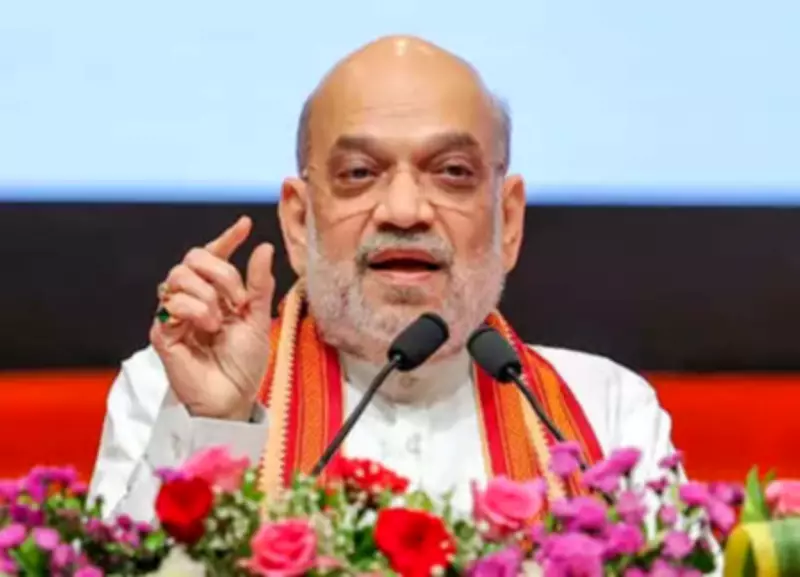
Union Home Minister Amit Shah declared on Monday that India is now Naxal-free, marking the end of a 55-year-long conflict that had plagued the nation with bloodshed, fear, and stalled development. Speaking at a ceremony in Bastar, Shah honored the sacrifices of thousands of security personnel and promised that the region's lost decades would be recovered within three to five years.
A Historic Achievement
Addressing CAPF personnel, victims of Naxal violence, and officers, Shah stated that the country had endured the nightmare of Naxalism from 1971 to March 31, 2026. He noted that three generations in affected areas had suffered killings, developmental darkness, and a bleak future. "I can say with pride that India has become Naxal-free," Shah said. "This was a dream for which several jawans laid down their lives. There would hardly be any security force in the country whose personnel did not sacrifice their lives fighting Naxalism."
Shah revealed that the target to end Naxalism before March 31, 2026, was set on January 21, 2024, despite warnings that it was too ambitious. "We prepared a working plan, implemented it, and with the blessings of Goddess Danteshwari, the day marking the end of Naxalism has arrived," he said. Calling August 24, 2024, a date that would be written "in golden letters" in the history of Naxal elimination, Shah emphasized that security forces achieved in three to four years what many believed could not be completed in one lifetime.

Turning Security into Development
The Home Minister linked the security success with the launch of Shaheed Veer Gundadhur Sewa Dera. He announced that nearly 200 CAPF camps in Chhattisgarh, which had protected tribal communities from Maoist violence, would now shift to a development role. Of these, 70 camps will be converted into welfare centers for tribal communities. "This will send a message to Maoist supporters and so-called intellectuals. Maoism did not spread here because there was no development. Development did not happen here because armed Naxalism was sitting here," Shah asserted.
He expressed confidence that Bastar would emerge as the most developed tribal division in the country. "There should be no doubt about it," he said.
Impact on Tribal Communities
Shah noted that the Modi government had created several schemes for backward and tribal communities, but Bastar's people were denied benefits because Maoists blocked education, roads, and governance. He cited paddy procurement at Rs 3,100 per quintal, 7 kg of rice per person every month, and 15% reservation in jobs for tribals. "But my Bastar did not get the opportunity. If education never reached, how could reservation help?" he questioned.
He lamented that Bastar's food, art, sports, music, and traditions were suppressed for decades. "Naxals destroyed it and ruined thousands of lives," he said, recalling that surrendered Maoists told him they were recruited as children. "One of them said Naxals picked up an entire Class three batch from school and all of them became Maoists."
A New Morning for Bastar
Shah described Bastar as witnessing a "new morning" and moving firmly towards development, but acknowledged the heavy cost. He paid tribute to families of martyrs, victims of Naxal violence, DRG personnel, surrendered Maoists who joined anti-Naxal operations, CoBRA, CAPF, Chhattisgarh Police, Bastar Fighters, NIA, NTRO, intelligence agencies, home ministry officials, social leaders, journalists, and public representatives. "The DRG and CoBRA fought with the greatest courage. This success came through a joint campaign of all," he said.
He added that Prime Minister Narendra Modi had strengthened both external and internal security, noting that India had largely moved beyond three major internal challenges—Jammu and Kashmir, the Northeast, and Naxalism—and was now on the path of development.
Emotional Tribute and Assurance
Shah spoke emotionally about his visit to the Sewa camp at Netanar. "I am a political person of sentiment. I have addressed rallies of lakhs, but the satisfaction I got among 400 tribals in Netanar was different," he said. "When I heard a little girl say, 'Ab hum bach gaye' (Now we are saved), it gave me a satisfaction that is difficult to express."

He assured families of surrendered Maoists that they would soon return as skilled and educated members of society. A detailed plan has been prepared for nearly 3,000 rehabilitated Maoists, with Rs 20 crore provided in the initial phase to help them live with dignity and reintegrate with their families. Shah urged Bastar society to accept surrendered Maoists with dignity and leave bitterness behind.
Vision for Developed India
Shah said Modi had set the target of a fully developed India by 2047, but that goal would remain incomplete without Bastar. "Without developed Bastar, the dream of developed Bharat is incomplete," he said. Now that Naxalism has ended, it is the government's responsibility to compensate for the damage of the last 50 years and bring Bastar on par with the rest of the country within three to four years. "The home ministry will ensure roads, rural development, banks, post offices, gas cylinders, tap water in every home, free foodgrains, electricity, and every other facility," Shah promised.
Tribute to Security Forces
Paying tribute to security forces, Shah recalled major operations such as Black Forest, Prahar, and Octopus, which cleared Maoist strongholds from Chhattisgarh to Jharkhand, Bihar, and Telangana. "How can I forget Operation Black Forest?" Shah said, recalling jawans climbing mined hills in 45-degree heat without worrying about supplies. "Had that operation not happened, had those hills not been cleared, a Naxal-free Bastar would not have been possible." He noted that many personnel suffered dehydration, lost limbs, and endured immense hardship during these operations.
Shah also recalled major Maoist attacks including Tadmetla (76 personnel killed), Ranibodli (55 killed), Manpur (29 killed), Burkapal (25 killed), and Telam (22 killed). He referred to villages being burnt and tribal families massacred, including an incident where 33 people, among them an eight-year-old child, were killed. "Now no innocent tribal will be killed, no school will be shut, electricity will not be cut, no levy will be demanded from fields, and the full price of tendu leaves and paddy will go directly into tribal bank accounts," Shah said.
Calling it a "big day for Bastar," Shah promised that within five years, Bastar would become the most developed tribal region in the country.