

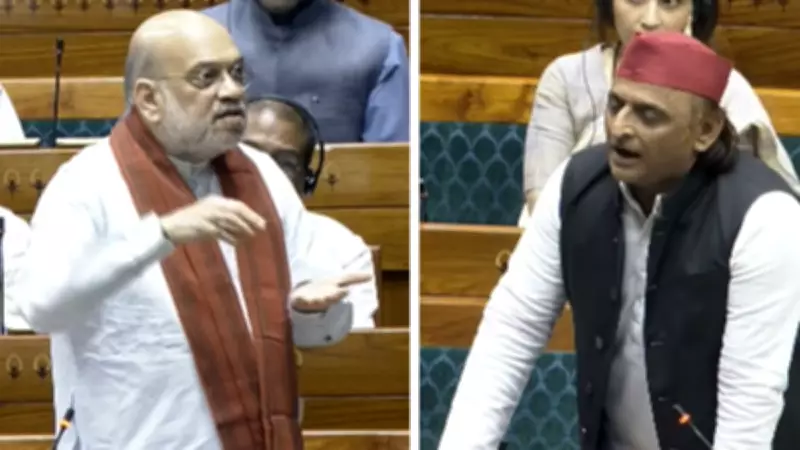
Amit Shah Firmly Opposes Religion-Based Reservation in Parliament
In a heated session of the Lok Sabha, Union Home Minister Amit Shah made a strong declaration, asserting that religion-based reservation is unconstitutional. This statement came during a parliamentary debate focused on the upcoming delimitation process scheduled for 2026, sparking a significant clash with opposition leaders, particularly Akhilesh Yadav of the Samajwadi Party.
Parliamentary Debate Intensifies Over Delimitation and Reservation
The debate centered on the delimitation exercise, which is set to redraw electoral boundaries based on population data from the 2021 Census. Amit Shah emphasized that the Constitution of India does not permit reservations based on religious grounds, arguing that such measures would undermine the secular fabric of the nation. He reiterated the government's commitment to upholding constitutional principles while addressing issues of social justice and representation.
Akhilesh Yadav countered Shah's stance, advocating for inclusive policies that consider the socio-economic status of all communities, including religious minorities. Yadav argued that delimitation should not overlook the needs of marginalized groups, suggesting that a broader approach to reservation might be necessary to ensure fair political representation. This exchange highlighted the deep ideological divides between the ruling Bharatiya Janata Party (BJP) and opposition parties on matters of reservation and electoral reforms.

Constitutional and Political Implications of the Clash
The confrontation between Amit Shah and Akhilesh Yadav underscores the ongoing national discourse on reservation policies in India. Shah's firm position aligns with the BJP's broader agenda of promoting a uniform civil code and resisting what it views as appeasement politics. In contrast, Yadav's arguments reflect concerns about protecting the interests of minority communities in the face of demographic changes and political redistricting.
The delimitation process for 2026 is expected to have far-reaching consequences, potentially altering the number of parliamentary seats across states based on population shifts. This debate in the Lok Sabha sets the stage for future legislative battles, as parties prepare to navigate the complex interplay of law, politics, and social equity. The government has assured that the process will be conducted transparently and in accordance with constitutional mandates, but opposition voices remain vigilant about potential biases.
As the discussion continues, it remains to be seen how these conflicting viewpoints will shape India's reservation framework and electoral landscape in the coming years. The outcome could influence not only the 2026 delimitation but also broader policies on affirmative action and minority rights in the country.






