

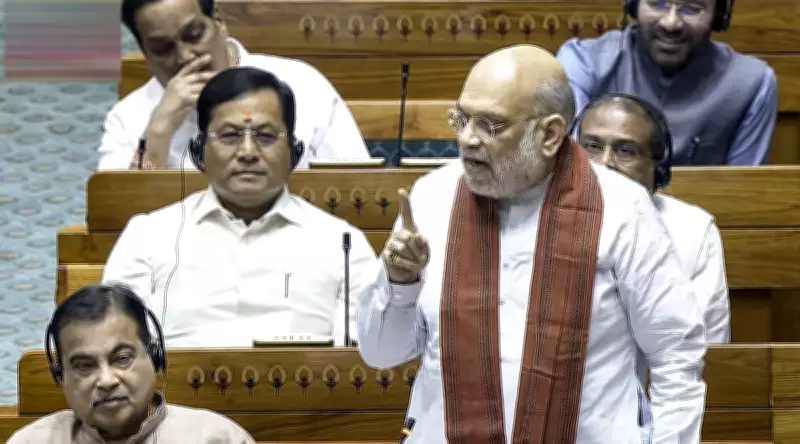
Amit Shah Launches Scathing Attack on INDIA Alliance Over Women's Reservation Bill
Union Home Minister Amit Shah delivered a fiery speech in the Lok Sabha on Wednesday, accusing the opposition INDIA alliance of actively opposing the Women's Reservation Bill. The bill, which aims to reserve one-third of seats in the Lok Sabha and state legislative assemblies for women, has been a contentious issue in Indian politics for decades.
Heated Debate Erupts in Parliament
During the parliamentary session, Shah tore into the opposition, claiming that their actions and statements reveal a deep-seated resistance to empowering women in political spheres. "The INDIA alliance talks about equality but their deeds show they are against giving women their rightful place in democracy," Shah asserted, his voice resonating across the hall.
He elaborated that while the ruling Bharatiya Janata Party (BJP) has consistently championed the cause, the opposition bloc has created hurdles and delayed the bill's passage through various parliamentary maneuvers. This is not just about legislation; it is about the future of half our population, Shah emphasized, urging members to prioritize national interest over political gains.

Historical Context and Political Implications
The Women's Reservation Bill was first introduced in 1996 and has faced numerous setbacks over the years due to lack of consensus among political parties. Proponents argue it is essential for achieving gender parity in governance, while critics cite concerns over implementation and representation.
Shah highlighted that the BJP-led government has made significant strides in promoting women's participation, pointing to initiatives at the grassroots level. However, he stressed that without constitutional backing through this bill, systemic change remains elusive. "We cannot claim to be a progressive nation if women are sidelined in decision-making bodies," he declared.
Opposition's Response and Broader Reactions
Members of the INDIA alliance, including the Indian National Congress and other regional parties, swiftly rebutted Shah's allegations. They argued that the delay is due to procedural issues and the need for broader consultations, not opposition to women's rights. "We support the bill in principle but demand a fair and inclusive process," one opposition leader stated.
Political analysts note that this debate underscores the ongoing struggle for gender equality in India, where women hold only about 14% of seats in the Lok Sabha despite comprising nearly half the electorate. The issue has sparked widespread discussion on social media and among civil society groups, with many calling for bipartisan cooperation to pass the bill.
As the session concluded, Shah's remarks left a lasting impact, setting the stage for further deliberations. The government has indicated it will push for the bill's passage in the coming months, but with the opposition firm on its stance, the path forward remains uncertain. This confrontation highlights the deep political divides that continue to shape India's legislative landscape.






