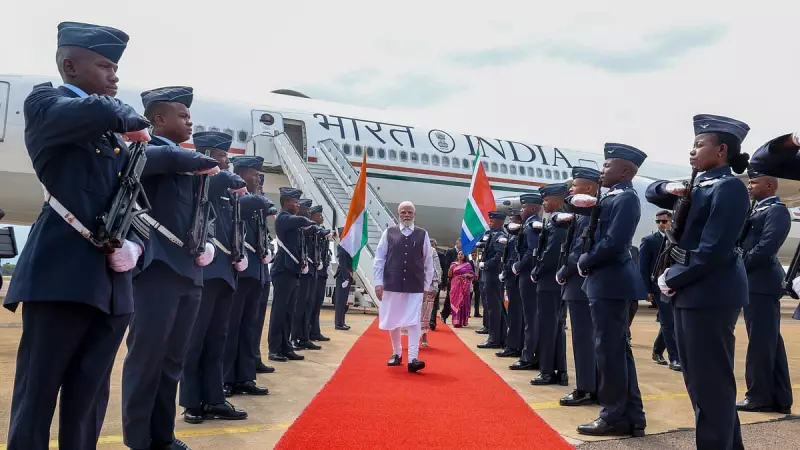
The international perception of Prime Minister Narendra Modi, long projected as a decisive and independent global statesman, is showing signs of significant erosion. According to a recent analysis, the carefully cultivated persona of a principled and autonomous world leader has encountered substantial damage.
The Core of the Erosion
For years, the narrative surrounding Narendra Modi on the world stage emphasized his strong, principle-driven approach and his ability to steer India on a self-reliant path in foreign affairs. This image was a cornerstone of his government's diplomatic outreach. However, recent developments and policy decisions have reportedly fractured this very facade. Analysts point to a growing dissonance between the projected autonomy and the realities of geopolitical alignments and domestic challenges that have spilled onto the international scene.
The critique, highlighted by commentator Bharat Bhushan and last updated on 09 January 2026, suggests that the foundation of this global leadership brand is now cracked. The specifics of this shift are linked to how India's foreign policy maneuvers and internal political dynamics are being interpreted by international observers and partners.

Factors Behind the Changing Narrative
Several intertwined factors are contributing to this reassessment of Modi's global stature. While the original opinion piece does not list them exhaustively, the implication is that a series of events have cumulatively impacted his standing. This could involve perceptions related to:
- Strategic Autonomy: Questions over the consistency of India's non-aligned or multi-aligned posture in the face of intense global polarisation.
- Domestic Policies: International scrutiny of internal social and political issues influencing the country's soft power and leader's image.
- Economic Diplomacy: The global economic climate and India's trade negotiations affecting its perceived strength and independence.
The central argument remains that the gap between assertion and perceived action has widened, leading to a critical juncture for India's global reputation under its current leadership.
Implications and the Road Ahead
The dent in Prime Minister Modi's international image is not merely a personal branding issue; it carries weight for India's diplomatic leverage and its ability to shape global agendas. A world leader's credibility is a key currency in international relations, affecting everything from trade deals to security partnerships.
As noted in the analysis from early 2026, this development marks a pivotal moment. It suggests that the coming months may require a concerted effort to address the underlying causes of this perceptual shift. Whether through recalibrated foreign policy communication, substantive diplomatic outcomes, or managing domestic narratives with global resonance, the challenge to restore the sheen of autonomous, principled leadership is now pronounced.
The evolving situation underscores a volatile global environment where a leader's image is constantly tested. For Narendra Modi, who has invested significantly in building a personal brand synonymous with strong and independent leadership, this represents one of the more formidable tests of his tenure on the world stage.