Army Chief Highlights Stable But Vigilant Northern Border Situation
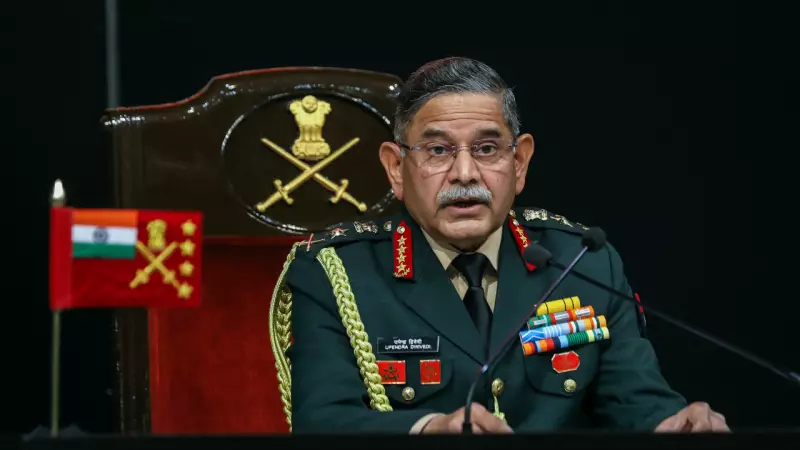
Army Chief General Upendra Dwivedi addressed the current security scenario on Tuesday. He stated that the situation along India's Northern front with China remains stable. However, he emphasized the need for constant vigilance in this sensitive region.
Multi-Level Engagement Aiding Normalization
General Dwivedi explained that apex-level interactions are contributing to gradual normalization. These include military, diplomatic and ministerial engagements. Renewed contact and confidence-building measures are playing a crucial role.
These developments have enabled various activities along the northern borders. Grazing and hydrotherapy camps are now operational in these areas. The Army Chief provided these details during his comprehensive briefing.

Robust Deployment and Infrastructure Development
The General outlined India's strategic orientation on this front. He confirmed that deployment along the Line of Actual Control remains balanced and robust. Capability development continues through a whole-of-government approach.
Infrastructure enhancement projects are progressing steadily. This comprehensive strategy ensures India maintains a strong defensive posture. The military remains prepared for any contingency along the disputed border.
Northwestern Front and Jammu & Kashmir Assessment
General Dwivedi also addressed the northwestern front situation. He noted that conditions in Jammu & Kashmir remain sensitive since May 10 last year. However, he assured that the situation remains firmly under control.
The Army maintains a strong presence in the region. Security forces continue their operations against militant elements. The General expressed confidence in current security arrangements.
Firm Stance on Shaksgam Valley Agreement
The Army Chief reiterated India's long-standing position on the Shaksgam Valley. He declared the 1963 agreement between Pakistan and China as illegal. India has never recognized this territorial arrangement.
Under this agreement, Pakistan ceded territory to China. General Dwivedi emphasized that New Delhi does not accept this so-called pact. He underlined India's consistent stance on the matter during his remarks.
Northeast Security and Manipur Situation
General Dwivedi discussed security arrangements for India's Northeast region. A comprehensive security grid is operational in this area. It comprises Assam Rifles, Army units and home ministry forces.
This coordinated effort aims to insulate the region from spillover effects. These effects originate from events unfolding in neighboring Myanmar. The security apparatus remains alert to cross-border developments.
Regarding Manipur specifically, the General noted marked improvement. Proactive government initiatives have yielded positive results. Several indicators demonstrate this progress.
The peaceful conduct of the Durand Cup represents one key achievement. Cultural festivals have resumed across the state. Renewal of suspension of operations with Kuki insurgent groups occurred in September 2025.
These developments serve as important markers of stability. The situation continues to show positive momentum according to military assessments.
Humanitarian and Disaster Relief Operations
The Army Chief highlighted extensive humanitarian efforts by Indian forces. The Army has operated across two neighboring countries in recent times. Their operations spanned ten Indian states for disaster relief.
Humanitarian Assistance and Disaster Relief missions have rescued over 30,000 people. These operations demonstrate the Army's commitment to civilian protection. The military stands ready to assist during natural calamities and emergencies.
General Dwivedi's comprehensive briefing covered multiple security dimensions. His assessment provides insight into current border situations and India's strategic posture.