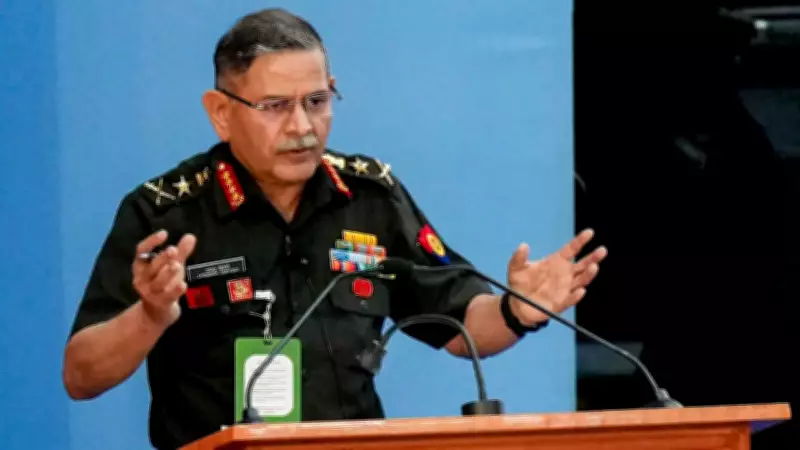
Army Chief Explains Deliberate Timing of Operation Sindoor to Respect Religious Prayers
In a revealing disclosure about last year's military action, Army Chief General Upendra Dwivedi has stated that the Indian Army intentionally delayed a planned strike during Operation Sindoor to avoid disrupting 'namaz' prayers at a terrorist camp. The senior military commander provided this insight during a recent podcast interview, shedding light on the operational considerations behind the timing of the significant counter-terrorism mission.
Strategic Timing Based on Religious Sensitivity
General Dwivedi explained that while the operation involved flexible timing options, commanders specifically considered prayer schedules when planning the strike. "When we were to destroy these targets, the timing could have been 2 o'clock, 4 o'clock, anytime," the Army Chief revealed. "But we made sure that when the people on the other side were going through their 'namaz' prayer in the terrorist camp, we said this time will not touch."
The military leader emphasized the principle behind this decision, stating "sabka malik ek hai" (everyone's master is one) as the guiding philosophy. This approach reflects the Indian Army's commitment to maintaining ethical standards even during combat operations against terrorist elements.

Operational Planning with Humanitarian Considerations
The revelation provides unprecedented insight into how the Indian military balances operational effectiveness with humanitarian considerations:
- The strike timing was carefully selected to avoid prayer periods
- Commanders demonstrated tactical patience to respect religious practices
- The decision reflects adherence to international norms of armed conflict
- Operation Sindoor maintained military objectives while showing cultural sensitivity
General Dwivedi further clarified that "that's why we chose a time when we knew that it was not" during prayer hours, indicating meticulous intelligence gathering about terrorist camp routines. This approach ensured the operation could proceed effectively while maintaining respect for religious practices, even when targeting hostile elements.
Broader Implications for Military Operations
This disclosure about Operation Sindoor's timing strategy highlights several important aspects of modern Indian military doctrine:
- The Indian Army's commitment to ethical warfare practices
- Consideration of cultural and religious factors in operational planning
- Strategic patience in executing time-sensitive missions
- Maintaining moral high ground in counter-terrorism operations
The Army Chief's comments underscore how military operations in complex environments require balancing multiple considerations beyond pure tactical advantage. By delaying the strike to avoid prayer times, the Indian Army demonstrated both operational discipline and respect for religious practices, setting a significant precedent for future counter-terrorism operations.