

Indian Army Charts Ambitious Path for Drone Warfare Capabilities
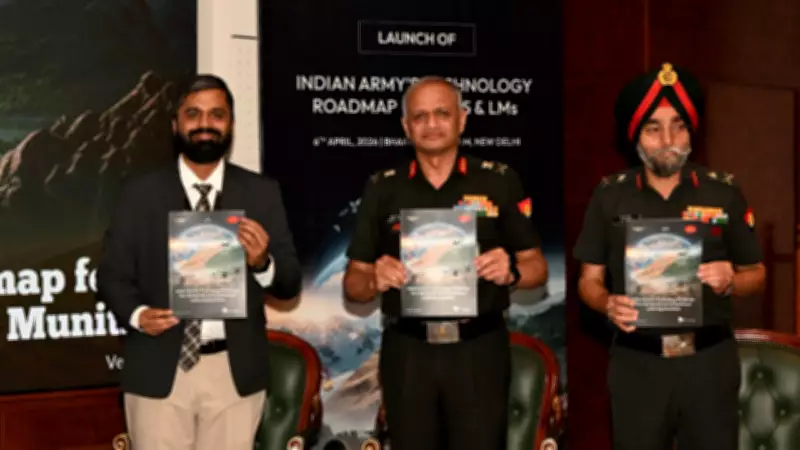
In a significant move to modernize its combat strategies, the Indian Army has officially unveiled a detailed technology roadmap focused on Unmanned Aerial Systems (UAS) and Loitering Munitions (LM). This strategic document, titled "Indian Army’s Technology Roadmap for Unmanned Aerial Systems and Loitering Munitions," was released by Lt Gen Rahul R Singh, Deputy Chief of the Army Staff for Capability Development and Sustenance.
Responding to Evolving Battlefield Dynamics
The release comes at a critical juncture, as ongoing global conflicts have starkly demonstrated how drones are fundamentally reshaping modern warfare. Recognizing this technological shift, the army aims to enhance long-term visibility into its requirements for unmanned systems, which are increasingly pivotal on contemporary battlefields.
The primary objective of this vision document is to synchronize efforts across various stakeholders, including industry leaders, research and development bodies, and academic institutions. By aligning these groups, the army seeks to channel and amplify domestic capabilities in drone technology, ensuring that investments and technological endeavors are directed toward priority areas identified by end-users.

Expanding Roles for Unmanned Systems
The roadmap outlines a broad spectrum of combat and support roles for indigenous drones, reflecting a comprehensive approach to integration. In combat scenarios, the army is focusing on systems capable of:
- Destroying hostile drones and loitering munitions
- Operating as helicopter-launched littoral systems for coastal strike support
- Delivering precision bombs and laying mines remotely
For support functions, the requirements include drones designed for:
- Reconnaissance and intelligence, surveillance, and reconnaissance (ISR) missions
- Land survey and mapping to assess terrain and routes
- Electromagnetic jamming to deny spectrum and provide electronic warfare support
- Radio relay to extend communications between distant points
- Long-range logistics for hauling stores and resupply operations
Mission Across Diverse Terrains
The mission statement emphasizes driving technological development to meet the army's operational needs across varied environments. This includes the extreme high altitudes of the icy Himalayas, the tropical rainforests of the Andaman and Nicobar Islands, and every type of terrain in between. Such diversity underscores the necessity for versatile and robust drone systems that can perform reliably under challenging conditions.
Boosting the Domestic Defence Ecosystem
A key focus of the roadmap is to strengthen the broader defence ecosystem, with particular emphasis on the drone sector. The army is actively encouraging increased participation from Micro, Small, and Medium Enterprises (MSMEs) and startups within the evolving indigenous defence manufacturing landscape. This initiative aims to foster innovation, reduce dependency on foreign technology, and build a self-reliant defence industrial base.
By releasing this comprehensive roadmap, the Indian Army not only sets a clear direction for future technological advancements but also signals its commitment to leveraging cutting-edge unmanned systems to maintain strategic superiority in an era where drone warfare is becoming increasingly central to military operations.






