

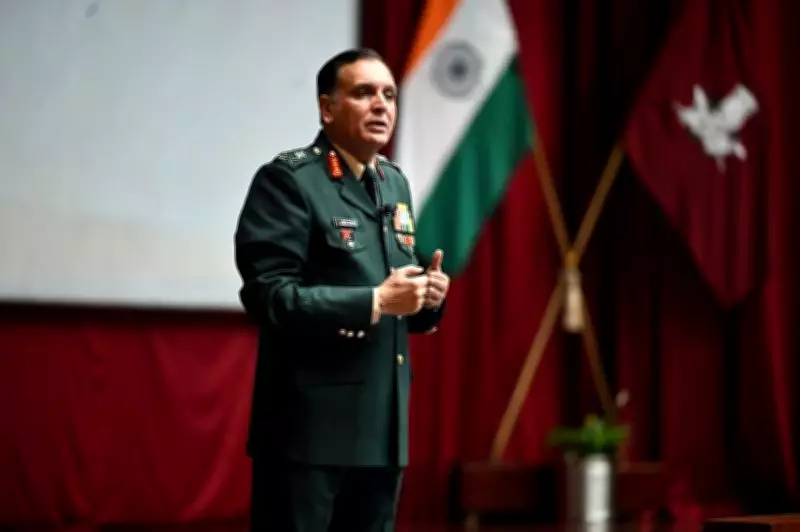
Indian Army Announces Major Reshuffle of Top Leadership
The Indian Army has undertaken a significant reshuffle of its senior leadership, appointing new commanders to critical positions along the volatile borders with Pakistan and China. This strategic realignment is designed to bolster operational effectiveness and address the complex security dynamics in the region.
New Commanders Take Charge in Key Sectors
In a move that underscores the Army's focus on enhancing its defensive and offensive capabilities, several high-ranking officers have been reassigned to command roles in sensitive areas. The reshuffle includes appointments to the Northern Command, which oversees the Line of Control (LoC) with Pakistan, and the Eastern Command, responsible for the Line of Actual Control (LAC) with China.
Key appointments include:

- Lieutenant General Upendra Dwivedi has been appointed as the new Vice Chief of the Army Staff, a role that will see him play a pivotal part in strategic planning and operations.
- Lieutenant General M.V. Suchindra Kumar takes over as the General Officer Commanding-in-Chief of the Northern Command, where he will manage operations along the Pakistan border.
- Lieutenant General R.C. Tiwari assumes command of the Eastern Command, focusing on the China frontier.
Strategic Implications for Border Security
This reshuffle comes at a time when India faces persistent security challenges from both Pakistan and China. The appointments are seen as a proactive measure to ensure that experienced and battle-hardened officers are at the helm to navigate the intricacies of border management and potential conflicts.
The move is expected to bring fresh perspectives and tactical innovations to the forefront, enhancing the Army's ability to respond swiftly to any provocations or escalations.
Analysts suggest that the reshuffle reflects the Army's commitment to maintaining a high state of readiness and adapting to the evolving geopolitical landscape. With tensions occasionally flaring along both borders, having seasoned commanders in place is crucial for deterrence and defense.
Focus on Operational Readiness and Modernization
Beyond the immediate border concerns, the reshuffle is also aligned with the Indian Army's broader goals of modernization and operational efficiency. The new commanders are tasked with integrating advanced technologies, improving logistics, and fostering joint operations with other branches of the armed forces.
This leadership change is part of a continuous process to ensure that the Army remains agile and prepared for any contingency, whether it be conventional warfare or asymmetric threats.
The Indian Army's top brass has emphasized that such reshuffles are routine and essential for maintaining a dynamic and responsive command structure. However, given the current security environment, this particular round of appointments carries added significance.
As the new commanders settle into their roles, all eyes will be on how they manage the delicate balance of diplomacy and defense along India's northern and eastern frontiers.






