

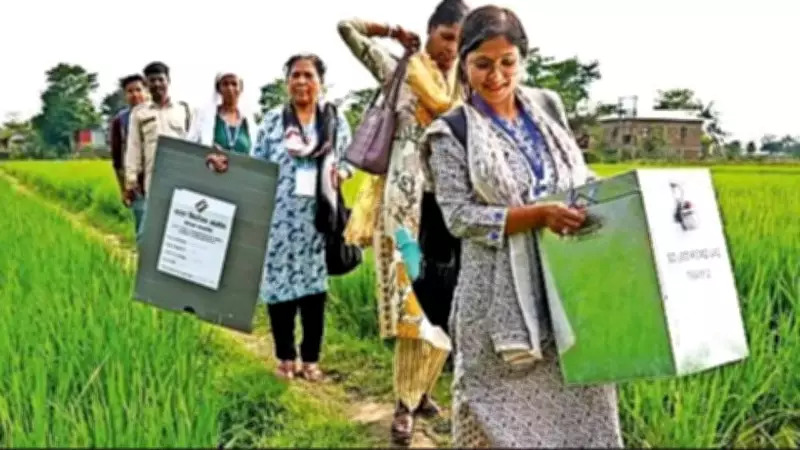
Assam Assembly Polls Spark Nationwide Labor Crisis
The upcoming Assam assembly elections on April 9 have triggered a significant cross-country labor vacuum, disrupting essential services and economic activities in multiple Indian states. Thousands of migrant workers from Assam are returning to their home state to cast their votes, creating workforce shortages in Karnataka's Kodagu district, Uttar Pradesh's Lucknow, and throughout Kerala.
Kerala Faces Sharp Workforce Reduction
Kerala is experiencing one of the most severe impacts from this migration. Migrant workers from Assam and Bengal constitute nearly 60% of the state's labor force, and a substantial portion has already departed. This exodus has left noticeable gaps across construction sites, plywood manufacturing units, and various other labor-intensive industries.
The town of Perumbavoor, recognized as a major hub for migrant workers, has visibly thinned out as workers continue their journey homeward. Kerala's planning board estimates the state's migrant population at approximately 40 lakh (4 million), making this departure particularly consequential for local economies.

Citizenship Concerns Drive Exodus
Beyond the simple act of voting, anxiety surrounding electoral roll procedures is contributing to the mass return. The Summary Revision of electoral rolls has generated fears among migrant communities about potential name deletions and alleged risks to their citizenship status.
"They are returning for assembly elections because they fear losing citizenship if they fail to vote," explained Benoy Peter from the Centre for Migration and Inclusive Development. This concern adds a significant dimension to what might otherwise be a temporary electoral migration.
Kodagu Plantations Struggle with Labor Shortage
In Karnataka's Kodagu district, approximately 20,000 plantation laborers from Assam have departed, creating critical shortages during a crucial agricultural period. Coffee, pepper, and cardamom estates are now struggling to maintain essential operations including weeding, bush clearing, fertilizer application, and general upkeep.
"Daily operations have taken a hit," reported Karun Kalaiah, a grower from Chettalli. Nanda Belliappa, president of the Coorg Planters' Association, confirmed that growers are now paying higher wages to retain available workers during this peak season for plantation work. He warned that continued delays could negatively affect agricultural output.
Construction and Retail Sectors Affected
The construction industry has slowed considerably, with contractors either halting projects or extending timelines for residential, commercial, and roadside developments. Retail activity has also been impacted by the reduced workforce, though specific data on the extent of this effect remains limited.
Lucknow's Sanitation Services Disrupted
In Uttar Pradesh's capital city Lucknow, more than 200 sanitation workers employed by private agencies have left for Assam, disrupting door-to-door garbage collection across several localities. This affects approximately 70,000 households that rely on these services.
A shortage of nearly one-third of sanitation staff has led to irregular waste lifting, road sweeping, and drain cleaning. Garbage has begun accumulating in various parts of the city, with disruptions expected to continue until at least April 15.
Officials confirmed that sanitation services in Lucknow are managed by Lucknow Swachchta Abhiyan and Lions Enviro across 110 municipal wards. Currently, over 150 workers from LSA's workforce of around 600 are absent, along with nearly 70 workers from Lions Enviro. A representative from Lions Enviro stated that workers from nearby districts including Barabanki have been deployed to fill some of the gaps, but service disruptions persist.
The nationwide labor shortage demonstrates how regional political events can create ripple effects across India's interconnected labor markets, affecting everything from agricultural production to urban sanitation services.






