

Assam's Chinese-Origin Families Cast Ballots Quietly, Haunted by Legacy of 1962 War Trauma
In Makum, a small township located in Assam's Tinsukia district approximately 500 kilometers east of Guwahati, election season arrives with the customary political noise and fervor. However, for the twenty Assamese-Chinese families still identified as the town's "original Chinese families," the atmosphere is distinctly different. Their ballots are cast quietly, their specific concerns folded into the broader issues of the township, with their unique identity rarely discussed in public forums anymore.
Ancestral Roots in Tea and a Painful History
These families trace their ancestry to Chinese workers brought by the British colonial administration to labor in Assam's burgeoning tea industry. Their story in the region spans generations, but so does their collective trauma. During the 1962 Indo-China war, Indian Chinese communities across the nation were targeted due to their ethnicity. In Makum, that painful memory has not vanished; it has simply turned inward, shaping a community's approach to public life.
Today, members of the Assamese-Chinese community explicitly state they do not seek separate political recognition during elections. They participate in the democratic process but refrain from raising demands specifically tied to their Chinese origin.

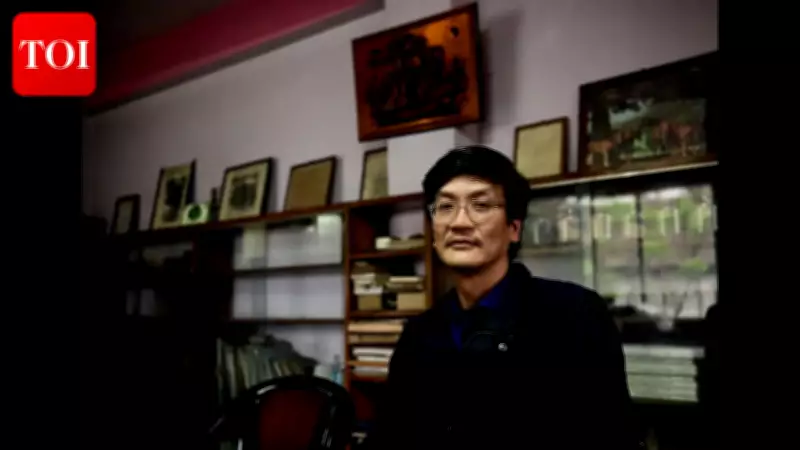
Wei Laim Lee, a manager of Chinese origin at C M Ho & Co. in Makum—a manufacturer of tea-sorting machines—explains, "Like other Assamese people, our community members also vote. We have no separate political issues for Chinese-origin people. Our people simply go and vote, aligning with the same set of local agendas as voters from other communities residing in Makum."
From Assertion to Assimilation: A Community's Shift
This sentiment reflects a significant historical shift. Makum was once known for efforts by its Assamese-Chinese residents to organize and assert a distinct cultural and political identity. However, the passage of time, gradual assimilation into Assamese society, and an inherited sense of caution have transformed that stance.
The older generation that lived through the colonial era and the traumatic Sino-Indian conflict has largely passed away. Their descendants, shaped by those memories but unwilling to relive them publicly, have consciously chosen a different path: to live as ordinary Assamese citizens and to vote accordingly.
Lee further elaborated, "Our people go to vote alongside other community members, focusing on local civic issues and development. We do not approach the ballot box from a specifically Chinese-origin political viewpoint."
Cultural Blending and Lingering Shadows
In homes and businesses today, Assamese is commonly spoken, with Hindi used in workplaces and local markets. Many younger members of the community no longer speak Chinese. Over decades, inter-community marriages and gradual blending into the broader Assamese social fabric have softened visible markers of difference.
Yet, the shadow of historical suspicion has not completely lifted. This shadow originates from one of the darkest chapters in the community's history. During the 1962 war, over 1,500 Chinese-Assamese individuals were labeled "Chinese spies" and "enemies," rounded up under the Defence of India Act. Many were taken from Makum and sent to detention camps in Deoli, Rajasthan, and Nagaon, Assam.
For numerous families, this rupture was permanent. A significant number later left India for Hong Kong and other global destinations. Those who returned to Assam rebuilt their lives with quiet determination.
A Thinning Visibility and Enduring Caution
About fifteen years ago, an estimated 500 Chinese-Assamese individuals were scattered across Tinsukia, Dibrugarh, Sivasagar, and Sonitpur districts in upper and northern Assam. Their public visibility has since diminished, even if their lineage continues. In Makum, what remains is a community that has learned survival through discretion.
This ingrained caution remains palpable in nearby Tinsukia town as well. There, people of Chinese origin are similarly reluctant to speak with media about identity or politics. The fear of being scrutinized, questioned, or misunderstood has endured across generations.

Tian Ann Wang, a young man of Chinese origin who runs a restaurant in Tinsukia with his father, declined to discuss his family's electoral expectations. "Nowadays, we do not wish to speak about our origin or anything political. A few years ago, people from intelligence agencies visited and asked many questions after Chinese embassy officials came to see us," Tian revealed.
His family operates their restaurant in Chirwapatty, an area once known as Chinapatty, where several Chinese-origin families still reside. The old name lingers as a faint trace of a more vibrant past. However, the political aspirations once linked to a distinct community identity have largely faded. What endures are everyday concerns: business livelihoods, civic amenities, social stability, and a quiet sense of belonging.





