

Activists engaged in a prolonged legal battle to safeguard the natural course of the Beas River in Punjab are finding renewed optimism amid escalating tensions between the ruling Aam Aadmi Party (AAP) and Dera Radha Soami Beas chief Gurinder Singh Dhillon. This development follows Dhillon's controversial visit to jailed Shiromani Akali Dal leader Bikram Singh Majithia, where he dismissed drug smuggling allegations against Majithia, directly contradicting the AAP government's stance.
Political Friction Sparks Hope for Environmental Action
Punjab Chief Minister Bhagwant Mann publicly criticized Dhillon in a Facebook post, stating, "Whether they become a judge today or tomorrow, God alone can protect justice in the courts when a visitor himself turns into the judge." This remark, along with comments from Mann's associate Baltej Pannu, who urged the Dera chief to avoid acting as a judge, has highlighted the growing rift. Activists, who have long sought government intervention to address unnatural changes in the Beas River's course near the Dera's boundary, now anticipate that this political discord may prompt action on their pending representations.
Two-Decade Campaign to Protect the Beas River
For over twenty years, Baldev Singh Sirsa, president of the Punjab Lok Bhalai Insaf Welfare Society, has spearheaded a campaign to preserve the Beas River's natural flow adjacent to the Dera premises. A petition on this matter is scheduled for a hearing before the Punjab and Haryana High Court on Friday. In June 2024, the court directed the Punjab government to address concerns regarding an embankment constructed by Radha Soami Satsang Beas, which petitioners argue has caused severe erosion of agricultural land in Kapurthala district.

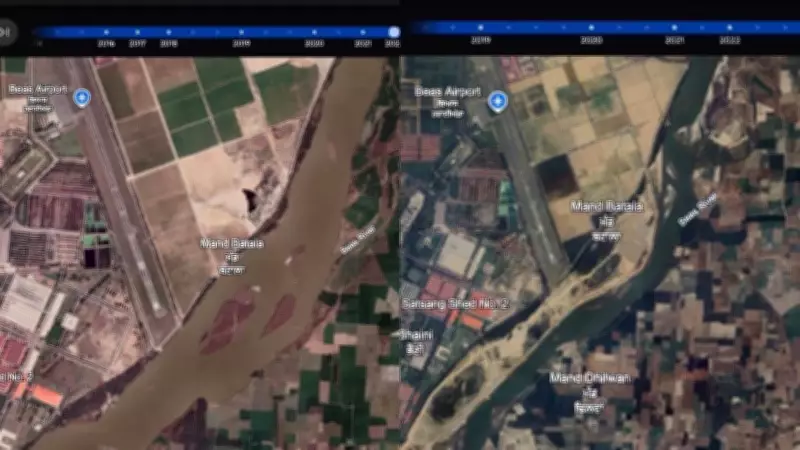
The court referenced Google Maps imagery from 1985 to 2022, illustrating how the embankment diverted river flow to the left bank, leading to rapid erosion on the right side in Dhilwan. It also noted a potential conflict of interest, pointing to an airport within the Dera premises that appears to benefit from the construction, with runway extensions into the floodplain. Photographs of heavy machinery were cited as evidence of ongoing works, and the court invoked reports from 2005 and 2024 warning of land loss and illegal operations.
Contradictory Reports and Legal Proceedings
Despite court orders, Sirsa filed a contempt plea against authorities for alleged violations. In response, the Department of Soil and Water Conservation submitted that the petition did not relate to their department. Officials from various departments visited the site and reported in December 2024 that some silted-up areas were found along the Dera boundary, with old bags placed temporarily, but no fresh mining or permanent structures were observed.
However, activists contest this official report, citing Google Map images from 2023 to 2025 that clearly show a large, well-organized land formation emerging and the river moving away from the Dera's boundary. Sirsa emphasized, "Google Maps don't lie. There is no natural change in course. As the AAP has seen through the Dera's agenda and its open support to SAD(B) leader Bikram Singh Majithia, we hope the government will also look at the river and save it from the apathy of officials."
Broader Implications and Future Outlook
The ongoing legal and political dynamics underscore the complex interplay between environmental protection, religious institutions, and governance in Punjab. With the next court hearing imminent, activists remain vigilant, hoping that the AAP government's current stance against the Dera chief will translate into concrete measures to restore and protect the Beas River's natural course. This case highlights the critical need for transparent and accountable environmental management to prevent further ecological damage and safeguard agricultural livelihoods in the region.






