

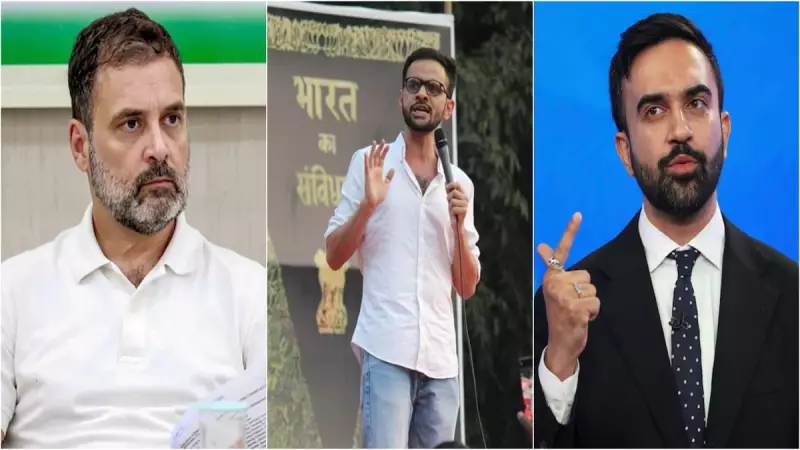
The Bharatiya Janata Party (BJP) has launched a sharp political attack on Congress leader Rahul Gandhi, alleging connections with US-based lobbying efforts. This accusation follows a controversial statement by Ugandan academic Mahmood Mamdani in support of jailed activist Umar Khalid. The BJP has also strongly criticized New York City Mayor Eric Adams for what it calls "interference" in India's judicial and internal affairs.
BJP's Allegations and the US Lobby Connection
The political firestorm erupted after Mahmood Mamdani, a professor at Columbia University, publicly backed Umar Khalid, who is currently in judicial custody facing charges under the Unlawful Activities (Prevention) Act (UAPA). Mamdani's comments were made during an event in New York. In a swift and aggressive response, the BJP connected this international support to Rahul Gandhi and the Congress party.
BJP national spokesperson Shehzad Poonawalla presented the party's stance, alleging a coordinated effort. He claimed that the support for Khalid from a US-based academic was not an isolated incident but part of a larger pattern involving foreign actors. The core of the BJP's allegation is that Rahul Gandhi and the Congress have links to lobbying groups in the United States that aim to influence perception and policy regarding India's internal matters. Poonawalla questioned the timing and intent behind such international endorsements of individuals facing serious legal charges in Indian courts.

Eric Adams and the Accusation of Foreign Interference
Adding another layer to the controversy, the BJP trained its sights on New York City Mayor Eric Adams. The party accused Mayor Adams of overstepping his boundaries and engaging in interference by commenting on India's domestic legal processes. While the exact remarks made by Adams were not detailed in the initial reports, the BJP's reaction was one of severe condemnation.
Shehzad Poonawalla emphasized that India's judiciary and legal framework are robust and independent, capable of delivering justice without unsolicited commentary from foreign city officials. The BJP framed Mayor Adams's reported comments as an unacceptable intrusion into the sovereignty of India. This, the party argued, was part of a disturbing trend where external forces are being mobilized to pressure India on issues that are strictly within its constitutional purview.
Political Repercussions and National Sovereignty
The incident has quickly escalated into a major political talking point, with the BJP positioning itself as the defender of national sovereignty against foreign influence and the alleged collusion of opposition parties. The party has sought to paint the Congress and Rahul Gandhi as being in league with international entities that seek to undermine India's legal and democratic institutions.
This controversy touches upon several sensitive themes in contemporary Indian politics:
- The autonomy of India's judicial system and the appropriateness of foreign commentary on ongoing cases.
- The role of diaspora academics and foreign politicians in domestic Indian issues.
- The alleged use of overseas lobbying by Indian political parties to gain leverage.
The BJP's aggressive push on this issue is expected to dominate political discourse in the coming days. It reframes the legal case of Umar Khalid into a broader narrative about national integrity and political loyalty. The party has demanded that Rahul Gandhi and the Congress clarify their stance and explain their alleged connections to the US lobbyists mentioned in the allegations. As of now, the Congress party has not issued a detailed response to these specific charges, setting the stage for a heated political confrontation.
The development underscores the increasingly global dimension of India's domestic political battles, where statements made thousands of miles away can trigger immediate and fierce reactions on the home front, influencing public perception and political strategy.






