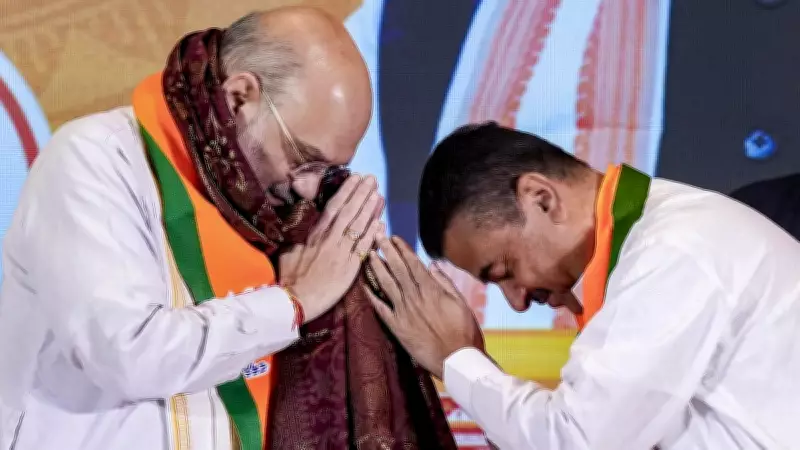
Bharatiya Janata Party (BJP) leaders have expressed strong confidence in their victory in the upcoming West Bengal Assembly Elections 2026, asserting that the people have voted for change. The party's optimism comes amid a high-stakes political battle in the state, where the BJP is seeking to unseat the incumbent Trinamool Congress (TMC) government led by Chief Minister Mamata Banerjee.
Adhikari's Dual Contest
Senior BJP leader Suvendu Adhikari is seeking re-election from the Nandigram constituency, a seat he previously won in the 2021 assembly elections. In a strategic move, Adhikari is also contesting from the Bhabanipur constituency, directly taking on Chief Minister Mamata Banerjee. This dual candidature underscores the BJP's aggressive strategy to challenge the TMC's stronghold.
Public Sentiment for Change
BJP leaders have cited widespread public discontent with the current state government, pointing to issues such as unemployment, corruption, and law and order. They believe that the electorate is ready for a change, which will translate into a decisive victory for the BJP. The party has been campaigning heavily across the state, focusing on development and governance.

The 2026 elections are seen as a crucial test for both the BJP and the TMC. While the TMC aims to retain power for a fourth consecutive term, the BJP is banking on anti-incumbency and its national appeal to make inroads. Adhikari's contest in Bhabanipur is particularly significant, as it pits him directly against Banerjee, who has been a dominant figure in West Bengal politics for over a decade.
Campaign Strategies
The BJP has deployed a multi-pronged campaign strategy, including rallies by top national leaders, door-to-door canvassing, and a strong social media presence. The party has also highlighted the alleged failures of the TMC government in delivering basic services and ensuring safety for women. In contrast, the TMC has focused on its welfare schemes and the leadership of Mamata Banerjee, portraying the BJP as an outsider.
As the election date approaches, both parties are leaving no stone unturned to secure victory. The outcome will not only determine the political landscape of West Bengal but also have implications for national politics ahead of the 2029 general elections.