

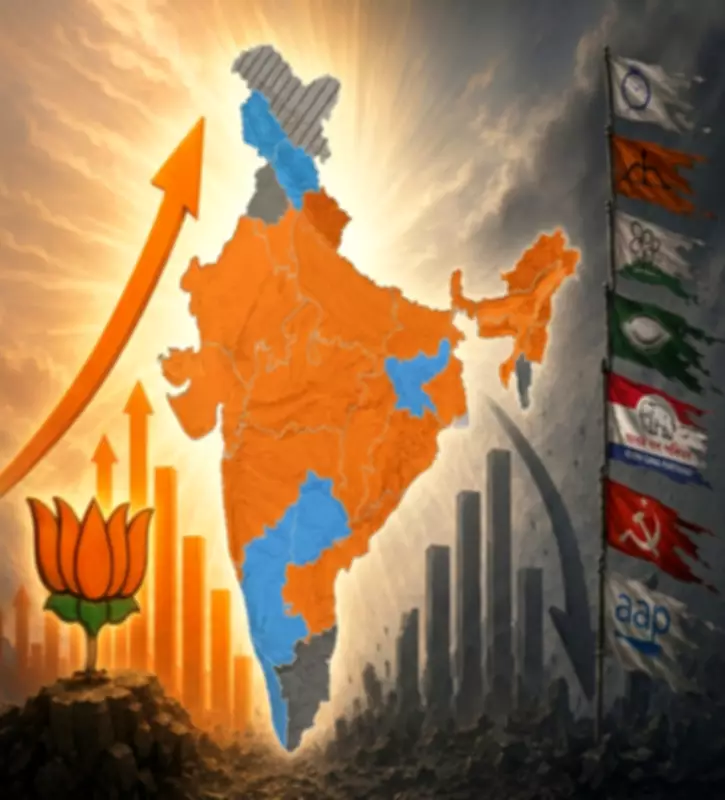
The results of the Assembly elections in Tamil Nadu, West Bengal, Kerala, Assam, and Puducherry have effectively signaled the erosion of the opposition INDIA bloc, with two of its key pillars — the Dravida Munnetra Kazhagam (DMK) and the Trinamool Congress (TMC) — suffering decisive setbacks.
A Broader Pattern of Regional Party Decline
This outcome also reflects a broader pattern. Across India’s political landscape – from north to south and east to west – regional parties, once entrenched within their states and frequently decisive in national coalitions, now stand decimated, replaced by the BJP or assimilated into it. The trend is unmistakable: the BJP is well on its way to creating a ‘regional party-mukt Bharat’ (regional party-free India).
Impact on National Politics
The weakening of regional heavyweights like the DMK in Tamil Nadu and the TMC in West Bengal has significant implications for national politics. These parties were instrumental in forming coalition governments at the center and often acted as kingmakers. Their decline reduces the bargaining power of regional forces and consolidates the BJP’s hold over the political spectrum.

In states like Assam, the BJP has already supplanted regional parties, winning consecutive elections and expanding its footprint. Similarly, in Kerala, the BJP has made inroads, while in Puducherry, it has formed alliances that marginalize local outfits. The pattern is consistent: regional parties are either being defeated at the polls or are merging with the BJP to stay relevant.
Reasons Behind the Shift
Analysts attribute this shift to several factors: the BJP’s strong organizational machinery, effective use of welfare schemes, and a nationalist narrative that transcends regional identities. Additionally, the opposition’s inability to present a united front has allowed the BJP to exploit divisions. The INDIA bloc, formed to counter the BJP, has failed to gain traction, as internal conflicts and ideological differences hamper its effectiveness.
Regional parties, once seen as guardians of local interests and identity, are now struggling to connect with voters who increasingly prioritize national issues and development over regional pride. The BJP’s aggressive expansion strategy, including alliances with smaller regional players, has further weakened the opposition.
Future of Regional Politics
If the trend continues, India may move towards a dominant-party system, with the BJP as the central force. This could reduce political diversity and diminish the voice of regional aspirations in national policymaking. However, some experts argue that regional parties may reinvent themselves or new ones could emerge to fill the void. For now, the message from the electorate is clear: the BJP’s dominance is on the rise, and regional parties are facing an existential crisis.






