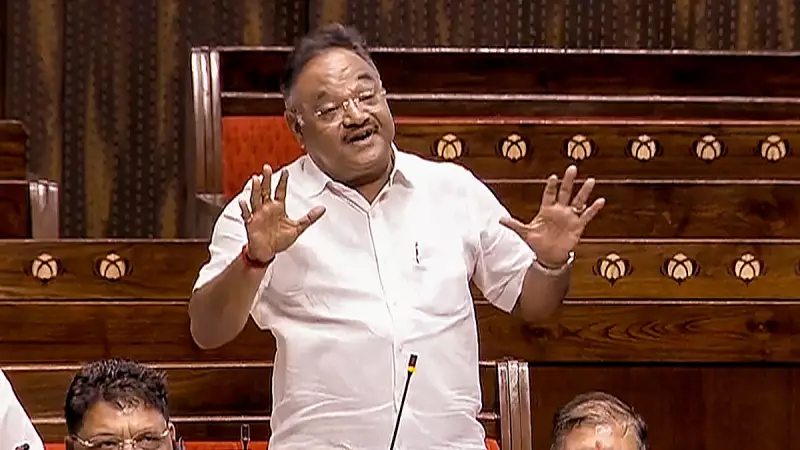
West Bengal Bharatiya Janata Party (BJP) president Samik Bhattacharya has pointed a finger at 'fundamentalists' for the current situation in neighbouring Bangladesh. The senior BJP leader made these remarks on Friday, December 19, 2025, addressing the political and social unrest across the border.
BJP Leader's Assertion on Bangladesh
Samik Bhattacharya stated that the ongoing developments in Bangladesh are being driven by elements with a fundamentalist agenda. While not naming any specific group, his comments highlight the Indian political establishment's concern regarding the stability of its eastern neighbour. The BJP leader from West Bengal, a state that shares a long and porous border with Bangladesh, emphasized the sensitivity of the issue.
Indian Government's Stance and Response
Bhattacharya expressed confidence in the Union government's handling of the matter. He clarified that the Government of India and the Ministry of External Affairs (MEA) are dealing with the situation in what he termed an "appropriate manner." He further assured that the central authorities would respond to developments as necessary, indicating a watchful and calibrated approach from New Delhi.

The BJP leader's statement comes at a time when regional dynamics in South Asia are under close scrutiny. India's foreign policy, especially concerning its immediate neighbours, is a critical aspect of its strategic posture. The reference to a response being formulated "accordingly" suggests that India's actions will be contingent on the evolving scenario in Dhaka.
Regional Implications and Political Context
As the chief of the BJP's West Bengal unit, Bhattacharya's remarks carry significant weight, given the state's deep cultural, linguistic, and familial ties with Bangladesh. Any significant instability in Bangladesh has direct implications for West Bengal, potentially affecting border security, cross-border movements, and communal harmony. His statement also aligns with the ruling party's broader narrative on national security and the challenges posed by ideological extremism in the region.
The situation underscores the delicate balance India maintains in its neighbourhood diplomacy. The Union government, through the MEA, is likely engaged in behind-the-scenes diplomacy to monitor and influence events, ensuring that India's national interests and the security of its eastern states are safeguarded.