BJP Accuses Samajwadi Party of Inability to Form Government Independently
In a sharp political critique, the Bharatiya Janata Party (BJP) has launched a scathing attack on Samajwadi Party (SP) chief Akhilesh Yadav, asserting that his recent remarks clearly demonstrate the party's incapacity to form a government on its own. The controversy erupted following Yadav's statement where he challenged others to 'bring 100 MLAs, become CM', which the BJP has seized upon as evidence of SP's political weakness.
Pankaj Chaudhary's Strong Rebuttal
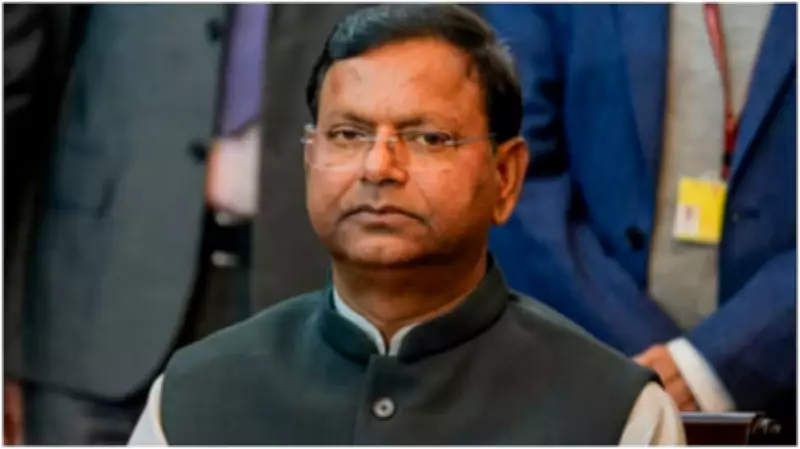
State BJP president Pankaj Chaudhary led the charge, claiming that Yadav's comment is a transparent admission of the Samajwadi Party's lack of strength and credibility in Uttar Pradesh politics. Chaudhary emphasized that this remark exposes SP's reliance on alliances and external support rather than its own electoral mandate, suggesting it cannot secure a majority independently. He argued that such statements undermine public trust in the party's governance capabilities and highlight its fragmented position in the state's political landscape.
The BJP's response comes amid ongoing tensions between the two major parties in Uttar Pradesh, with the ruling BJP aiming to consolidate its position ahead of future elections. Chaudhary's criticism is seen as part of a broader strategy to delegitimize the opposition and reinforce BJP's narrative of stability and self-sufficiency in governance.

Context of Akhilesh Yadav's Controversial Remark
Akhilesh Yadav's original comment, made in a public address, was interpreted by many as a taunt directed at political rivals, implying that without substantial legislative support, claiming the chief minister's post is futile. However, the BJP has twisted this to allege that it reflects SP's internal doubts about its own prospects. Political analysts note that this exchange underscores the intense rivalry and verbal sparring characteristic of Uttar Pradesh politics, where every statement is scrutinized for electoral implications.
The Samajwadi Party has yet to issue a formal counter-response, but sources indicate that it may dismiss the BJP's allegations as baseless and politically motivated. This incident adds to a series of confrontations between the two parties, focusing on issues of governance, development, and electoral strategy.
Broader Implications for Indian Politics
This development has significant ramifications beyond Uttar Pradesh, as it touches on broader themes of coalition politics and party strength in India. The BJP's accusation that SP cannot form a government alone resonates with national debates about the viability of single-party rule versus alliance-based administrations. It also highlights the ongoing power struggle in one of India's most politically crucial states, where outcomes often influence national trends.
As the political discourse intensifies, observers are watching closely to see how this affects voter perceptions and party strategies in the lead-up to upcoming elections. The BJP's aggressive stance may aim to portray itself as the only party capable of providing stable, majority-led governance, while painting the opposition as dependent and unstable.
In summary, the BJP's criticism of Akhilesh Yadav's remark has ignited a fresh political firestorm, with Pankaj Chaudhary's claims putting the Samajwadi Party on the defensive. This episode underscores the high stakes in Indian politics, where verbal exchanges can quickly escalate into major campaign issues, shaping public opinion and electoral outcomes.