BJP's Calculated Campaign Reshapes Maharashtra's Political Landscape
In Maharashtra, certain family names have historically wielded immense political influence, often overshadowing party manifestos. The Thackeray and Pawar surnames have long been synonymous with power in the state. For the Bharatiya Janata Party, the January 15 municipal elections and their favorable results on Friday represented far more than mere control over India's wealthiest civic body, the Brihanmumbai Municipal Corporation, or establishing governance in Pune, the state's cultural capital.
A Deeper Political Objective Beyond Seat Counts
Beyond the immediate victories and ward maps lies a much more profound goal: the systematic dismantling of two powerful political brands that have dominated Maharashtra for over half a century. The BJP's success in potentially marginalizing these established forces did not happen by chance. It resulted from deliberate design and sustained effort spanning more than a decade.
The heirs of these political dynasties recognized the threat and mounted a vigorous defense. The Thackeray cousins can find some comfort in retaining the number two position in Mumbai. Meanwhile, the Ajit Pawar-led Nationalist Congress Party, which interestingly belongs to the Mahayuti government at the state level, will occupy the opposition space left vacant by Congress in both Pune and Pimpri Chinchwad municipal corporations.

The Battle for Mumbai's Political Soul
On the surface, Uddhav Thackeray's Shiv Sena (UBT), labeled as "Nakli" or fake by BJP leadership, securing twice the seats won by Deputy Chief Minister Eknath Shinde's Shiv Sena faction might appear as a moral victory. However, this outcome comes with a significant loss: the Thackerays have been displaced by the BJP in the BMC.
The BMC was never just another civic body for the Thackeray family. It served as their political fortress for decades, functioning as a nerve center that provided essential resources and patronage for organizational expansion. This stronghold facilitated the spread of Sena Shakhas not only across Mumbai but throughout Maharashtra.
This critical importance explains why Uddhav Thackeray allied with his estranged cousin, Maharashtra Navnirman Sena chief Raj Thackeray, campaigning vigorously to protect their bastion.
Emotional Appeals and Strategic Countermeasures
"This is not merely a battle to safeguard the Thackeray legacy; it is a battle to safeguard Mumbai's very existence," declared Uddhav Thackeray during a campaign rally in Mumbai on January 11. Raj Thackeray echoed similar sentiments at an election meeting in Thane on January 12, asserting, "They aim to erase the Marathi manoos from Mumbai."
Both Thackeray leaders invoked the 1961 Samyukta Maharashtra movement, in which their grandfather, the late Prabodhankar Thackeray, participated. They claimed the BJP planned to separate Mumbai from Maharashtra and merge it with Gujarat.
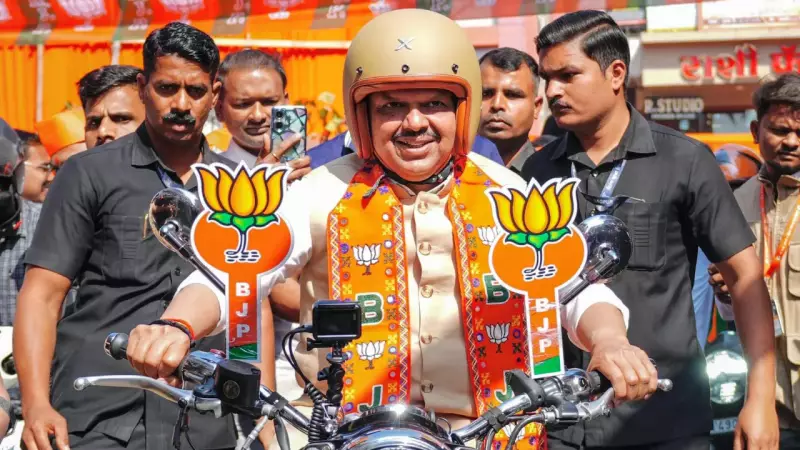
Chief Minister Devendra Fadnavis, who spearheaded the BJP's campaign, firmly rejected these allegations. Speaking in Nashik on January 11 and again at Shivtirth in Mumbai on January 12, Fadnavis made repeated efforts to refute these claims, ensuring that the Thackerays' emotional appeals to Mumbai's Marathi pride and identity did not gain traction this time.
Narrative Warfare and Strategic Groundwork
The Thackerays' arguments about rising unemployment and neglect of local residents met with a powerful counter-narrative from Fadnavis, who promoted a vision of a "Global Mumbai." Additionally, the BJP fielded over ninety Marathi candidates for BMC elections and announced that the next mayor would be Marathi.
BJP sources revealed their party had worked meticulously for over a decade, progressing step by step to counter both the emotional regionalism of the Thackerays and the cooperative-sector dominance of the Pawars. Fadnavis's speeches aimed at separating the Thackeray identity from Mumbai's identity formed part of this carefully crafted strategy.
Systematic Weakening of Political Opponents
Approximately three years ago, the BJP not only facilitated splits within both Shiv Sena and NCP but also sowed confusion among party members and traditional voters. Both factions of each party claimed the legitimate legacy of their respective brands.

The fact that breakaway groups retained their party symbols and official names after aligning with the BJP provided an additional advantage, further helping to marginalize the original brands.
"Many of our supporters expressed frustration when Ajit Pawar joined the Fadnavis government following the NCP split," a senior BJP leader told TOI. "They questioned why we needed Ajit Pawar as a partner in our government. Hopefully, they now understand our broader strategic plan."
Long-Term Infiltration of Political Strongholds
Long before the NCP split in July 2023, BJP's Operation Lotus had been active in western Maharashtra since 2014. Over the years, the BJP steadily strengthened its presence in cooperative sugar mills, banks, and milk unions that traditionally formed the backbone of NCP's support structure.
Several loyal satraps of the Pawar family, along with like-minded Congress leaders who controlled the cooperative sector, gradually shifted allegiance to the BJP. This migration significantly weakened Pawar's base in Maharashtra's "sugar bowl" region.
Limited Consolation for Political Dynasties
Although Ajit Pawar joined forces with his uncle's party, ensuring that both NCP factions collectively emerged as runners-up in Pune Municipal Corporation and Pimpri Chinchwad Municipal Corporation polls, this offers little consolation for the Pawar brand. While NCP may have replaced Congress as the primary opposition in these areas, the undeniable reality remains that both Pawar factions together could not prevent the BJP from securing decisive victories in their home district for the second consecutive time.
Ajit Pawar clarified that his party contested against the BJP because these were "local polls." At both state and national levels, his party remains part of BJP-led governments.