The Bharatiya Janata Party has achieved a remarkable victory in Maharashtra's civic polls. The party secured the position of single-largest party in 19 out of 29 municipal corporations. This result marks a significant expansion from their previous record of 15 corporations in 2017.
Fadnavis Takes Charge of Campaign
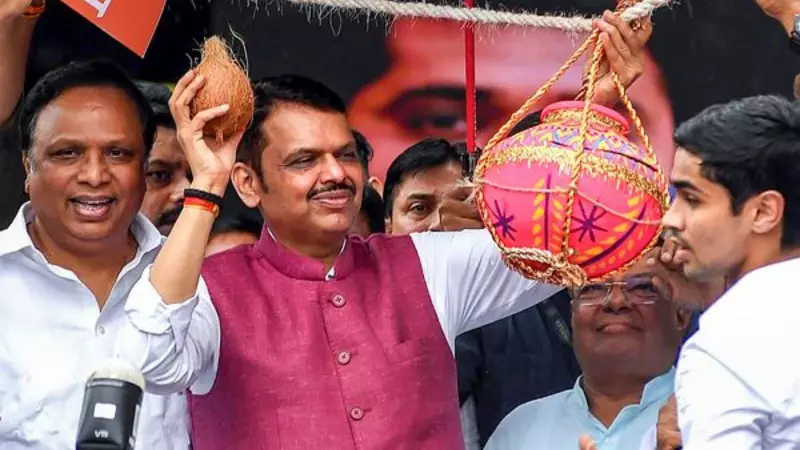
Chief Minister Devendra Fadnavis played a pivotal role in this electoral success. He embraced the responsibility of meeting Union Home Minister Amit Shah's ambitious target of "shath pratishat BJP." Fadnavis campaigned with extraordinary intensity, treating the local elections with the same seriousness as state or national polls.
He addressed multiple rallies daily, traveling across districts to promote a message of good governance and development. A senior BJP functionary explained the strategic thinking behind this approach. "Fadnavis knew the Thackeray cousins could rally support around Marathi pride. To counter this, we decided against bringing central leaders like PM Modi or Amit Shah to campaign in Mumbai. Even Yogi Adityanath was not invited. This tactical move prevented opponents from framing the contest as anti-Gujarat or anti-North India."

Key Municipal Corporations Won
The BJP's victories spanned major urban centers across Maharashtra:
- Mumbai (BMC)
- Nagpur
- Pune
- Nashik
- Navi Mumbai
- Kalyan-Dombivali
- Pimpri-Chinchwad
- Chhatrapati Sambhajinagar
- Kolhapur
- Solapur
- Akola
- Dhule
- Jalgaon
- Sangli
- Ulhasnagar
- Ichalkaranji
- Jalna
- Nanded
- Mira-Bhayander
In ten other corporations, including Thane, Chandrapur, and Amravati, the BJP finished either second or third. The capture of Mumbai's Brihanmumbai Municipal Corporation represents a particularly significant achievement. It ends nearly three decades of control by the Shiv Sena (UBT) led by Uddhav Thackeray in India's financial capital.
Multi-Pronged Electoral Strategy
The BJP executed a carefully planned strategy on multiple fronts. State BJP president Ravindra Chavan oversaw an extensive expansion drive. The party welcomed numerous suitable candidates from opposition parties, employing what is often described as "tod fod ki rajneeti" or politics of breaking rivals.
This approach, successful at the state level, was effectively implemented at the taluka level as well. It involved bringing smaller local players with their spheres of influence into the BJP fold. The political landscape featured multi-cornered contests that exposed divisions within both the ruling Mahayuti and opposition Maha Vikas Aghadi.
These fractures worked to the BJP's advantage. The party leveraged its superior organizational machinery, resources, and manpower. The Shiv Sena (UBT) allied with the MNS, while the Congress partnered with the Vanchit Bahujan Aghadi. Similarly, the Ajit Pawar-led NCP joined forces with Sharad Pawar's NCP (SP). This fragmentation prevented any unified anti-BJP consolidation.
Countering Regional Sentiment with Broader Appeal
To address the Marathi pride narrative promoted by the Thackeray cousins in Mumbai, the BJP subtly emphasized Hindutva themes. Party strategists believed this approach would help transcend caste and community divisions. This consolidation of Hindu votes proved effective not only in Mumbai but also in other municipal corporations with significant minority populations.
Cities like Nashik, Dhule, Chhatrapati Sambhajinagar, Akola, and Nanded saw this strategy contribute to BJP victories. The party's ability to navigate Maharashtra's complex political permutations and combinations proved decisive. Workers sometimes clashed with allies to protect local interests, yet the overall campaign remained cohesive and goal-oriented.
The results demonstrate the BJP's growing organizational strength in Maharashtra. They highlight Chief Minister Fadnavis's leadership in translating central directives into local electoral success. The civic poll triumph sets the stage for future political contests in the state, reinforcing the BJP's position as the dominant political force in Maharashtra's urban landscape.