BJP Claims Historic Victory in Mumbai's BMC Elections
The political landscape of Mumbai witnessed a dramatic transformation on Friday. The BJP-led Mahayuti alliance achieved a decisive victory in the Brihanmumbai Municipal Corporation elections. This outcome effectively ended the nearly three-decade-long dominance of the undivided Shiv Sena in India's wealthiest civic body.
Counting of votes concluded on Friday, revealing the BJP as the single largest party in the 227-member BMC. The alliance comfortably surpassed the crucial 114-seat majority mark. Voters had cast their ballots on January 15, with a turnout rate of 54.77 percent recorded across the city.
Celebrations and Reactions Mark the Momentous Occasion
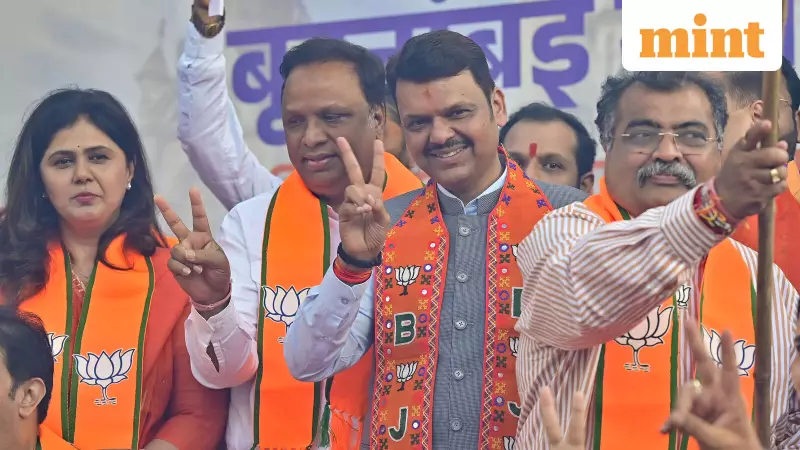
Maharashtra Chief Minister Devendra Fadnavis addressed jubilant party workers in south Mumbai following the results. He celebrated the alliance's strong performance across multiple municipal corporations. Prime Minister Narendra Modi also expressed gratitude to the voters of Maharashtra for their support.

"Thank you Maharashtra! The dynamic people of the state bless the NDA's agenda of pro-people good governance," Modi stated in a social media post. The State Election Commission has not yet released an official statement covering all results from the civic polls.
Five Critical Factors Behind the BJP's Success
Political analysts point to several interconnected reasons for this electoral shift. These factors combined to deliver a clear mandate for the BJP-led alliance in Mumbai's municipal governance.
1. Strategic Alliance with Shinde's Shiv Sena
The BJP's partnership with Eknath Shinde's Shiv Sena faction proved instrumental. This alliance helped consolidate the Marathi-Hindutva voter base, particularly in Mumbai's suburban areas. Shinde's camp brought valuable organizational strength and experienced former corporators to the table.
Their combined efforts significantly enhanced booth-level mobilization during the campaign. The Mahayuti alliance now demonstrates a powerful political combination within the state government.
2. Clear Leadership and the Fadnavis Factor
Voters responded positively to the clear leadership presented by Chief Minister Devendra Fadnavis and Deputy CM Eknath Shinde. This offered a sense of political stability and continuity that contrasted with the opposition's fragmented approach.
Fadnavis emerged as a central figure in this victory. Under his leadership, the BJP surpassed its previous best performance of 82 seats from the 2017 BMC elections. The success of their 'Mission Mumbai' initiative firmly establishes the BJP as the dominant political force in the financial capital.
3. Fragmented Opposition Vote Share
A divided opposition worked to the BJP's advantage. Multiple parties including Shiv Sena (UBT), MNS, Congress, and NCP (SP) failed to consolidate anti-BJP votes effectively. This fragmentation proved particularly costly in middle-class and Marathi-speaking constituencies.
Congress chose to contest independently, refusing to share a platform with Raj Thackeray's Maharashtra Navnirman Sena. This decision stemmed from ideological differences and concerns about losing North Indian voter support. In several key regions, however, the party did coordinate with the MNS through an alliance.
4. Successful Narrative Shift on Development
The BJP successfully transformed the electoral narrative. For decades, the BMC represented an impenetrable fortress for the Thackeray-led Shiv Sena. The campaign shifted focus from traditional identity politics toward development and urban infrastructure.
Voters responded to the BJP's emphasis on 'vikas' and stable governance. The alliance highlighted stalled projects during administrator rule and positioned itself as the solution to Mumbai's civic challenges. This narrative change marked a significant evolution in the city's political discourse.
5. Consistent Hindutva Messaging
Maharashtra minister and BJP leader Nitesh Rane interpreted the results as a clear mandate for the alliance's Hindutva pitch. The strong showing in the BMC polls reflected voter support for this ideological position throughout the campaign.

"Hindutva has always been our soul; one cannot differentiate our Hindutva from development," Fadnavis remarked during the celebrations. The BJP effectively blended national leadership appeal with specific local promises, creating alignment between state governance and municipal administration.
A New Political Era for Mumbai
This victory solidifies the BJP's position as Maharashtra's leading political force. Their dominance now clearly extends to urban civic bodies beyond Assembly and Lok Sabha elections. The results represent a fundamental shift in Mumbai's power structure after years of Sena control.
The high-stakes battle for the BMC saw the Thackeray cousins reunite after two decades, but their hopes were dashed by the election outcome. With control of the cash-rich municipal corporation, the BJP now governs a civic body with a massive budget of ₹74,427 crore for 2025-26.
This electoral triumph positions the BJP to implement its governance agenda directly in India's financial capital. The alliance's performance across 25 of 29 municipal corporations demonstrates widespread support for their political vision in Maharashtra's urban centers.