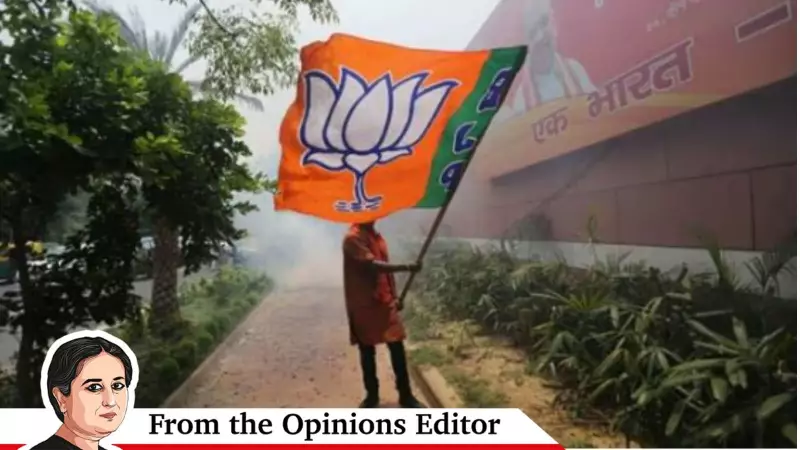
The dawn of 2026 in India is overshadowed by a profound political bleakness, marked by the ruling Bharatiya Janata Party's strategic silences on critical issues and a seemingly rudderless opposition unable to mount an effective challenge. A series of disturbing incidents in late 2025 and early 2026 highlight a pattern where vigilantism is empowered, accountability is resisted, and democratic tools are used to undermine democracy itself.
A Litany of Abdications: Hate, Impunity, and Evasion
The closing month of 2025 presented a grim tableau. A student from Tripura died following a hate-motivated attack in Dehradun, yet senior BJP figures refrained from condemning the crime explicitly. In the days before Christmas, attacks on churches and congregations across multiple states by mobs alleging forced conversions were met with a similar, deafening silence from the party in power.
The climate of impunity was starkly illustrated in Chhattisgarh, where Bajrang Dal members arrested for vandalising Christmas decorations in a Raipur mall were greeted with garlands upon receiving bail. In Uttar Pradesh, vigilantes disrupted a young woman's birthday party at a Bareilly cafe simply because two of her guests were Muslim.

Beyond hate crimes, governance failures persisted without consequence. In Indore, a city frequently awarded for its cleanliness, contaminated water led to deaths. A senior BJP minister dismissed a reporter's question on accountability, offering only a weak apology later. In Maharashtra, local body elections showcased an 'anything-goes' alliance culture, with 68 candidates from the ruling Mahayuti alliance set to be elected unopposed.
On the policy front, the Narendra Modi government pushed through a bill that significantly diluted the employment guarantee assured by MGNREGA to the poorest. The judiciary, too, often appeared in sync with the executive, as highlighted by the prolonged incarceration of scholar Umar Khalid, who spent over five years in jail without trial, his bail pleas repeatedly denied.
The Opposition's Paralysis: Fighting Words, No Strategy
Despite this teeming agenda of failures, the Congress-led Opposition finds itself bewildered and helpless. Its core argument—that the Constitution and democracy are in danger under the BJP—fails to resonate widely beyond sections of Dalits and Muslims, communities most reliant on constitutional safeguards.
The Opposition must confront why, despite the BJP's documented abdications, it continues to win elections. Its defence of constitutional values comes at a time when these frameworks are widely perceived as fraying. The BJP has adeptly seized this moment of communicative abundance and performative politics to project itself as the authentic carrier of the "voice of the people," needing liberation from an old, defunct order.
It offers emotive, unifying visions—"Hindu Rashtra," "Viksit Bharat," "Vishwaguru"—that create powerful selfie points of identity and belonging. However, these wholes are fundamentally exclusionary, resting on the continued marginalisation of the Muslim minority and using emotional appeal to sidestep demands for accountability.
The Path Forward: Imagination, Patience, and a New Vocabulary
To counter this, the Opposition requires more than just criticism; it needs imagination. It must work to repurpose the BJP's grand narratives, for instance, by reframing Hinduism around its inherent pluralism rather than being intimidated by majoritarian assertions. It may need to frame a new "imagined community" that can bridge social cleavages.
Initiatives like Prashant Kishor's simple, powerful pitch in Bihar—"vote for your child's future"—point towards a language that can straddle divisions, though his campaign ultimately stumbled. For now, as the new year unfolds, an Opposition stuck with an older vocabulary finds itself unable to effectively call out the BJP government's silences, its governance failures, or the fundamental exclusions at the heart of its political project. The crisis is not just of actions, but of response.