BMC Election Ink Scandal: Acetone Erases 'Indelible' Marks, Sparks Outrage
Videos circulating on social media show voters easily wiping off so-called 'indelible ink' with acetone during the Brihanmumbai Municipal Corporation elections. This development has ignited a major controversy about election integrity and transparency.
Social Media Flooded with Evidence
Throughout Thursday, January 15, 2026, multiple videos emerged showing common voters, politicians, and media personnel using acetone to remove the ink marks from their fingers. The ink is supposed to remain visible for days to prevent multiple voting.
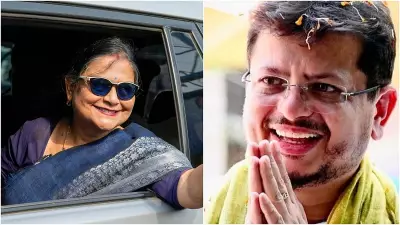
Mumbai Congress leader Varsha Gaikwad posted a video demonstrating the issue. "My colleague and his wife here show how this ink can be easily wiped off with acetone or nail polish remover," she wrote on social media platform X.

Gaikwad expressed serious concerns about the election management. "The faith of the people in our democratic process must be protected at all costs," she stated, criticizing what she called various irregularities including the ink problem.
BMC Denies All Allegations
The Brihanmumbai Municipal Corporation has firmly rejected reports about the ink being removable. In an official statement, the civic body called such media reports "factually incorrect."
According to standard procedure, polling staff apply the indelible ink to one finger of the voter's left hand at the time of casting the vote. The BMC maintains this process remains secure and effective.
Political Leaders Voice Concerns
Maharashtra Navnirman Sena chief Raj Thackeray raised additional concerns about the voting process. He alleged that the State Election Commission was using a "new pen" that allowed markings to disappear, especially when voters used hand sanitizer.
"This is proof of how the government can do anything to stay in power," Thackeray claimed, urging alliance workers to remain vigilant against potential voting irregularities.
Chief Minister Responds to Controversy
Maharashtra Chief Minister Devendra Fadnavis addressed the allegations directly after casting his vote in Nagpur. "I have also been marked with a marker, is it erasing?" he questioned reporters.
Fadnavis suggested that if the ink was truly being erased, the Election Commission should investigate the matter thoroughly. "They can use oil paint if they want," he proposed, emphasizing that elections should remain completely impartial.
However, the Chief Minister criticized what he called unnecessary controversy. "Creating a ruckus on everything and raising questions is very wrong," he stated in response to Raj Thackeray's allegations.
Widespread Voting Across Maharashtra
The controversy unfolded as voting proceeded across Maharashtra for 29 municipal corporations, including the crucial BMC elections. Polling occurred at 2,869 seats across 893 wards throughout the state.
A total of 15,931 candidates contested these elections, with 1,700 candidates in Mumbai alone and 1,166 in Pune. Approximately 3.48 crore voters were eligible to participate in Thursday's civic polls.
Besides Mumbai, other major corporations voting included Pune, Pimpri-Chinchwad, Kolhapur, Vasai-Virar, Kalyan-Dombivli, Nagpur, Solapur, Amravati, and Thane. The counting of votes is scheduled for January 16.
What is Acetone?
Acetone is a colorless, volatile, and flammable organic solvent with a distinctive sweet, pungent odor. It is widely available in common products like nail polish removers, paint thinners, and various cleaning agents.
The chemical's effectiveness at dissolving many substances makes it particularly concerning in this electoral context, as it appears capable of removing what should be permanent voting ink.
The controversy raises fundamental questions about election security measures and whether current protocols adequately protect against potential voting fraud in India's largest municipal corporation elections.