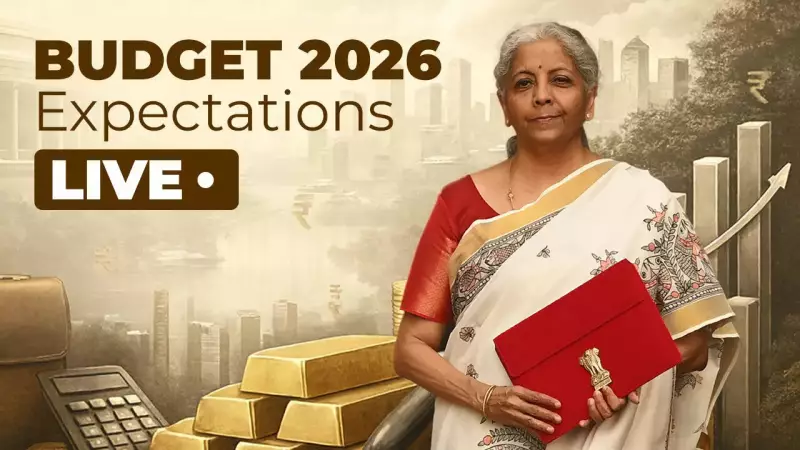
Budget 2026 Session Commences: Parliament Convenes Amid High Expectations
The Budget session of Parliament has officially begun today, setting the stage for Finance Minister Nirmala Sitharaman's much-anticipated Union Budget speech scheduled for February 1, 2026. This marks a significant moment in India's fiscal calendar, with all eyes focused on the government's economic roadmap for the upcoming financial year.
Key Events and Schedule
President Droupadi Murmu is expected to deliver the opening address at 11:00 AM, formally inaugurating the session. Following this, FM Sitharaman will present the Economic Survey 2025-26 tomorrow, on January 29, providing crucial insights into the nation's economic performance and outlook.
The Budget session is divided into two parts: the first segment runs from January 28 to February 13, while the second half will commence on March 9, 2026. Notably, this year's Budget presentation on February 1 falls on a Sunday, a rare occurrence that has captured public attention.

Traditional Ceremonies and Preparations
The traditional halwa ceremony was held on January 27, signaling the start of the quarantine period for Budget officials. This long-standing ritual, which involves preparing and serving the dessert to ministry staff, marks the beginning of the mandatory "lock-in" period for those involved in Budget preparations.
Finance Minister Sitharaman participated in the ceremony at North Block on Raisina Hill, the former finance ministry headquarters, as the newly occupied Kartavya Bhawan-I lacks a printing press. During the event, she inspected the Budget Press, reviewed presentation readiness, and conveyed best wishes to the entire Budget team, accompanied by Minister of State for Finance Pankaj Chaudhary and senior officials.
Political Context and Opposition Concerns
Ahead of the session, the government convened an all-party meeting where opposition leaders expressed several concerns. They pressed for detailed debates on issues including the proposed withdrawal of MGNREGA, India's foreign policy posture, and the broader economic situation. Opposition parties criticized the government for not sharing a provisional legislative agenda at the meeting, chaired by Defence Minister Rajnath Singh.
Parliamentary Affairs Minister Kiren Rijiju addressed these concerns, stating that the government's business list is typically circulated after the President's address and assuring members it would be made available promptly.
Economic Backdrop and Global Challenges
This Budget represents Sitharaman's ninth consecutive presentation, coming at a critical juncture for the Indian economy. The global economic landscape is marked by turmoil, with India facing specific challenges including 50% Trump tariffs and a rupee that has hit an all-time low of 92 per dollar.
Despite these headwinds, India's GDP growth is projected at 7.6% for the current financial year, maintaining its position as the world's fastest-growing major economy. The Budget is expected to address how India will navigate these global conditions while retaining this growth momentum and maintaining fiscal discipline.
Digital Presentation and Accessibility
Continuing recent practice, the Budget will be delivered in a paperless format. All related documents, including the Annual Financial Statement, Demand for Grants, and the Finance Bill, will be made available through the Union Budget Mobile App. This bilingual app, offered in English and Hindi on both Android and iOS platforms, will host the documents immediately following the Finance Minister's Budget speech, ensuring easy digital access for Members of Parliament and the public.

Industry Expectations and Expert Insights
Industry leaders and experts have outlined several key expectations for Budget 2026. Subramanyam S, CEO of AscentHR Technologies, emphasized that India's challenge lies not in job creation but in job formalization and productivity. He called for a simpler, predictable compliance framework that enables companies, especially MSMEs and start-ups, to hire with confidence.
Tax experts like Sunil Badala, Partner and National Head of Tax at KPMG in India, highlighted expectations for further reforms. These include an overhaul of the dispute resolution mechanism under direct tax laws with mandatory timelines for appeal disposal, revisions to Safe Harbour Rules, and enhancements to the GST Invoice Management System. With the new Income Tax Act set to take effect from April 1, 2026, stakeholders are closely watching how these expectations will be addressed.
Fiscal Priorities and Reform Agenda
Economists and analysts are urging continued focus on capital expenditure, with particular emphasis on defense, roadways, railways, and key infrastructure sectors. Simultaneously, there is pressure on FM Sitharaman to provide a credible fiscal glide path with a lower fiscal deficit target to enhance India's economic credibility.
Taxpayers are also anticipating additional relief on the income tax front, especially in the new tax regime, to make it more attractive. The Budget speech, expected to begin at 11:00 AM on Sunday, will reveal the government's reform agenda for the upcoming financial year and its strategy to steer the economy through challenging global conditions.