

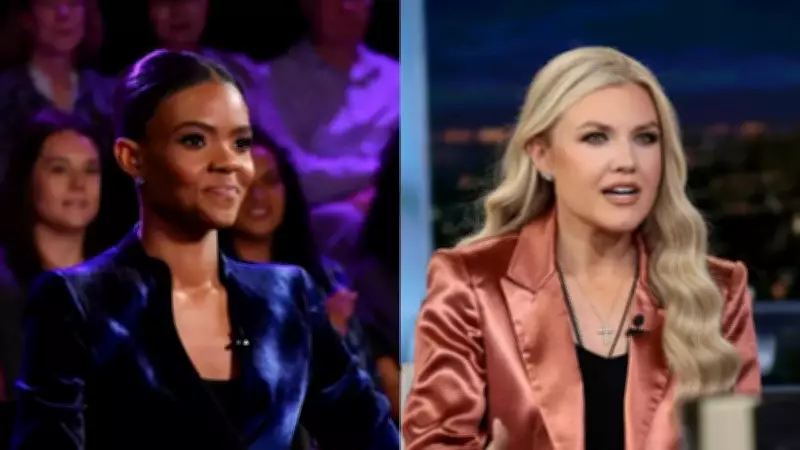
Candace Owens vs. Erika Kirk: Social Media Clash Ignites Debate on Political Rhetoric
A new political confrontation has erupted on social media, with commentator Candace Owens facing accusations of attacking conservative activist Erika Kirk, sparking widespread controversy and debate. The incident began when a viral post claimed Owens was mocking Kirk and questioning her credibility, quickly escalating into a heated discussion about reputation, safety, and the boundaries of political discourse.
Viral Post Accuses Owens of Targeting Kirk's Character
The controversy intensified after a post by user Bren (@bren45000) circulated widely online, alleging that Owens publicly attacked Kirk's character. The post stated: "Candace mocks Erika Kirk. Calls her a fraud. She then insinuates that TPUSA shouldn't be around high school kids because Erika was somehow possibly involved in sex trafficking/sex abuse scandals. At this point, I think Candace is intentionally trying to endanger Erika Kirk."
This claim rapidly spread across platform X, where users engaged in fierce arguments about the tone and implications of the accusation. Critics argued that linking someone to sensitive issues like trafficking without clear evidence could be harmful and irresponsible. Meanwhile, defenders of Owens contended that political commentators often use strong language to emphasize points when they disagree with others, framing it as part of robust political debate.

Background: Erika Kirk's Role in Youth Activism
Erika Kirk has been actively involved in conservative activism focused on young people, frequently participating in events with Turning Point USA (TPUSA), a group known for organizing student programs. Given that these activities often involve youth settings, any allegations concerning safety or misconduct naturally attract significant online attention and scrutiny.
The situation highlights how discussions around youth-oriented organizations can quickly become charged, with implications for trust and security in these spaces.
Broader Implications: Social Media and Political Discourse
For many observers, this clash transcends a mere personal dispute between two individuals. It underscores the rapid pace at which political arguments can spiral out of control on social media, where brief videos and posts can shape narratives before all facts are established. The power of viral content to influence public perception within minutes has become a defining feature of modern political communication.
As the debate continues to rage online, neither side appears to be backing down. Proponents and opponents are deeply divided over whether the allegations constitute reasonable criticism or an unjust attempt to smear an individual's reputation. This incident has become another flashpoint in the ongoing culture wars, potentially drawing in other pundits and affecting the conservative movement more broadly.
Critics and Proponents Weigh In
The scandal gained further traction after critics asserted that Owens's statements crossed a line, particularly by alluding to serious accusations involving youth activism groups. They argue that such rhetoric can have real-world consequences, endangering individuals and undermining constructive dialogue.
On the other hand, supporters maintain that Owens's approach is part of a broader trend in political commentary, where forceful language is used to challenge opponents and highlight perceived flaws. This polarization reflects deeper tensions within political discourse, where the balance between free speech and responsible communication remains contentious.
Ultimately, the Candace Owens-Erika Kirk controversy serves as a case study in how social media amplifies political conflicts, transforming isolated incidents into widespread debates that resonate across ideological lines. It raises critical questions about accountability, evidence, and the ethical boundaries of political rhetoric in the digital age.






