

Caste Communities as Key Players in Tamil Nadu's Electoral Battles
In Tamil Nadu, the outcome of elections is not merely a matter of party arithmetic or ideological alignments. Across the diverse regions of the state, dominant caste blocs continue to exert a profound influence on political strategies, alliance formations, candidate selections, and ultimately, the final results. These communities—vanniyars in the north, gounders in the west, thevars in the south, and dalit and nadar groups in key pockets—serve as critical electoral forces that parties must navigate to secure victory.
Vanniyar Dominance in Northern Tamil Nadu
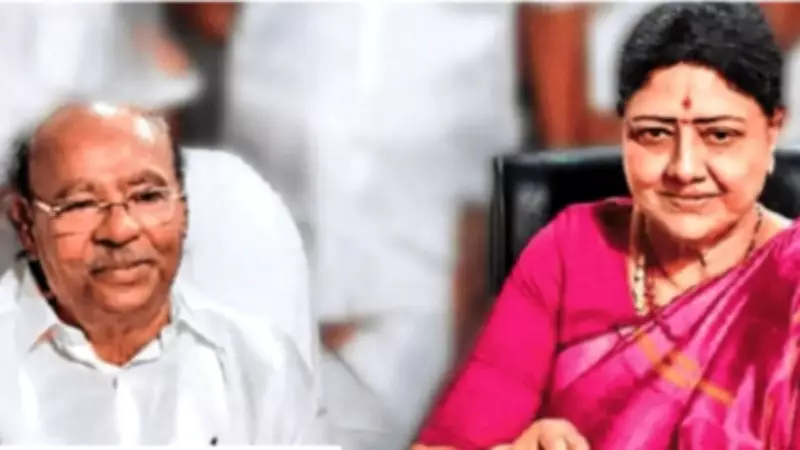
Vanniyars are concentrated in northern districts such as Viluppuram, Dharmapuri, Krishnagiri, Salem, Cuddalore, and Vellore. This influential Other Backward Class community rose to political prominence after the Vanniyar Sangam, led by S Ramadoss, spearheaded violent protests that preceded the introduction of a 20% quota for Most Backward Classes in 1989 by the M Karunanidhi government.
Since then, the community has largely backed the Pattali Makkal Katchi, founded by Ramadoss and now under the disputed control of his son, Anbumani Ramadoss. However, sizeable sections of vanniyars have also aligned with the Dravida Munnetra Kazhagam and the All India Anna Dravida Munnetra Kazhagam. In the current electoral scenario, Anbumani's PMK faction, a member of the National Democratic Alliance, is contesting 18 seats, while Ramadoss senior has fielded candidates in 35 seats, predominantly in the northern belt.

Shortly before the 2021 assembly polls, the ADMK government introduced a 10.5% internal quota for vanniyars, but the Supreme Court struck it down. The incoming DMK government adopted a cautious approach, maintaining that only the central government has the legal authority to conduct a caste census. The DMK government currently includes three senior ministers from the vanniyar community.
"Both DMK and ADMK allot more seats to vanniyars, which shows the community's significance," says Vanniyar Federation founder-president C N Ramamurthy. The DMK also received a boost last week when Guru Viruthambigai, daughter of the late PMK leader Guru, met Chief Minister M K Stalin to offer support.
Gounder Influence in Western Tamil Nadu
If vanniyars are central to the north, gounders continue to hold sway in western Tamil Nadu, particularly in Coimbatore, Erode, and Salem districts. Large sections of this community continue to support leaders from their fold, such as ADMK general secretary Edappadi K Palaniswami and former ministers S P Velumani and P Thangamani. K A Sengottaiyan, another community veteran, has crossed over to Vijay's Tamizhaga Vettri Kazhagam.
In the 2021 assembly election, the western belt was the only region that stayed with the ADMK, which won 29 of 48 seats there. This time, Stalin has assigned the region to former minister V Senthilbalaji. "DMK candidates will win in several constituencies in the western region and we will form the next government," Senthilbalaji told The Times of India.
Thevar Stronghold in Southern Tamil Nadu
In southern Tamil Nadu, thevar influence remains strong in districts such as Ramanathapuram, Sivaganga, Virudhunagar, Theni, and Madurai. The mukkulathor grouping—comprising the Kallar, Maravar, and Agamudaiyar communities—has long been regarded as a key support base of the ADMK, especially during the tenures of M G Ramachandran and J Jayalalithaa.
However, that base has shown signs of strain. Sections of the community were upset over perceived slights by Palaniswami, who expelled three prominent leaders from their fold from the party: AMMK chief T T V Dhinakaran, former chief minister O Panneerselvam, and Jayalalithaa aide V K Sasikala. In 2021, the ADMK won just 16 of 58 seats in the south, where the DMK and Congress won 33 and eight seats respectively.
Panneerselvam has since joined the DMK. Sasikala has launched the All India Puratchi Thalaivar Makkal Munnetra Kazhagam and fielded 77 candidates with the stated objective of defeating ADMK nominees. Her campaign is centred on the theme of "Palaniswami the betrayer."

Dalit and Nadar Communities as Electoral Forces
Dalits remain another key electoral force, with their population ranging from 15% to 34% in many districts, except Kanyakumari, where their numbers are relatively low. Scheduled Castes such as paraiyar, pallar, and arunthathiyar continue to carry significant political weight.
DMK ally Viduthalai Chiruthaigal Katchi, led by Thol Thirumavalavan, remains a prominent voice among dalit voters, particularly within the paraiyar community in the north. Among pallar leaders, S Krishnasamy of Puthiya Tamilagam is contesting independently in 60 seats after alliance talks with ADMK failed. In the NDA camp, John Pandian, who heads a dalit outfit, has been fielded from Rajapalayam on BJP's lotus symbol. Vijay's TVK and Seeman's Naam Tamilar Katchi have also made some inroads into dalit vote banks.
In several southern pockets, outcomes also depend on nadars, the economically influential community in Tirunelveli, Tenkasi, Thoothukudi, Virudhunagar, and Kanyakumari. Historically, the community aligned with Congress, largely because of former chief minister K Kamaraj, a nadar, who played a key role in enabling reservation for backward classes through the First Amendment to the Constitution.
Following Jayalalithaa's death, ADMK lost much of its nadar support because of the leadership's perceived affinity towards gounders and vanniyars. The DMK has since occupied some of that space, with Kanimozhi Karunanidhi, the party's MP from Thoothukudi, focusing considerable attention on the region. BJP leaders Tamilisai Soundararajan and Pon Radhakrishnan also count among the community's prominent faces.
These caste-based dynamics underscore the complex interplay of social identities and political calculations in Tamil Nadu, where regional dominance and community allegiances often dictate electoral fortunes and alliance strategies.





