

CEC Gyanesh Kumar Evades Queries on Opposition's Parliamentary Removal Motion
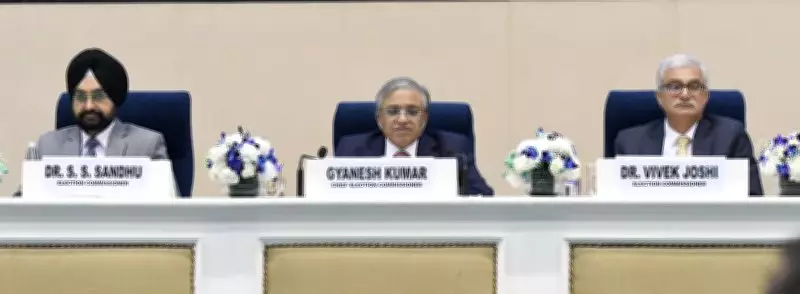
Chief Election Commissioner Gyanesh Kumar on Sunday skillfully dodged questions regarding a significant move by Opposition parties to initiate his removal from office through a parliamentary motion. The press conference, held to announce Assembly election schedules in four states and a Union Territory, saw Kumar sidestepping direct responses to queries about the Opposition's formal notice.
Opposition Accusations and Constitutional Grounds
In an unprecedented step, Opposition factions have submitted notices in both the Lok Sabha and the Rajya Sabha, seeking to table a motion for Kumar's removal. They allege a partisan attitude and accuse the CEC of aiding the ruling BJP on multiple occasions. A key point of contention is the Special Intensive Revision (SIR) of electoral rolls, which the Opposition claims was strategically designed to benefit the saffron party at the Centre.
The process for removing a Chief Election Commissioner is stringent and mirrors that of a Supreme Court judge. According to Article 324(5) of the Constitution, the CEC can only be removed on grounds of "proven misbehaviour or incapacity". This provision ensures that the conditions of service cannot be altered to the CEC's disadvantage post-appointment, safeguarding the independence of the office.

Parliamentary Procedure and Implications
For the removal motion to succeed, it must be introduced in either House of Parliament and passed by a special majority. This requires a majority of the total membership of the House and a two-thirds majority of members present and voting. In contrast, Election Commissioners can be removed through a recommendation by the CEC to the President, highlighting the elevated protection afforded to the Chief Election Commissioner.
The allegations against Kumar have sparked a broader debate on electoral integrity and political neutrality within India's democratic framework. As the nation prepares for upcoming state elections, this development underscores the critical role of the Election Commission in maintaining fair and transparent electoral processes.
Observers note that while Kumar remained silent on the removal notice, the Opposition's move signals escalating tensions over electoral governance. The outcome of this parliamentary effort could set a significant precedent for future accountability measures concerning constitutional appointees.






