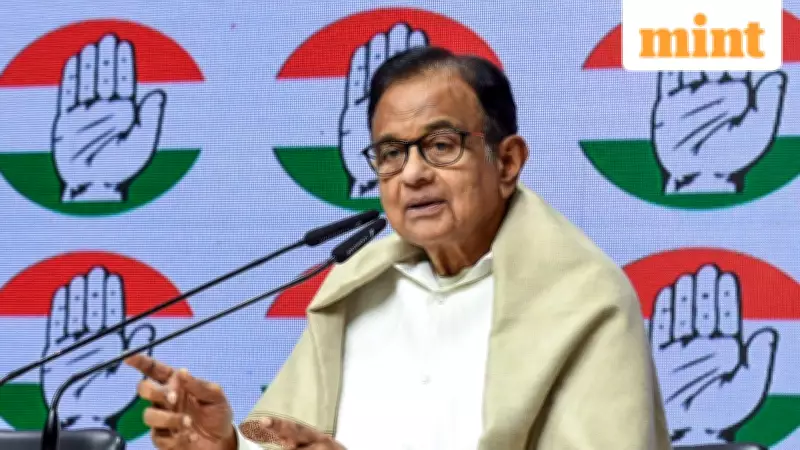
Former Finance Minister P Chidambaram Delivers Scathing Critique of Union Budget 2026
In a strongly worded press conference held in New Delhi on Sunday, 1 February 2026, former finance minister and Congress MP P Chidambaram launched a sharp criticism of the Union Budget presented by Finance Minister Nirmala Sitharaman. Chidambaram described the budget as a "failed test of economic strategy and economic statesmanship," expressing deep concerns about its alignment with India's economic realities.
Questioning Government's Economic Understanding
Chidambaram raised serious questions about whether the Finance Minister and the government had properly studied the Economic Survey 2025-26, which was released by the Ministry of Finance's Department of Economic Affairs on Thursday, 29 January. "I am not sure if the Finance Minister and the government read the Economic Survey 2025-26," he stated, adding that even if they had reviewed the document, they appeared to have "decided to discard the challenges and fall back on their favourite pastime of throwing words at the people."
The former finance minister emphasized that he could identify at least ten significant challenges highlighted in the Economic Survey that were not adequately addressed in the budget proposals. "Every pre-budget commentator and writer, and every student of economics, must be astonished by what he or she heard in the Finance Minister's speech to Parliament today," Chidambaram remarked, suggesting widespread disappointment among economic observers.

Budget Presentation and Key Announcements
Finance Minister Nirmala Sitharaman presented her ninth consecutive Union Budget for the financial year 2026-27 at 11 AM on Sunday, 1 February 2026. The budget contained several significant announcements including:
- Increase in capital expenditure (Capex) to ₹12.2 trillion for FY27
- Establishment of rare earth corridors in Tamil Nadu, Kerala, Odisha, and Andhra Pradesh
- Enhanced funding support for MSMEs (Micro, Small and Medium Enterprises)
- Strong push for Ayurveda and traditional medicine systems
- Various other economic reforms aimed at boosting growth
Price Changes and Fiscal Measures
The Union Budget 2026 introduced several measures affecting consumer prices through policy adjustments:
Items Expected to Become Cheaper:
- Leather products through extended policy support
- Cancer medications via duty-free imports and customs exemptions
- Seafood products with reduced levies
- Textile garments with lower customs duties
- Overseas tour packages through tax adjustments
At least 17 imported drugs for cancer patients are among the items that might see price reductions due to these fiscal measures.
Items Becoming Costlier:
- Chewing tobacco with tax rates increased to 60%
- Jarda scented tobacco with similar tax hikes
- Alcohol for human consumption with TCS (Tax Collected at Source) rate rising from 2% to 1%
Broader Economic Context and Implications
The Economic Survey 2025-26, released just days before the budget, provided detailed insights into India's economic performance during the current financial year and outlined expectations for the upcoming fiscal period. Chidambaram's criticism centers on what he perceives as a disconnect between the survey's findings and the budget's actual proposals.
The former finance minister's remarks highlight ongoing political debates about economic management and fiscal policy in India. His characterization of the budget as relying on rhetoric rather than substantive economic strategy reflects broader concerns about how the government addresses complex economic challenges identified by experts and official documents.
As India navigates its economic trajectory, the Union Budget 2026-27 will continue to face scrutiny from various stakeholders, with Chidambaram's critique representing a significant voice in the ongoing dialogue about fiscal policy and economic direction.