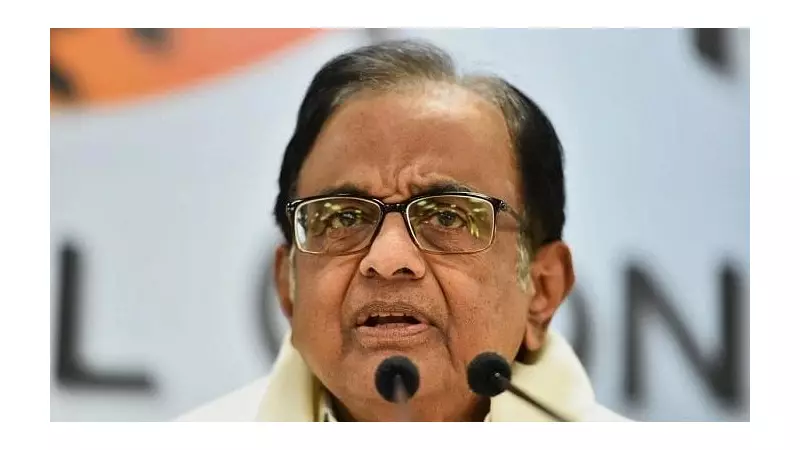
Senior Congress leader and former Union Minister P. Chidambaram has launched a sharp critique against the use of Hindi words in the names of official government bills. He labeled the practice an "affront to non-Hindi speaking people of India" and a violation of the spirit of the Official Languages Act.
The Core of the Controversy: Hindi Words in Legislative Names
Chidambaram's criticism, made through a post on social media platform X, specifically pointed to recent bills introduced in Parliament. He highlighted the use of Hindi terms like "Bharatiya" and "Nyaya" in legislative titles as examples of this problematic trend. For instance, he referenced bills such as the Bharatiya Nyaya Sanhita, which replaces the Indian Penal Code.
The veteran politician argued that this move goes against established parliamentary convention and the law itself. He emphasized that while Hindi is an official language, English serves as the associate official language for all official purposes of the Union, including parliamentary proceedings. According to him, inserting Hindi words into bill names is a deliberate step that marginalizes a significant portion of the country's population.

Legal and Constitutional Context of the Language Debate
Chidambaram anchored his argument in the Official Languages Act of 1963. He reminded that the Act clearly mandates the continuation of English alongside Hindi. His statement underscored that the names of central laws must be in English, and any Hindi translation should be presented alongside it, not as a replacement.
This is not an isolated comment but part of a long-standing political and cultural debate in India. The issue of "Hindi imposition" has frequently sparked protests, particularly in states like Tamil Nadu, West Bengal, and Karnataka, where regional language identity is strong. Critics from these regions often view the promotion of Hindi in official domains as an attempt to undermine linguistic diversity and impose a homogenized cultural identity.
The Congress leader's remarks are seen as a direct challenge to the ruling BJP-led government's perceived push for Hindi. The BJP has often been associated with policies that proponents see as promoting national integration through Hindi, but opponents decry as majoritarian.
Political Repercussions and the Road Ahead
Chidambaram's statement is likely to reignite a heated political discourse. It positions the Congress party as a defender of linguistic federalism and regional rights, potentially resonating with its allies and voters in non-Hindi speaking states. The timing is also crucial as the country heads towards a general election, where such identity-based issues can influence voter sentiment.
As of now, there has been no immediate official response from the government or the BJP to Chidambaram's specific charges. However, the debate touches a raw nerve in Indian politics. It raises fundamental questions about:
- National unity vs. regional identity: How to balance promotion of a common language with respect for linguistic diversity.
- Legal propriety: Whether the current practice of naming bills aligns with the letter and spirit of the Official Languages Act.
- Inclusive governance: Ensuring all citizens, regardless of their native language, feel equally represented by the Union government's communications and laws.
The controversy underscores the deep-seated sensitivities around language in India. It moves beyond mere semantics into the realm of cultural respect, political representation, and constitutional values. How this debate unfolds could have significant implications for India's social cohesion and political alignments in the coming months.