

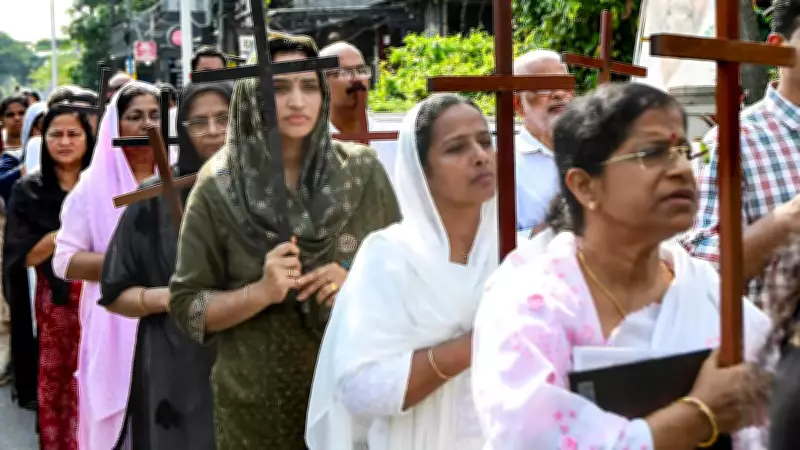
The Rise of 'ChriSanghi' in Kerala: A Political Phenomenon Explained
In the vibrant and often contentious political landscape of Kerala, a new term has emerged that is capturing attention and sparking debates across the state. The concept of 'ChriSanghi' represents a fascinating development in how political identities are being reshaped and understood in this southern Indian region.
Understanding Kerala's Political Lexicon
To comprehend the significance of 'ChriSanghi,' one must first understand the established political terminology that has long dominated Kerala's discourse. Three terms in particular have become deeply embedded in the state's political parlance:
- Kammi: This refers to a blind follower of communist ideology, representing the strong leftist tradition in Kerala politics.
- Conghi: This term describes a loyal supporter of the Congress party, reflecting the historical presence of centrist politics in the state.
- Sanghi: This identifies a follower of Sangh Parivar politics, representing the right-wing ideological framework associated with organizations like the RSS and BJP.
These terms are used liberally across various platforms, from casual tea-shop debates to heated exchanges on social media platforms, illustrating how deeply political identity is woven into Kerala's social fabric.

The Emergence of 'ChriSanghi'
The term 'ChriSanghi' represents a new development in this political vocabulary. While the exact origins and precise definition of this term require further examination, it appears to signal a shift in how political affiliations are being perceived and categorized in Kerala.
This emerging terminology suggests a potential evolution in the state's political dynamics, particularly regarding the Bharatiya Janata Party's presence and strategy in Kerala. The BJP has historically faced challenges in establishing a strong foothold in the state, which has traditionally been dominated by leftist and centrist political forces.
Analyzing the BJP's Kerala Strategy
The rise of terminology like 'ChriSanghi' coincides with the BJP's increased efforts to expand its influence in Kerala. Several factors may be contributing to this political development:
- Strategic Outreach: The BJP has been implementing targeted campaigns to connect with various communities across Kerala, including Christian populations who have traditionally aligned with different political parties.
- Ideological Shifts: Changing social and political attitudes may be creating new opportunities for right-wing politics to gain traction in regions previously resistant to such ideologies.
- Organizational Strengthening: The Sangh Parivar's network has been working to establish stronger grassroots presence in Kerala, potentially leading to greater visibility and influence.
Political Implications and Future Prospects
The emergence of 'ChriSanghi' as a term in Kerala's political discourse raises important questions about the state's political future. How far can this development take the BJP in a state with such strong established political traditions?
Political analysts suggest that while the BJP faces significant challenges in Kerala, including strong opposition from established parties and deeply rooted political cultures, the changing terminology reflects evolving political realities. The use of such terms indicates that political identities are becoming more complex and nuanced, potentially creating space for new political alignments.
The coming years will be crucial in determining whether this represents a temporary linguistic trend or signals a more substantial shift in Kerala's political landscape. As political debates continue to evolve in tea shops, social media platforms, and formal political arenas, the terminology used to describe political affiliations will likely continue to adapt and change, reflecting the dynamic nature of democracy in action.






