

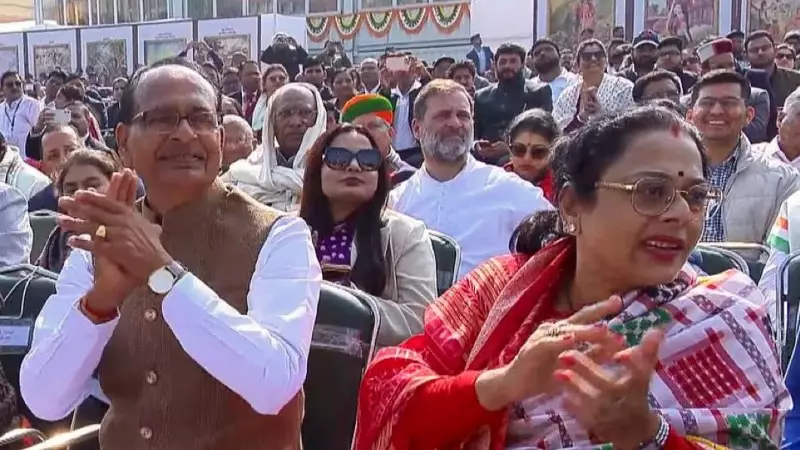
Congress Alleges Protocol Violation Over Opposition Leaders' Seating at Republic Day Parade
The Congress party has raised serious allegations of a "protocol mess-up" after its leaders, including Leader of Opposition in Lok Sabha Rahul Gandhi and Congress President Mallikarjun Kharge, were seated in the third row during the Republic Day parade celebrations in New Delhi. The controversy has sparked a heated political debate about parliamentary decorum and respect for constitutional positions.
Historical Comparison Sparks Political Firestorm
Congress Lok Sabha Whip Manickam Tagore brought attention to the seating arrangement by sharing a historical comparison. He posted an image from the 2014 Republic Day parade showing BJP veteran LK Advani seated in the front row when the Manmohan Singh-led UPA government was in power. Tagore questioned why there was such a "protocol mess-up" now, suggesting political motivations behind the seating decisions.
"This was in 2014—look at where LK Advani ji was seated then," Tagore stated in his social media post. "Why this protocol mess-up now? Is it because Modi and Shah want to insult Kharge ji and Rahul ji?"

Widespread Criticism from Opposition Leaders
The controversy has drawn reactions from multiple political figures who have expressed their disapproval of the seating arrangement:
- Manickam Tagore emphasized that "Leaders of the Opposition cannot be insulted like this, especially on Republic Day"
- Congress leader Vivek Tankha described the situation as "sheer lack of protocol & grace" in his social media response
- Tankha further commented that expecting proper protocol might be "too much to expect in present times"
Protocol Significance on National Occasions
The seating arrangement at Republic Day events holds significant protocol importance as it reflects the constitutional hierarchy and respect for elected representatives. The position of Leaders of Opposition in both houses of Parliament carries specific protocol weight that traditionally ensures prominent seating during national events.
This incident has highlighted the ongoing political tensions between the ruling party and opposition, with protocol matters becoming another flashpoint in parliamentary relations. The timing of this controversy during Republic Day celebrations has added symbolic weight to the allegations, as the day represents constitutional values and democratic traditions.
Broader Implications for Parliamentary Decorum
The controversy extends beyond immediate seating arrangements to touch upon broader questions about parliamentary respect and institutional decorum. Political observers note that such protocol matters can influence the working relationship between government and opposition, potentially affecting legislative proceedings and bipartisan cooperation.
As the debate continues, questions remain about whether this represents an isolated incident or reflects changing norms in political protocol. The comparison with 2014 arrangements has particularly fueled discussions about consistency in protocol application across different political administrations.






