Congress Launches Scathing Attack on Modi Government Over US Oil Waiver
The Indian National Congress launched a blistering political assault on Prime Minister Narendra Modi and his administration on Saturday, following controversial remarks from a United States official regarding India's ability to purchase Russian oil. The opposition party's criticism centers on what it describes as a diplomatic humiliation for a nation of 1.4 billion people.
"Permission for India": The Controversial Statement
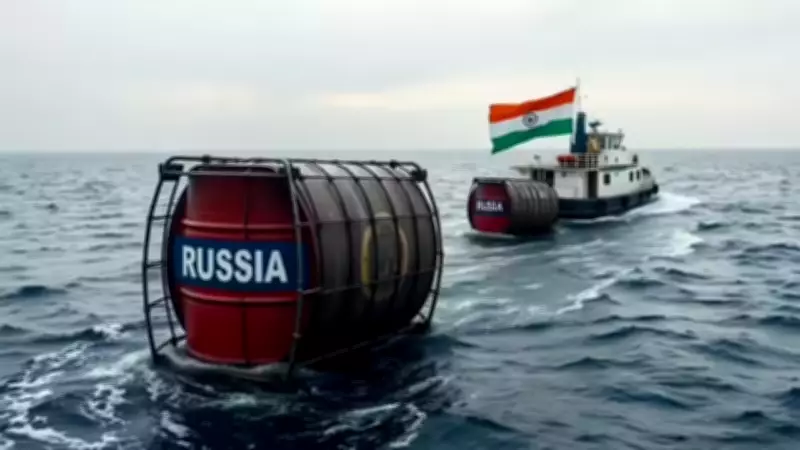
The political firestorm was ignited by comments from US Treasury Secretary Scott Bessent, who stated in a Friday interview with Fox Business that the United States had granted "permission" to India to accept Russian oil shipments already at sea. This temporary 30-day waiver was implemented to help maintain global oil supplies during ongoing Middle East conflicts, particularly the US-Israel tensions with Iran.
"The world is very well supplied in oil. Yesterday, the Treasury Department agreed to let our allies in India start buying Russian oil that was already on the water," Bessent explained during the broadcast interview. He emphasized that India had previously complied with US requests to halt purchases of sanctioned Russian oil earlier this fall.

Congress Condemns "Compromised" Leadership
Taking to social media platform X, the Congress party posted a scathing condemnation of the Modi government's foreign policy approach. Quoting Bessent's "permission" remark directly, the opposition wrote: "Permission? For India? A country of 1.4 billion people waiting for Washington's approval. This is the cost of a compromised Prime Minister."
The party's statement continued with historical context, noting: "India fought for freedom so that no foreign power could dictate terms to us. Yet today, under a weak Prime Minister, the US is openly talking about giving India 'permission'." Congress characterized the entire situation as a national "humiliation" and demanded immediate explanations from the prime minister.
Broader US Policy Context and Additional Statements
Bessent provided further details about the temporary policy adjustment, revealing that there are "hundreds of millions of sanctioned barrels of sanctioned crude on the water" that could be quickly brought to market through sanction relief. "We are going to keep a cadence of announcing measures to bring relief to the market during this conflict," he added, suggesting more flexibility might follow.
US Energy Secretary Chris Wright echoed similar sentiments in his own social media post, stating: "We have implemented short term measures to help keep oil prices down. We are allowing our friends in India to take oil that is already on ships, refine it, and move those barrels into the market quickly." Wright described this as "a practical way to get supply flowing and ease pressure" during the ongoing Middle East tensions.
This development comes several months after former President Donald Trump's administration imposed 25% punitive tariffs on India over its Russian oil purchases. The current temporary waiver represents a significant policy shift, albeit framed as a short-term measure to stabilize global energy markets.
Political Fallout and Demands for Accountability
The Congress party has framed the US official's language as evidence of India's diminished standing on the global stage under Modi's leadership. In their social media statement, they directly challenged the prime minister: "Indians are not actors in someone else's script. PM Modi, your silence on this statement is deafening. The people of India deserve an explanation."
The opposition's attack highlights growing political tensions over India's energy security strategy and diplomatic relationships. With global oil markets experiencing volatility due to Middle East conflicts, India's balancing act between maintaining relations with traditional partners like Russia while navigating US sanctions has become increasingly complex.
As the political debate intensifies, the Modi government faces mounting pressure to address both the practical implications of the temporary oil waiver and the perceived diplomatic implications of the "permission" language used by US officials. The controversy underscores the delicate nature of international energy diplomacy in an increasingly multipolar world order.