

Congress Leaders Tharoor and Ramesh Clash Over India's Response to Iran Tensions
Internal divisions within the Congress party have once again come to the forefront, this time over India's diplomatic stance regarding the escalating tensions involving Iran. The disagreement pits party MP Shashi Tharoor against senior leader Jairam Ramesh, revealing a split in the party's approach to foreign policy matters in West Asia.
Tharoor Welcomes Diplomatic Outreach to Iran
Speaking to reporters outside Parliament, Shashi Tharoor, who also serves as the chairman of the Parliamentary Standing Committee on External Affairs, expressed support for the diplomatic efforts led by Prime Minister Narendra Modi and External Affairs Minister S Jaishankar. Tharoor highlighted that their outreach to Tehran represents a positive step at a critical juncture, as tensions in West Asia continue to escalate with no immediate signs of easing.
He emphasized that India should adopt a proactive role in diplomatic initiatives aimed at restoring stability in the region. According to Tharoor, the ongoing hostilities have already begun to disrupt global energy routes, posing significant implications for India's energy security. Additionally, he raised concerns about the safety of the large Indian diaspora residing and working in the Gulf region, stressing that ensuring their security and maintaining India's longstanding ties with Gulf nations must remain a top priority.

Ramesh Questions Government's Silence on Assassination
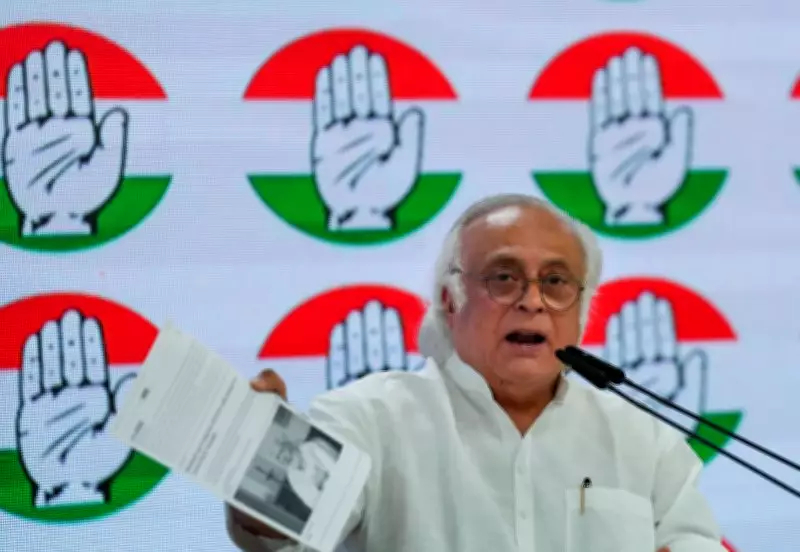
In contrast, Congress general secretary Jairam Ramesh has sharply criticized the central government for what he describes as its 'silence' over the assassination of Iran's Supreme Leader Ayatollah Ali Khamenei. Ramesh pointed out that there has been no official reaction from the Indian government regarding this incident. He questioned the perceived hesitance, noting, "The PM is silent. The EAM is silent. Parliament is yet to have an obituary reference."
Ramesh further argued that while India has condemned Iran's attacks on Gulf states, it has failed to address what he termed the "US-Israeli assault on Iran" that preceded the current crisis. This criticism underscores a broader discontent within the Congress party regarding the government's handling of international conflicts.
Additional Criticism from Within the Party
Adding to the internal discord, Congress leader Pawan Khera also voiced criticism against the government. He alleged that External Affairs Minister S Jaishankar delayed informing the public about his conversation with Iran's foreign minister. Khera claimed that details of this discussion were only shared after a statement from Iran's Foreign Ministry was circulated publicly. According to Khera, the Iranian side emphasized the need for bilateral and multilateral forums, including BRICS, to condemn what it described as military aggression against Iran.
These remarks from Tharoor and Ramesh follow a recent telephonic conversation between Prime Minister Narendra Modi and Iranian President Masoud Pezeshkian, where they discussed the deteriorating security situation in the Gulf. The exchange highlights the ongoing debate within the Congress on how India should navigate its foreign policy in the volatile West Asian region.






