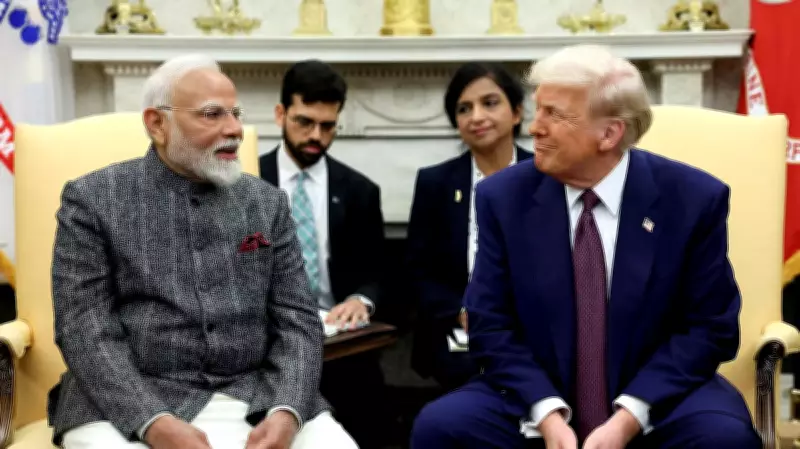
Congress Intensifies Criticism of Modi Government Over US Trade Deal
The Indian National Congress has escalated its political offensive against the Narendra Modi-led government, directing sharp criticism over the ongoing negotiations for a trade deal with the United States. The opposition party has raised pointed questions about the alignment of these discussions with the government's flagship 'Aatmanirbhar Bharat' (Self-Reliant India) initiative, suggesting a potential contradiction in policy direction.
Questioning the 'Aatmanirbhar' Narrative
In a series of public statements, Congress leaders have challenged the government's commitment to its own slogan. They argue that pursuing a comprehensive trade agreement with a global economic powerhouse like the United States could undermine the core principles of self-sufficiency and domestic industrial promotion that Aatmanirbhar Bharat purportedly champions. The criticism centers on whether such a deal might lead to increased market access for American goods and services, potentially at the expense of local industries the government vows to protect.
Political and Economic Implications
The Congress party's attack is not merely rhetorical; it taps into broader political and economic concerns. Key points of contention include:

- Trade Balance: Fears that the deal may exacerbate India's trade deficit with the US if not structured to favor Indian exports.
- Sectoral Impact: Apprehensions about sensitive sectors like agriculture, dairy, and digital services being exposed to foreign competition.
- Policy Consistency: Allegations that the government's actions contradict its 'nation-first' messaging, creating confusion among stakeholders.
This critique positions the Congress as a defender of economic sovereignty, aiming to resonate with voters and industries wary of globalization's downsides.
Government's Stance and Ongoing Negotiations
While the Modi government has consistently promoted the Aatmanirbhar Bharat campaign as a cornerstone of its economic strategy, it has also engaged in active trade diplomacy. Officials have previously framed such international agreements as complementary to self-reliance, arguing they can attract investment, transfer technology, and create jobs. The US-India trade deal negotiations, which have seen rounds of talks, aim to resolve longstanding issues like tariffs, market access, and intellectual property rights.
The Congress's latest salvo adds a layer of political pressure as these discussions progress. By labeling the potential deal as 'America Nirbhar' (Dependent on America), the opposition seeks to frame it as a betrayal of the government's promises, potentially influencing public perception and negotiation dynamics.
Broader Political Context
This episode is part of a larger pattern of political friction between the ruling BJP and the Congress, especially on economic policies. As India approaches future electoral cycles, trade and self-reliance are likely to remain hot-button issues. The Congress's strategy appears designed to:
- Undermine the government's credibility on a key policy plank.
- Mobilize support from sectors and regions that might feel threatened by trade liberalization.
- Differentiate its own economic vision as more protective of domestic interests.
The ongoing debate highlights the delicate balance India must strike between fostering domestic growth and engaging with the global economy, all under intense political scrutiny.