

Congress Rift Exposed Over India's Iran Policy
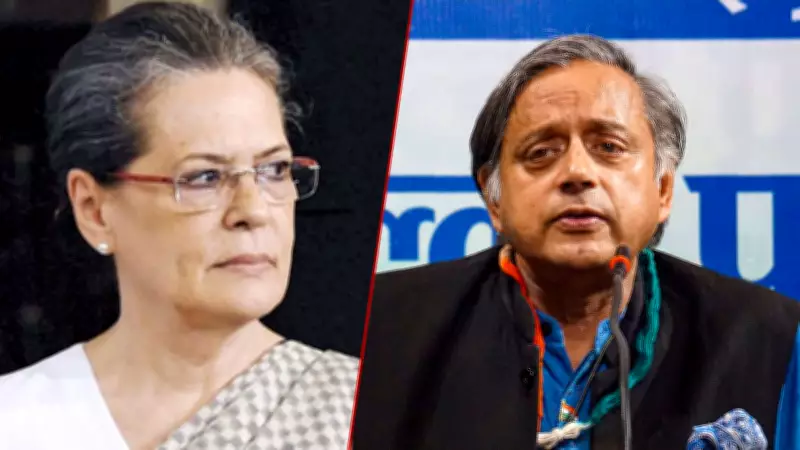
The political landscape in India has been stirred by a significant internal debate within the Congress party regarding the nation's response to the escalating crisis in West Asia. Senior Congress leader Shashi Tharoor has publicly broken ranks with party leadership, notably contradicting Sonia Gandhi, to endorse the Modi government's cautious and restrained diplomatic stance towards Iran.
Tharoor's Defense of Restraint
In a striking departure from the party line, Tharoor described the government's approach not as silence or abdication, but as a demonstration of strength and responsible statecraft. He emphasized that in a volatile region involving key players like Iran, Israel, and the United States, restraint is paramount to safeguarding India's national interests. Tharoor argued that direct positioning could jeopardize strategic balances, making measured diplomacy the wiser course.
Contrast with Sonia Gandhi's Criticism
This stance stands in sharp contrast to Sonia Gandhi's earlier criticism, where she labeled the government's silence on Iran as an abdication of moral responsibility. The divergence highlights a deep-seated ideological rift within the Congress, pitting advocates of pragmatic diplomacy against those calling for more vocal moral statements on international issues.

Broader Political Consensus
Tharoor is not alone in his support. Other leaders, such as Manish Tewari, have also backed this restrained approach, suggesting a broader consensus that transcends traditional party lines. This indicates that on matters of critical foreign policy, there may be emerging bipartisan agreement on prioritizing national interest over partisan politics.
The Core Debate: Morality vs. National InterestThe controversy raises a fundamental question for Indian foreign policy: should the country prioritize making moral statements on global issues, or focus squarely on protecting its strategic and economic interests? In the fragile geopolitical climate of West Asia, where tensions are rising, New Delhi's calculated silence might indeed be its most powerful message, as argued by Tharoor.
Implications for Indian Diplomacy
India's strategy of avoiding direct alignment while maintaining a delicate balance reflects a nuanced understanding of its role in global affairs. With global tensions escalating, this approach aims to navigate complex international relationships without compromising domestic priorities. The debate underscores the challenges of diplomacy in an interconnected world, where every move is scrutinized.
As the Congress party grapples with this internal divide, the episode serves as a reminder of the evolving dynamics in Indian politics, where foreign policy decisions can spark intense internal discussions and redefine party positions on the world stage.






