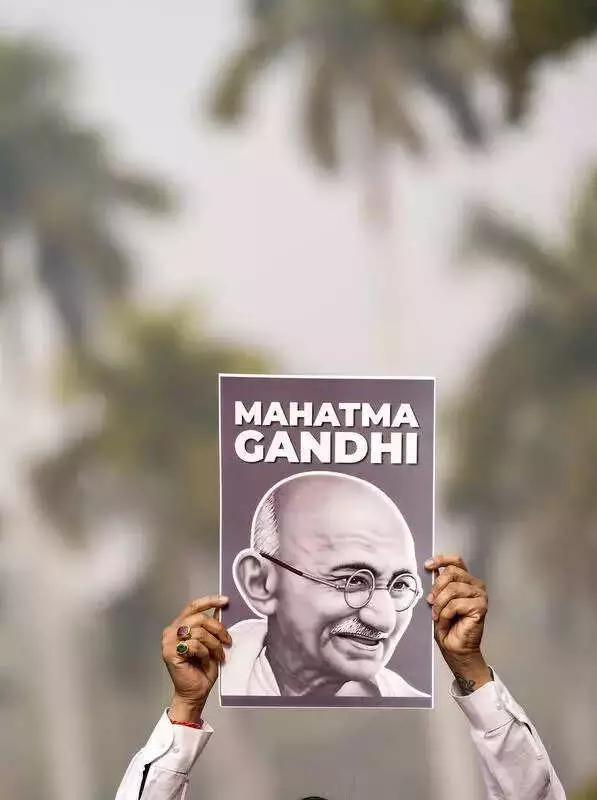
The Congress party has launched a major nationwide political offensive to protect the Mahatma Gandhi National Rural Employment Guarantee Act (MGNREGA), believing the 'Save MGNREGA' campaign will deliver significant electoral benefits. The party's top leadership is now on a countrywide tour with a dual mission: to collect direct feedback from the ground and to strategically steer state and district units in fortifying the campaign's message.
Punjab Tour Kicks Off in Amritsar
As part of this extensive outreach, Arathi Krishna, the All India Congress Committee (AICC) secretary in charge, commenced her Punjab tour from Amritsar on Sunday. She engaged directly with a gathering of rural unskilled labourers, detailing the core features and advantages of MGNREGA. Krishna emphasized that the scheme provides assured, demand-driven employment and livelihood security to households in rural areas, framing it as a critical rights-based framework.
In a pointed critique, she contrasted MGNREGA with the central government's new Viksit Bharat – Guarantee for Rozgar and Ajeevika Mission (Gramin) or VB-GRAM G. She argued that the new mission could create substantial gaps in coverage and entitlements, potentially weakening the established system of rural employment support.

Funding Shift a Major Point of Contention
Arathi Krishna provided a concrete example to illustrate her concerns. "Under MGNREGA, the Union government pays 100% of the workers' wages, enabling state governments to provide work without financial strain," she explained. "However, under the VB-GRAM G, states will have to bear 40% of the wage cost. To save money, there is a real possibility that state governments may choose not to provide work at all," she added, highlighting the risk of the legal guarantee to work being diluted.
Following her interaction with workers, Krishna held a strategy meeting with senior Punjab Congress leaders to offer further guidance on the 'MGNREGA Bachao Sangram' (Save MGNREGA Struggle). After the meeting, she stated that the state leadership was concentrated on effectively communicating that MGNREGA remains a more robust and rights-based employment framework compared to the VB-GRAM G alternative.
Concerns from the Diaspora
Arathi Krishna, who also serves as the vice-chairperson of the Indian Overseas Congress (IOC), revealed that she had convened a meeting with IOC presidents. "Several leaders expressed their reservations about the VB-GRAM G scheme," she noted. She linked this apprehension to the backgrounds of many diaspora leaders and beneficiaries. "Since many of them hail from a rural background, and a significant proportion of MGNREGA beneficiaries themselves come from the rural areas, they are concerned about losing the legal guarantee to work, among other apprehensions," Krishna said.
The Congress party's concerted campaign underscores the escalating political battle over rural welfare schemes. The party is positioning MGNREGA not just as a policy instrument but as a fundamental right for rural workers, aiming to make its protection a central issue in the political discourse ahead of upcoming elections.