Congress Attacks BJP Over Chinese Communist Party Meetings
A courtesy meeting between Chinese Communist Party leaders and Rashtriya Swayamsevak Sangh general secretary Dattatreya Hosabale has sparked a major political controversy. The Congress party has launched a sharp attack on the ruling BJP, calling the interaction a clear "change of colours."
High-Level Meetings at RSS and BJP Offices
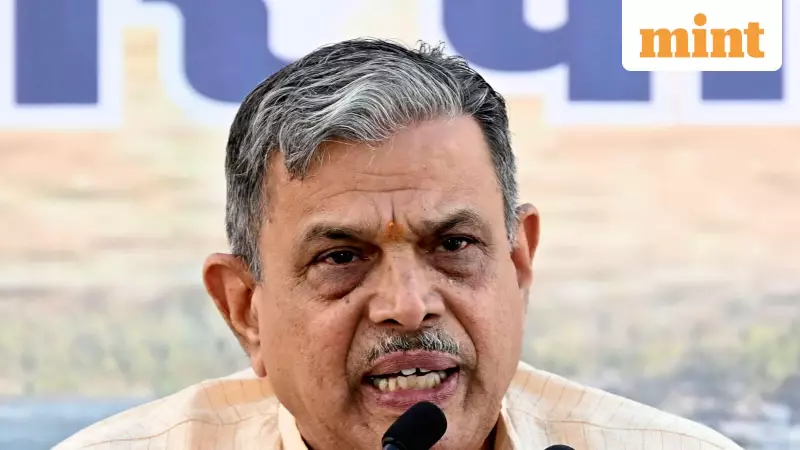
The Communist Party of China delegation visited the RSS headquarters on Tuesday for a thirty-minute meeting. Sources familiar with the development confirmed that no formal agenda was discussed during this courtesy call. The Chinese delegation had specifically requested the meeting with RSS leadership.
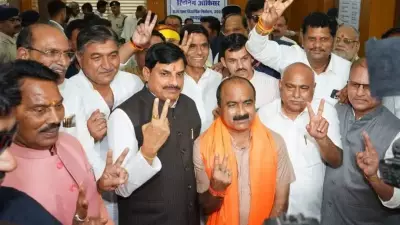
This followed another significant meeting on Monday. Chinese officials met with BJP General Secretary Arun Singh and Foreign Affairs Department Convener Vijay Chauthaiwale at the BJP headquarters. Chauthaiwale described the interaction as part of routine exchanges between political parties.

"A delegation of the Communist Party of China visited the BJP head office today," Chauthaiwale wrote on social media platform X. "During the discussion, a BJP delegation discussed at length the means to advance inter-party communications between the BJP and CPC." Chinese Ambassador to India Xu Feihong also participated in this meeting.
Congress Leader Pawan Khera's Strong Criticism
Congress spokesperson Pawan Khera held a press conference in New Delhi to express his party's concerns. He directly questioned the BJP's relationship with China and criticized Prime Minister Narendra Modi's approach.
"The BJP has taught even a chameleon how to change its colours," Khera stated forcefully. "Those who were supposed to show 'red eyes' to China have instead rolled out a 'red carpet' for it."
Khera revealed that the BJP maintained connections with the Chinese Communist Party even before coming to power. He alleged that party leaders visited China regularly and that RSS members received training there.
Questions About Border Issues and Operation Sindoor
The Congress leader raised serious questions about whether critical national security matters were discussed during these meetings. He specifically mentioned the Shaksgam Valley dispute and developments during Operation Sindoor.
"You are in power, and you held meetings at the party office," Khera challenged. "We want to know—if not publicly, then at least behind closed doors—did you raise the issue of Shaksgam? Did you raise other issues? What happened during Operation Sindoor?"
Khera referenced statements from senior Army officers about Chinese support to Pakistan. He mentioned weapons supplies including PL-15 missiles. Despite these security concerns, he accused Prime Minister Modi of traveling to China on Beijing's terms.
China's Position on Shaksgam Valley
The meetings occurred against the backdrop of renewed tensions over territorial claims. On Monday, Chinese Foreign Ministry Spokesperson Mao Ning firmly rejected India's claim to the Shaksgam Valley in Jammu and Kashmir.
"The territory you mentioned belongs to China," Mao declared when questioned about border issues. "It's fully justified for China to conduct infrastructure construction on its own territory."
Historical Context of RSS-China Relations
This interaction marks a significant shift from last year's approach. The RSS had excluded Chinese, Pakistani, and Turkish diplomats from a lecture series addressed by Sangh chief Mohan Bhagwat. That decision was widely interpreted as connected to Operation Sindoor developments.
The Congress maintains that it doesn't object to political parties engaging with foreign counterparts. However, Khera emphasized his party's concern about what he called BJP's "duplicity, hypocrisy, and deceit."
"For years, the BJP kept shouting that the Congress had signed an MoU, and now they themselves are holding meetings," Khera noted. "Our concern is with the BJP's intentions, because after such closed-door meetings, it is the country that ends up paying the price."
The Chinese Communist Party delegation also met with Congress party leaders on Tuesday, adding another layer to this complex diplomatic engagement.