

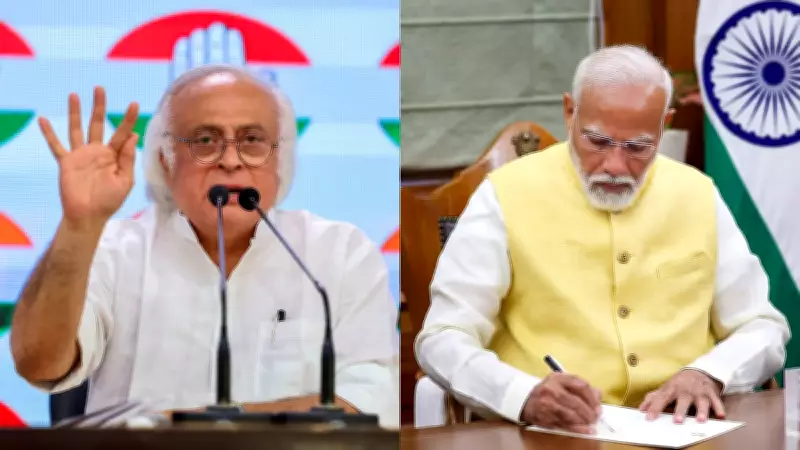
Congress Launches Scathing Attack on Modi's Foreign Policy Strategy
The Indian National Congress has launched a sharp critique against Prime Minister Narendra Modi's approach to international relations, accusing his administration of prioritizing personality over substantive diplomacy. In a recent statement, the opposition party characterized this strategy as "Vishwaphoney," a term coined to contrast with the government's self-proclaimed "Vishwaguru" (world teacher) image.
Allegations of Superficial Diplomacy
According to Congress leaders, the Modi government's foreign policy has become excessively reliant on the Prime Minister's personal charisma and high-profile international engagements, rather than building enduring strategic partnerships. They argue that this focus on optics has exposed the limitations of the "Vishwaguru" narrative, suggesting it lacks the depth required for effective global leadership.
The criticism centers on claims that India's diplomatic efforts under Modi have often emphasized ceremonial aspects and media visibility, potentially at the expense of concrete outcomes in areas such as trade, security, and geopolitical influence. Congress spokespersons highlighted instances where high-visibility summits and photo-ops have not translated into long-term benefits for the nation.

Political Implications and Broader Context
This attack comes amid ongoing political debates in India regarding the direction of its foreign policy. The Congress party's remarks are seen as part of a broader effort to challenge the ruling Bharatiya Janata Party's (BJP) narrative of India's rising global stature under Modi's leadership.
Analysts note that the use of the term "Vishwaphoney" is a deliberate rhetorical move to undermine the government's claims of establishing India as a moral and intellectual leader on the world stage. The opposition contends that a more institutionalized and less personality-centric approach is necessary for sustainable foreign policy success.Key points raised by Congress include:
- Alleged overemphasis on Modi's personal diplomacy in bilateral and multilateral forums.
- Concerns that this strategy may weaken India's diplomatic institutions and long-term strategic planning.
- Claims that the "Vishwaguru" image has not yielded proportional gains in terms of economic or security partnerships.
Government's Defense and Counterarguments
In response, supporters of the Modi administration have defended the Prime Minister's active role in foreign policy, citing achievements such as strengthened ties with major powers, enhanced diaspora engagement, and a more assertive stance on global issues. They argue that Modi's personal outreach has effectively raised India's profile and attracted investment.
The debate underscores deeper ideological divides in Indian politics regarding how the country should engage with the world. As the 2024 general elections approach, foreign policy is likely to remain a contentious topic, with both sides leveraging it to appeal to voters concerned about national prestige and international standing.
This controversy highlights the ongoing tension between personality-driven politics and institutional governance in India's diplomatic endeavors, with significant implications for its future global role.






