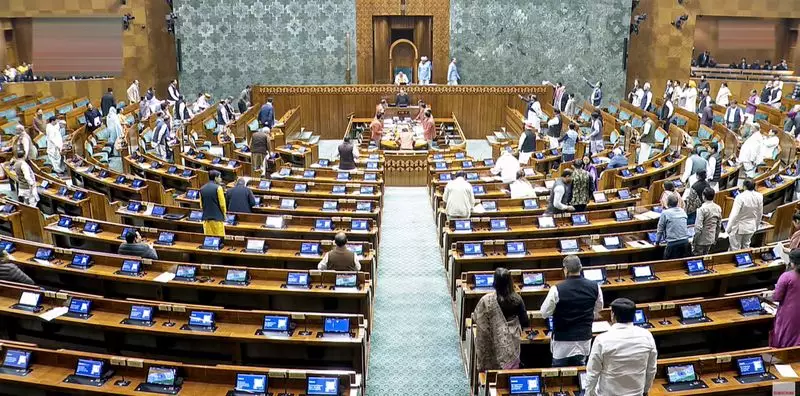
The Congress party launched a sharp attack on the Narendra Modi-led government on Thursday, following a written reply in the Lok Sabha from the Prime Minister's Office (PMO). The reply stated that no documents or files from the tenure of India's first Prime Minister, Jawaharlal Nehru, are missing from its records.
Parliamentary Query and the Government's Stance
The controversy stems from a question raised by Congress MP Manickam Tagore. He sought details from the Ministry of Culture regarding missing documents related to the Nehru-Gandhi family, specifically mentioning papers from the periods of Jawaharlal Nehru and Indira Gandhi. Tagore's question implied that important historical records might have been lost or misplaced.
In its official response, the PMO, which handles such matters, provided a clear and concise answer. "No documents/files from the period of the first Prime Minister, Jawaharlal Nehru, are missing from the Prime Minister's Office," the reply read. This direct statement formed the core of the government's position, seemingly aiming to put the issue to rest.

Congress's Counterattack and Allegations
Far from being satisfied, the Congress party seized upon the reply to mount a political offensive. Senior Congress leader Jairam Ramesh led the charge, interpreting the PMO's statement not as a clarification but as an admission of a broader agenda.
Ramesh accused the government of engaging in a systematic effort to diminish and distort the contributions of the Nehru-Gandhi family to India's modern history. He argued that while the PMO said no Nehru-era files were missing from its custody, it did not address the status of documents held by other ministries or institutions. The Congress alleged this is part of a continuing pattern to "erase, rename, and distort" the legacy of the country's foundational leaders.
"The non-BJP, non-NDA Prime Ministers of India held office for over 30 years. Their files, documents, and correspondence are of immense historical value," Ramesh stated, framing the issue as one of preserving national heritage versus political vendetta.
The Bigger Political Battle Over History
This exchange in Parliament is not an isolated incident but the latest skirmish in a long-running ideological war. The ruling BJP and the opposition Congress have repeatedly clashed over the interpretation of history, particularly the roles of figures from the Nehru-Gandhi dynasty versus those of leaders from the Hindu nationalist movement.
The Congress's reaction highlights its strategy to portray the BJP government as undermining India's secular and pluralistic foundations, which it associates with Nehru's vision. Conversely, the BJP has often criticized what it calls the "Congress culture" and has worked to bring alternative historical narratives to the forefront.
The immediate consequence is a further deepening of political rancor. The issue allows the Congress to rally its base around the defense of its most iconic leaders, while the government can project an image of transparency and fact-based governance through its parliamentary reply. Ultimately, this debate transcends missing files; it is a fundamental contest over who gets to write the dominant narrative of modern India, with significant implications for the nation's political discourse in the lead-up to future elections.