

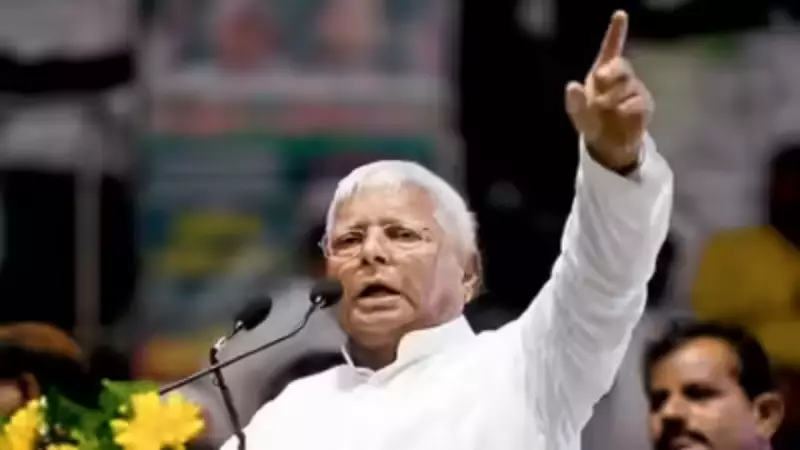
A Delhi court on Friday took a significant step in the high-profile Railways land-for-jobs scandal, formally framing criminal charges against Rashtriya Janata Dal (RJD) chief and former Union Railway Minister Lalu Prasad Yadav, along with his immediate family members.
Charges Framed Against 46 Accused
The court determined that a prima facie case exists for charges of corruption, cheating, and criminal conspiracy against the accused. Lalu Prasad Yadav faces specific charges under the stringent Prevention of Corruption Act. His wife and former Bihar Chief Minister Rabri Devi, their sons Tejashwi Yadav and Tej Pratap Yadav, and daughter Misa Bharti, along with several other associates, have been charged with cheating and conspiracy under the Indian Penal Code (IPC).
Out of the 98 surviving individuals named in the case, the court has proceeded to frame charges against 46 accused persons. The remaining individuals have been discharged at this stage. The court firmly rejected pleas filed by the accused seeking discharge, stating such requests were unwarranted given the evidence presented.

The Core of the Allegations
The case revolves around events alleged to have occurred during Lalu Prasad Yadav's tenure as the Railway Minister between 2004 and 2009. Investigators claim that Group D appointments in the Indian Railways were illegally given in exchange for land.
The central allegation is that individuals seeking jobs transferred land parcels to Yadav's family members or entities linked to them at prices far below market value. Investigators assert that no transparent recruitment process was followed, and the land transfers were part of a clear quid pro quo arrangement. In its order, the court observed that public employment was allegedly used as leverage to acquire properties, pointing to an overarching conspiracy involving the former minister's close associates.
Legal Proceedings and Wider Probe
All the accused have consistently denied the allegations, maintaining that the case is politically motivated. With the framing of charges, the stage is now set for the trial to commence, where evidence will be examined in detail.
Parallel to this criminal case, the Enforcement Directorate (ED) continues its investigation into the money laundering aspect linked to the scandal. The federal agency has already attached several properties, alleging they were acquired using the proceeds of the crime.
This development marks a critical juncture in a case that has drawn significant political and public attention, potentially having major implications for one of Bihar's most prominent political families.






