A delegation from the Communist Party of China visited the headquarters of the Rashtriya Swayamsevak Sangh in Delhi on Tuesday. This meeting occurred just one day after the same Chinese group held discussions with leaders of the Bharatiya Janata Party.
Significance of the RSS Meeting
The Chinese representatives met senior RSS functionaries at Keshav Kunj in the national capital. A senior RSS official described the interaction as a courtesy call. He stated the request came from the Chinese side and the RSS obliged.
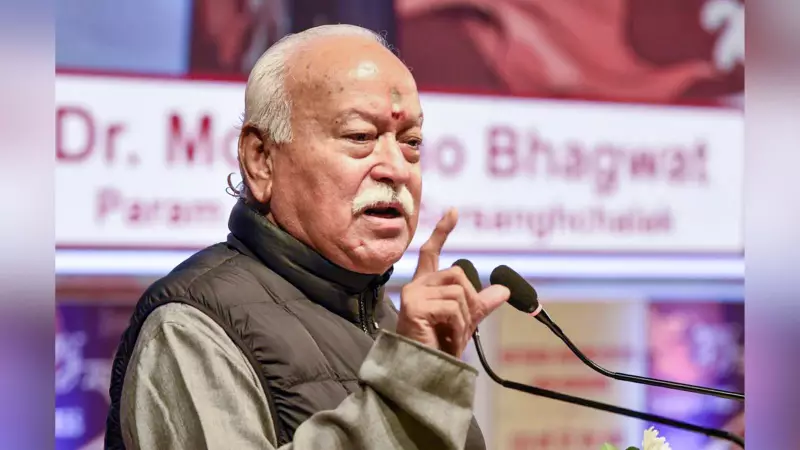
RSS chief Mohan Bhagwat did not attend the meeting. He was traveling outside Delhi at the time. The official emphasized there was no specific agenda for the discussion.

Historical Context and Limited Engagement
This engagement holds particular importance due to the limited contact between the RSS and Chinese representatives in recent years. Notably, the RSS did not invite Chinese diplomats to Mohan Bhagwat's lecture series in August last year.
Representatives from several other countries attended those lectures. The decision to exclude Chinese diplomats was linked to Operation Sindoor at that time. Neither Pakistan nor China received invitations following that operation.
Parallel Meeting with the BJP
The RSS meeting followed closely after the CPC delegation's interaction with BJP leaders on Monday. Discussions during that meeting focused on advancing inter-party communication between the two political organizations.
BJP leaders with significant interface to the RSS participated in Monday's exercise. According to party insiders, this likely marks the first such interaction between the BJP and CPC since the BJP came to power in 2014.
Previous Engagements Between Parties
Sources indicate the last similar interaction occurred in 2009. The BJP was then led by its president Nitin Gadkari, who now serves as Union Minister for Road Transport and Highways.
That earlier interaction included a visit by Gadkari to China in 2011. He engaged with the Communist Party of China during that trip.
Public Confirmation and Social Media Posts
BJP leaders publicly confirmed Monday's meeting through social media posts. Vijay Chauthaiwale, in-charge of the BJP's foreign affairs department, posted about the meeting on X.
He stated that a delegation headed by party general secretary Arun Singh discussed advancing inter-party communications with the CPC delegation. Chinese Ambassador to India Xu Feihong also joined the delegation.
In a separate post, BJP national secretary Arun Singh confirmed the meeting. He noted discussions focused on enhancing communication and interaction between the two parties.
Political Background and Context
This outreach occurs against a specific political backdrop. The BJP has repeatedly criticized the Congress party for its past proximity to the Communist Party of China.
These criticisms include references to meetings and memoranda of understanding between Congress and CPC over the years. The BJP has highlighted these connections during political debates.
Broader Implications for India-China Relations
Both the BJP and RSS maintain that these latest engagements remain exploratory and limited in scope. However, the CPC delegation's meetings with both organizations indicate a calibrated effort.
This effort aims to broaden political channels of communication between India and China. It unfolds amid otherwise strained bilateral relations between the two neighboring countries.
The simultaneous engagement with both the ruling party and its ideological parent organization suggests a strategic approach. The Chinese delegation appears to be exploring multiple political avenues within India's current political landscape.
These meetings represent rare diplomatic contact at the political party level. They occur despite ongoing tensions and disagreements between the two nations on various fronts.
Observers will watch closely for any follow-up interactions or developments. The outcomes of these discussions could influence future political and diplomatic exchanges between India and China.