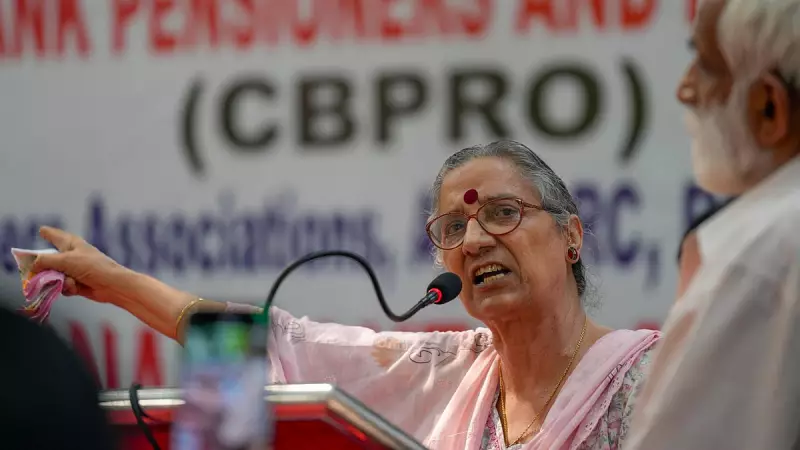
The Communist Party of India (CPI) has launched a sharp critique against the Narendra Modi-led central government on two distinct fronts. The party has accused the Centre of mishandling funds for the Mahatma Gandhi National Rural Employment Guarantee Act (MGNREGA) and also condemned the ongoing violence against minorities in neighboring Bangladesh.
D. Raja's Dual Allegations Against the Government
CPI General Secretary D. Raja articulated the party's position during a press conference in Patna, Bihar. He presented a two-pronged attack on the government's policies, both domestic and in its stance towards regional affairs.
On the domestic front, Raja accused the central government of deliberately withholding funds for the MGNREGA scheme. He claimed this was a strategic move to financially cripple state governments, particularly those not ruled by the Bharatiya Janata Party (BJP). According to Raja, this withholding of funds is directly impacting the rural poor who depend on the scheme for livelihood, especially during non-agricultural seasons.

"The Centre is not releasing funds for MGNREGA to trouble non-BJP state governments. This is affecting the poor," Raja stated emphatically. The MGNREGA is a critical social security net that guarantees 100 days of wage employment per year to rural households.
Condemnation of Violence in Bangladesh
Shifting focus to international concerns, D. Raja strongly criticized the central government for its perceived silence on the violence against minorities in Bangladesh. He expressed deep concern over attacks on Hindu temples and properties during recent religious festivals in Bangladesh.
Raja questioned the Modi government's commitment to protecting Hindu interests abroad, a key plank of its political rhetoric. "The government talks about protecting Hindus everywhere, but why is it silent when Hindus are attacked in Bangladesh?" he asked. He urged the Indian government to take a firmer diplomatic stand and raise the issue with the Bangladeshi authorities to ensure the safety and security of the minority community.
Political Context and Broader Implications
The press conference in Patna is significant within the broader political landscape. The CPI is part of the opposition's efforts to consolidate a united front against the BJP ahead of future elections. By highlighting issues of economic justice and minority rights, the party aims to challenge the government's narrative on both governance and foreign policy.
The allegations regarding MGNREGA funding touch upon a recurrent tension between the Centre and several opposition-ruled states. The scheme's implementation often becomes a point of political contention, with states alleging insufficient fund transfers from the central government.
Similarly, the situation in Bangladesh poses a delicate diplomatic challenge. While India shares close ties with the current Bangladeshi government, pressure from political parties and civil society to address minority persecution can complicate bilateral relations.
D. Raja's statements underscore a concerted effort by left parties to hold the government accountable on its promises. By linking a domestic welfare issue with an international human rights concern, the CPI is attempting to paint a picture of governmental failure on multiple levels—economic protection for the poor at home and diplomatic protection for co-religionists abroad.
The response from the central government to these specific allegations is now awaited. The developments will be closely watched as they relate to vital issues of rural employment, fiscal federalism, and India's role in advocating for minority rights in its immediate neighborhood.