

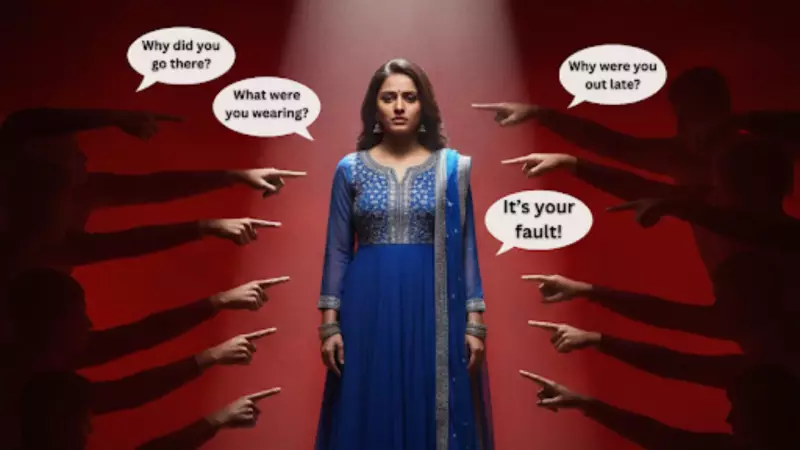
In 2013, a comment by a senior political leader sparked nationwide controversy and laid bare a persistent mindset in India's discourse on sexual violence. Bharatiya Janata Party leader Kailash Vijayvargiya invoked the epic Ramayana, stating, "Only when Sitaji crossed the Lakshman rekha was she kidnapped by Ravan." He used this mythological boundary as a metaphor, suggesting women must stay "within limits" to avoid abduction by modern-day "Ravanas."
The remark was widely condemned at the time for its blatant victim-blaming. Yet, more than a decade later, the underlying narrative—that a woman's choices, movements, and behaviour are responsible for the violence committed against her—remains stubbornly entrenched across public life.
A Pattern That Refuses to Fade
This is not an isolated incident tied to one leader or party. It reflects a deep-seated attitude that permeates political rhetoric, judicial observations, and everyday conversations. The focus consistently shifts from the perpetrator's act to the victim's conduct.

Fast forward to October 2024, when a second-year medical student was gang-raped near her campus in Durgapur after stepping out for dinner. In response, West Bengal Chief Minister Mamata Banerjee stated that "girls should not be allowed to come outside at night-time." While she later claimed her words were distorted, the message echoed the same old tune: restrict women's freedom to ensure their safety.
The political backlash was swift. BJP MP Bansuri Swaraj accused Banerjee of justifying rape and called it a "regressive mindset." But once again, the national conversation had drifted from the horrific crime to policing women's behaviour.
When Courts Echo the Bias
This victim-blaming virus has infected judicial language as well. In March 2025, the Allahabad High Court granted bail to a man accused of raping a woman he met at a bar in Delhi's Hauz Khas. The court observed that the "victim herself invited trouble."
This comment drew sharp scrutiny from the Supreme Court. Justices B.R. Gavai and Augustine George Masih cautioned judges against such observations, emphasizing that while bail may be granted, courts must be extremely careful in how they speak about survivors of sexual violence.
The incident recalled the 2021 controversy when Karnataka MLA KR Ramesh Kumar told the state assembly, "when rape is inevitable, lie down and enjoy it," a statement that drew laughter from some members. He later apologised, but the episode highlighted the disturbing normalisation of such rhetoric.
The Crushing Burden of "Reasonable" Restrictions
Public discourse repeatedly devolves into moral instruction for women—dictating where they should go, how they should dress, and when they should be visible. For countless women and girls, these limitations are not choices but evil necessities adopted as safety precautions.
A mother of a 19-year-old told The Times of India that her daughter's freedom felt conditional. "When we’re around, we feel she is safe," she said. "But when she’s alone, it’s different." Another woman from Noida expressed the internal conflict: "I want my daughter to live freely. But with crime rates so high, fear always wins."
Personal accounts reveal the terrifying reality that no precaution guarantees safety. A 21-year-old college student described being harassed by men in a car while returning to her hostel late, despite being dressed modestly. A Delhi-based corporate professional spoke of "reasonable" restrictions like curfews and clothing rules imposed by supportive parents, normalising the idea that women simply should not be out at night.
This is the quiet, heavy burden women carry—not just the fear of violence, but the ever-present fear of being blamed for it.
The Data That Debunks the Myth
The core idea that safety lies in restraint collapses under official data. According to the National Crime Records Bureau (NCRB) 2023 figures, a staggering 97.5% of reported rape cases were committed by someone known to the victim. Homes, families, and trusted relationships—not dark streets—are frequent sites of violence.

Supreme Court advocate Barnali Basak pointed out that social stigma, especially for survivors from privileged backgrounds, often prevents reporting. "The fear of social judgment outweighs the crime itself," she explained. Children are particularly vulnerable, with abuse within families going unreported for years due to fear, dependency, and shame.
Developmental psychologist Akansha Rastogi warned of severe long-term psychological impacts when a child's report of abuse is ignored, leading to loss of control, mental health issues, and difficulty trusting others.
Shifting the Focus: From 'Why Was She There?' to 'Why Did He Do It?'
Experts stress that victim-blaming functions as a psychological defence mechanism. Dr. Medha, assistant professor of psychology at Patna Women’s College, explained it helps people feel safe by maintaining a "just world" belief. "Blaming the victim creates distance—'this won’t happen to me,'" she said.
However, the reality is unambiguous. Rape is not caused by clothing, behaviour, or timing. It is an act rooted in power, entitlement, and control. "Rape occurs even when women are: fully covered, elderly, children, disabled, or in safe places," Dr. Medha stated. If clothing or visibility were the cause, these patterns would not exist.
Women are raped at home, by relatives, in daylight, and as children. The conclusion is simple: rape happens because some men choose to violate. Blaming women does nothing to prevent it. Holding perpetrators accountable does.
The Path Forward: Belief Over Blame
Ending victim-blaming requires a fundamental shift in questions—from interrogating the survivor's actions to interrogating the perpetrator's motives. The illusion of safety through restriction is dangerous. Sexual violence occurs not because someone was visible or out late, but because someone felt entitled to violate.
As trauma psychologist Judith Herman states, healing begins when survivors are believed, not interrogated. "Blaming women is fear-based," she writes. "Believing women is justice-based."
A society that stops blaming survivors is not becoming weaker. It is becoming more honest, just, and truly safe. The decade-old Lakshman Rekha comment and its many echoes since are a stark reminder of how far we still have to go.





